Can You Wear Jeans To A Wine Tour?
Yes, jeans work on nearly every Provence wine tour. Here is what to pair them with, what to skip, and how the mistral, cellar floors and summer heat should shape your outfit.
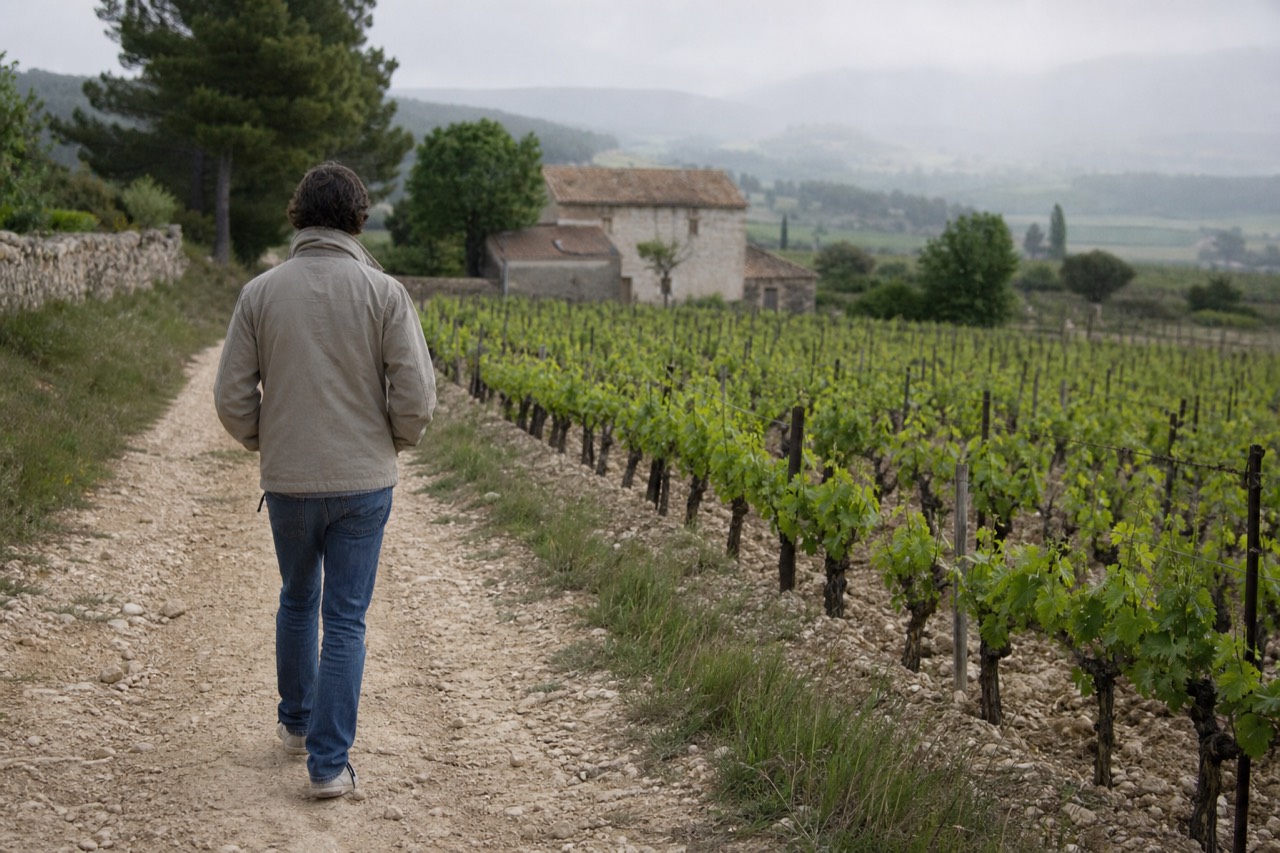
Can You Wear Jeans To A Wine Tour?
Yes, jeans are completely acceptable on a wine tour in Provence, and on most days they are the single most common thing guests wear. Small-group minibus tours, half-day tastings and full-day vineyard loops are casual by design, and no operator in the region's tour roster lists any dress code at all. The only outfit decisions that genuinely matter are footwear, warmth and skipping perfume.
That answer surprises people who have read about formal tastings in older wine regions, where jackets and closed shoes were once the norm. Provence is not that place. The dominant tour format here is a small group climbing in and out of a shared tour vehicle, walking gravel driveways between cellar buildings, and standing around a tasting bar in a working farm building. Dark jeans with a plain shirt or a knit is effectively the regional uniform for visitors, and nobody at the pourer's side of the bar will blink at it.
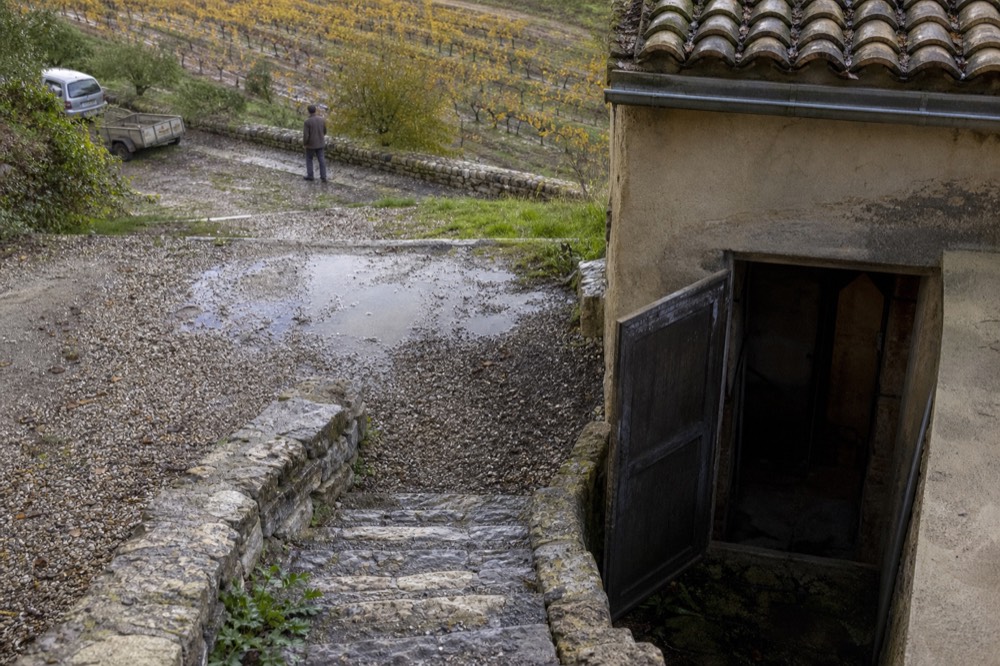
The context that matters is agricultural. A Provençal wine estate is a farm first and a hospitality venue second, especially from late August when the harvest starts in the earliest parcels and runs into September. Gravel, dust, uneven stone steps, the occasional puddle from cellar rinsing: these are the conditions your clothes actually meet. Denim handles all of it better than linen or tailored trousers, which is a practical argument for jeans that has nothing to do with style.
There is one honest nuance. Jeans are fine, but stiff brand-new raw denim on a hot August afternoon can be genuinely uncomfortable, and Provence afternoons in July and August are hot. A lighter wash or a looser cut solves that. If you are visiting in the shoulder season, the same jeans plus a layer you can shed indoors are close to the ideal outfit.
If you are still choosing which tasting day to dress for, the Provence Wine Tours roster covers everything from a three-hour tasting to a private full-day chauffeur drive, and the dress expectations barely move between them. The half-day Châteauneuf-du-Pape trip from Avignon is a good example: guests arrive from city hotels, often straight off a train, and jeans plus walking shoes are what the van fills with every departure.
What Should You Wear To A Provence Vineyard Day?
A practical base outfit is dark jeans or chinos, a breathable top, a light layer for cellar cool, and closed walking shoes. Add a windproof jacket between autumn and spring because the mistral blows hardest on the Avignon and Châteauneuf-du-Pape side, where most outdoor terrace tastings sit. Skip strong perfume or cologne, which genuinely interferes with tasting.
Start from the day's structure rather than from fashion. A typical half-day tour is roughly two-thirds travel and cellar time, one-third standing or short walking outdoors between buildings. You need clothes that survive a car seat, a cool cellar, and a hot terrace in the afternoon sun, sometimes within the same hour. Layers are not a cliché here, they are the working answer to that spread.
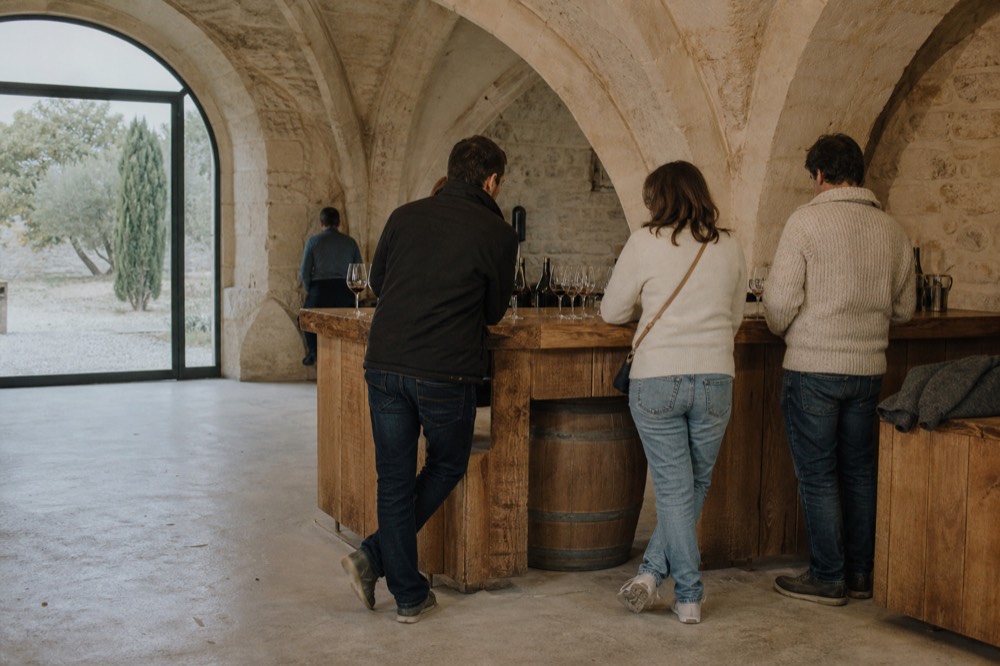
The perfume point deserves emphasis because it is the one clothing-adjacent rule with a real technical basis. A large part of what you perceive as flavour is aroma, and a strong fragrance on you or the person beside you competes directly with the glass. Tasting-room staff notice it, and regular tasters quietly resent it. Unscented deodorant, no perfume, no strongly scented lotion: that is the whole rule.
For a sense of how the pieces fit together across the year, this planning table keeps things in ranges rather than promises, because weather varies and estates differ:
| Season | Bottoms | Top and layers | Footwear | Extra |
|---|---|---|---|---|
| Summer (June to August) | Light jeans, chinos, a summer dress | Breathable shirt, optional light shirt-jacket for cellars | Closed sandals with grip or trainers | Hat, sunglasses, water |
| Spring and autumn | Jeans, chinos | T-shirt or shirt plus a warm mid-layer | Trainers or light boots | Windproof layer for the mistral |
| Winter | Heavier jeans | Sweater plus a proper coat | Boots | Warm layer you can remove indoors |
One more Provence-specific point that most first-page advice misses: the mistral is a winter-and-spring wind, not a summer one. Météo-France describes it as a turbulent, generally dry regional wind averaging around 50 km/h with gusts of 80 to 100 km/h, often strongest in winter and spring, and an episode can last several days or more than a week. Its strongest zone runs between Orange, Avignon, Istres and Arles, which is exactly the Châteauneuf-du-Pape tasting territory. So if your tour departs Avignon between November and April, the windproof layer matters more than the jeans question ever will.
What Shoes Work Best For A Vineyard Or Cellar Visit?
Closed, flat shoes with grip are the best choice: trainers, loafers or ankle boots. Vineyard rows are gravel or bare earth, cellar floors are stone or concrete and often damp from rinsing, and stairs between tank levels are steep and narrow. Heels, slick soles and flip-flops all fail on the same surfaces, and no tour operator reschedules for shoe problems.
The shoe decision is honestly more consequential than the denim one. Jeans have never caused an injury on a wine tour. Slick-soled dress shoes on wet cellar steps have caused plenty of near-misses, and stilettos sink straight into the gravel that fronts most Provençal estate buildings. A vineyard walk, which many tours include between tastings from spring to early autumn, adds dry earth, vineyard stakes and sometimes a slope.
White trainers are fine and common. There is a lingering idea that sneakers read as disrespectful at a tasting, and in Provence today that idea is simply outdated: the guest mix on any given minibus runs from backpackers to retired professionals, and the pourer's only real interest is that you can walk safely to the barrel room. If you want to look slightly more put-together without sacrificing function, leather sneakers, suede loafers or Chelsea boots all pair naturally with jeans.
Sandals are the borderline case. A well-secured leather sandal with a flat sole works in summer, and plenty of locals wear exactly that. What fails is the beach flip-flop: no protection on gravel, no grip on stone, and a bare toe anywhere near a cellar floor that gets hosed down. If you would not walk a cobbled village street in them for an hour, do not tour a winery in them.
Does Dress Code Change For A Châteauneuf-du-Pape Tasting?
No. Châteauneuf-du-Pape is the most prestigious appellation reachable from Avignon, but its visitor reality is still a working southern Rhône village estate: gravel, stone, sun and small-group tours where jeans and trainers are standard. Only a private chauffeur-driven day, where the format itself feels formal, nudges most guests to dress up slightly.
There is a psychological trap here. Châteauneuf-du-Pape carries the weight of being one of France's first six wine AOCs, decreed on 15 May 1936 alongside Cassis, Arbois, Cognac, Monbazillac and Tavel, and its current spec names 18 grape entries, the familiar 13 once you collapse the colour mutations of clairette, grenache and piquepoul. People assume that heritage demands a dress code. It does not. The appellation's prestige lives in the bottle and the rules, not in a jacket requirement at the door.
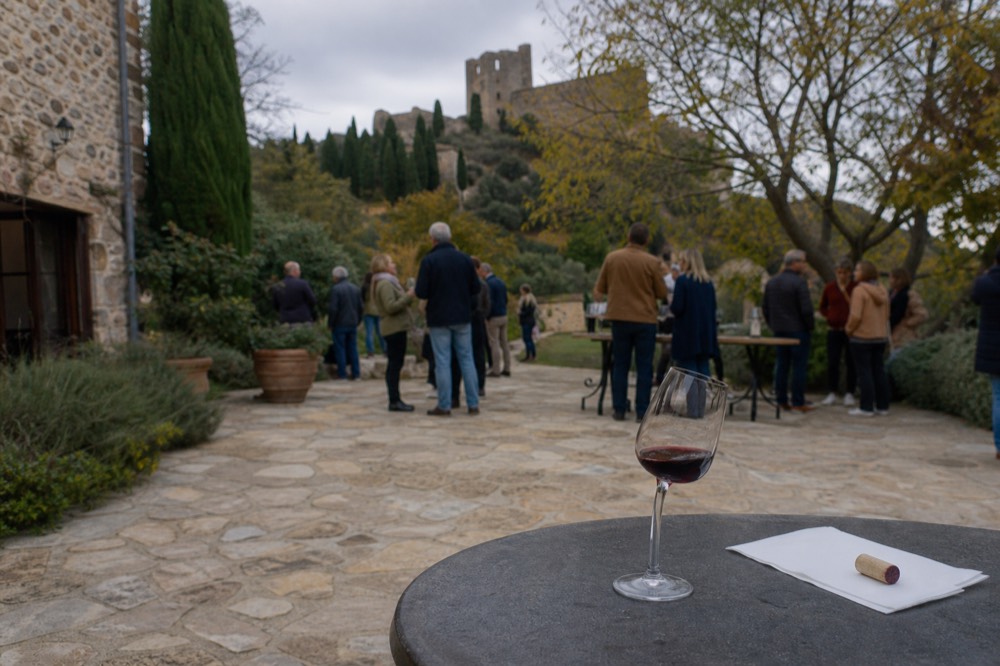
The 4-Hour Half-Day Châteauneuf-du-Pape tour from Avignon illustrates the point. It runs $103.36 per person, is rated 4.8 across 456 reviews, includes the tastings in the price, and carries free cancellation. Guests on it are picked up in central Avignon, often mid-morning after breakfast in a hotel or café, and the van population is overwhelmingly jeans, shorts in summer, and comfortable shoes. Guests on these tours typically wear jeans and walking shoes, and nobody at the cellar door minds.
If you want the fuller version of that day, the Three-Estates Châteauneuf-du-Pape Day from Avignon runs 7 hours at $207 per person, rated 5 across 553 reviews with tastings included, and the dress reality is identical. More estates means more gravel, so if anything the case for solid shoes gets stronger, not the case for smarter clothes.
The one format where attire genuinely shifts is the private day. The Private Gigondas And Châteauneuf-du-Pape Day from Carpentras costs $1,219.42 per group for up to 8 people, rated 5 across 1 review, with tastings paid separately at the cellar door. Nobody requires a jacket, but the pace, the chauffeur-guide format and often a long lunch mean many guests choose chinos or a dress over denim. That is a social choice, not a rule.
What About Summer Heat, The Mistral And Winter Layers?
Dress for two climates in one day: hot sun outdoors and cool cellars indoors, plus a windproof layer from October to April. Summer calls for light colours, a hat and breathable fabrics over your jeans. Winter calls for a sweater and a real coat, because mistral days are dry, sunny and surprisingly cold on an exposed terrace.
Summer in Provence is straightforwardly hot, and the July and August peak is real: for accommodation booked through rental platforms in 2022, 44% of nights in the region fell in July and August against 37% nationally, and July is the peak month for non-resident visitors. That is a platform-rental figure, not a wine-tour figure, but it tells you when the cellars are busiest and when the terrace tasting at 2 p.m. will feel hottest. Light jeans or a lighter fabric entirely, plus sun protection, is the sane summer answer.
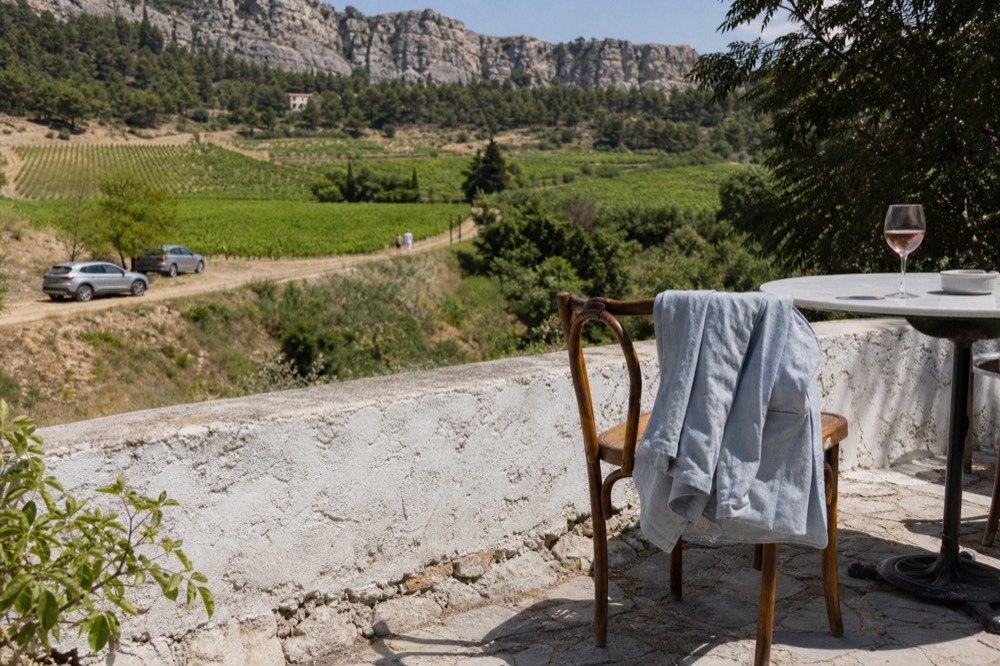
The mistral deserves a second mention because it changes what "layers" means. Mistral days are dry and usually very sunny, because the wind clears the cloud, so the sky tells you nothing about the temperature. The wind runs down the lower Rhône valley and across Provence to the coast, averaging around 50 km/h with gusts to 80 or 100 km/h, strongest between Orange, Avignon, Istres and Arles. A sunny April terrace tasting in Châteauneuf-du-Pape with the mistral up is a genuinely cold place to stand in a T-shirt, and a windproof outer layer is the fix. The wind is not a reason a tour gets cancelled, and it is not a rain risk, it is a comfort problem you can dress your way out of.
Cellar temperature is the third climate. Underground or thick-stone barrel rooms sit noticeably cooler than the afternoon air, and tours move you between the two repeatedly. A layer that ties around your waist or fits in the day bag solves it. This is also why jeans earn their place: denim tolerates the temperature swings and the surfaces better than almost anything else packable.
What Should You Not Wear To A Wine Tour?
Skip strong fragrance, heels and slick soles, anything you cannot walk on gravel in, and pure white clothes if a vineyard walk or harvest-season visit is on the itinerary. Beyond that, almost nothing is off-limits: shorts, jeans, dresses and trainers all appear on every tour. The only true dress-code rule in France is legal, not social, and it is about age, not attire.
The fragrance rule is the one with a technical basis, as covered earlier: aroma is most of flavour, so scents on your skin fight the wine. Everything else on the avoid list is mechanical. Heels and slick soles fail on gravel and damp stone. Very loose long scarves or baggy sleeves can drag across a tasting bar. Pure white fabric is a risk during the harvest window, when the second half of August into September sees the earliest parcels picked and crush residue finds its way onto surfaces, and it is a risk year-round if red wine gets sloshed at a crowded bar.
The legal point is worth knowing because it occasionally confuses families. The legal age to be sold or served alcohol anywhere in France, cellar door included, is 18, under Article L3342-1 of the Code de la santé publique, and the person pouring is required by law to ask for proof of age. That is the only rule at a French tasting bar that is written down in statute. There is no statute on what you wear to it.
For anyone turning the outfit question into a broader trip-planning question, the practical pages on this site carry the rest: what to expect from tastings around Aix-en-Provence, how to choose the right wine tour from Avignon, and how a half-day Châteauneuf-du-Pape visit actually spends its hours. Dress casually for all of them.
Whichever of these formats you land on, the clothing calculus does not change. The three-estate day simply repeats the gravel-and-terrace cycle three times instead of twice, so the same jeans, the same grip-soled shoes and the same tie-around layer serve you from the first cellar to the last. The private Gigondas and Châteauneuf day adds a longer drive and usually a restaurant stop, which is the one moment on any of these itineraries where slightly smarter shoes feel like a natural upgrade rather than a requirement.
The short version of everything above: jeans are welcome everywhere from a three-hour Aix tasting to a private full-day Rhône drive, closed shoes with grip matter more than any fabric choice, a windproof layer earns its place from October to April, and skipping perfume is the only rule with a technical basis behind it. Here are the specific questions people ask most often.
Common Questions About What To Wear To A Wine Tour
Can You Wear Jeans To A Wine Tour?
Yes. Jeans are standard guest attire on wine tours across Provence, from three-hour tastings to full-day small-group loops. No operator on the region's tour roster publishes a dress code, and dark jeans with a plain top and closed shoes are the most common outfit you will see on any departure.
Do You Need To Dress Up For A Châteauneuf-du-Pape Tasting?
No. The appellation's prestige is historic, one of France's first six AOCs from 15 May 1936, but the visitor experience is a working village estate with gravel courtyards and small-group tours. Jeans and trainers are normal. Only private chauffeur-driven days, where the format itself is more formal, lead many guests to dress up slightly.
Are Sneakers Acceptable At A Winery?
Yes, and they are the most practical choice. Vineyard rows are gravel or earth, cellar floors are stone or concrete and often damp, and stairs between tank levels are steep. Trainers handle all of it. Leather sneakers or ankle boots look slightly smarter if you want that.
Should You Wear Perfume On A Wine Tour?
No. Aroma is most of what you perceive as flavour, and a strong fragrance on you or a neighbour competes directly with the glass. Tasting-room staff and serious takers notice it. Unscented deodorant and no cologne is the respectful baseline.
What Should You Wear On A Wine Tour In Winter?
Layers, with a windproof outer layer. The mistral blows hardest from winter into spring, averaging around 50 km/h with gusts of 80 to 100 km/h, and it hits the Avignon and Châteauneuf-du-Pape side hardest. Mistral days are dry and sunny but cold on an exposed terrace, so bring a real coat and a sweater you can shed indoors.
Can You Wear Shorts And Sandals On A Summer Wine Tour?
Shorts, yes, they are common in July and August. Sandals are fine if they are flat and securely fastened; flip-flops are not, because gravel driveways and damp cellar floors make them a slipping and stubbing hazard. Prioritise grip over style.