Is It Worth Going To Aix-en-Provence?
A straight answer on whether Aix-en-Provence deserves a place on your Provence itinerary, with wine tours, day-trip distances and what the town actually offers.
Is It Worth Going To Aix-en-Provence?
Yes, for most travellers Aix-en-Provence is worth two or three days, and it is arguably the best small-city base in Provence for wine touring. The town itself is a compact baroque ensemble of limestone mansions, markets and fountains, and it sits inside its own appellation, Coteaux d'Aix-en-Provence, with the Sainte-Victoire vineyards 24.5 km and roughly 31 minutes away by road. It is not the cheapest stop in the region, and anyone chasing big monuments or beaches should look elsewhere, but the combination of a genuinely beautiful old centre and wine country on three sides is hard to beat.
The case for Aix starts with what it is not. It is not a village that empties at dusk, and it is not a city the size of Marseille. Aix is big enough to sustain restaurants, a daily food market and an evening street life that smaller Luberon villages simply cannot offer, while the historic centre stays walkable end to end in about twenty minutes.
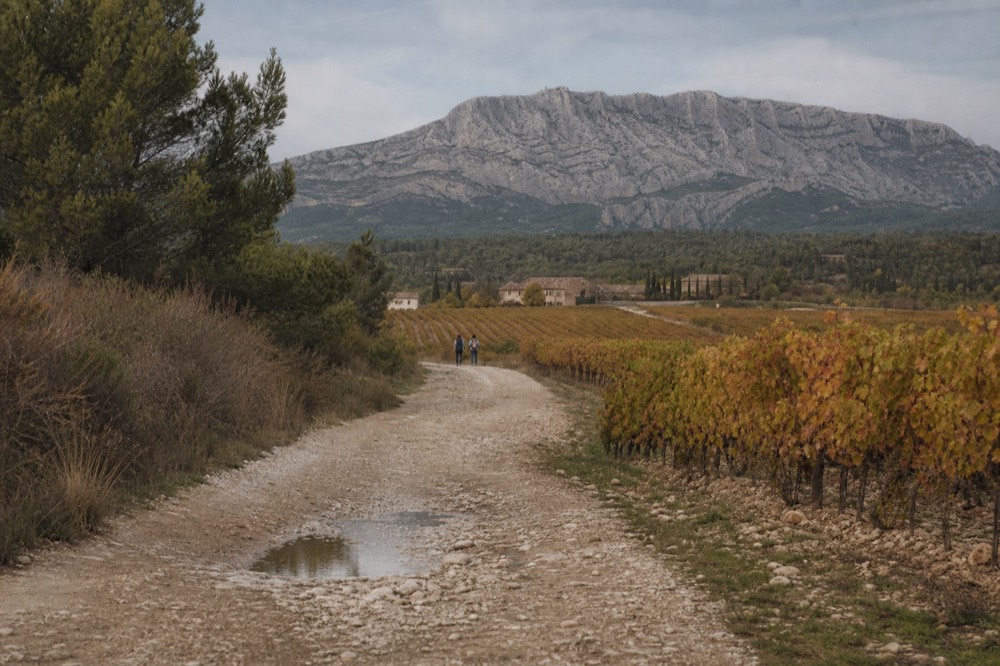
The town's identity is unusually coherent for somewhere so visited. Paul Cézanne was born here, lived most of his life here, and painted the Sainte-Victoire mountain that dominates the eastern skyline dozens of times. His studio is preserved as a museum, and the mountain itself is visible from streets all over town, a permanent reminder that the landscape you drink wine under is the same one that shaped modern painting.
For wine travellers, the geography is the real argument. Aix sits between the Coteaux d'Aix-en-Provence appellation that surrounds it, the Sainte-Victoire sub-denomination of Côtes de Provence to the east, and the Luberon to the northwest. Cassis and Bandol are reachable on a half-day tour. Châteauneuf-du-Pape is the one honest caveat: 89.3 km and about 67 minutes of free-flow driving each way, which is why most Rhône-focused tours depart from Avignon instead, just 17.4 km from the village.
If you are weighing Aix against other bases, the tours below are the three most-booked departures from the town, and they cover the realistic range: a short tasting route, a half-day with more depth, and a private full day.
What Is Aix-en-Provence Actually Famous For?
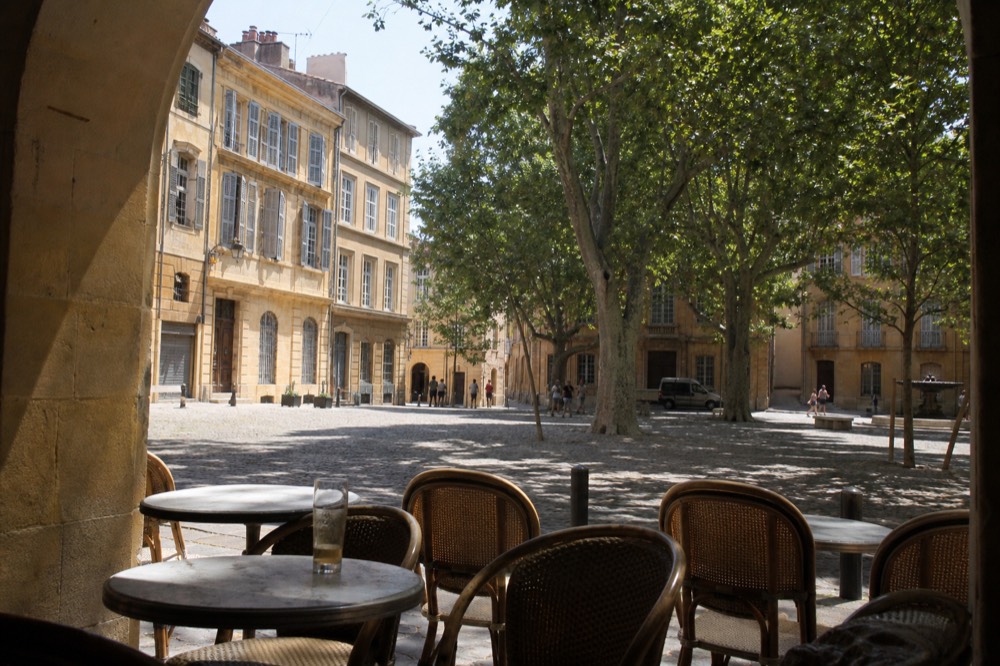
Aix is famous for three things: Cézanne, its fountains and markets, and being a university town with a baroque old centre built from local limestone. The Cours Mirabeau, a tree-lined avenue laid out in the seventeenth century, divides the medieval quarter from the Mazarin district, and the town's daily food market on Place Richelme runs every morning of the year. Add the Granet Museum's painting collection and a festival calendar anchored by the July International Lyric Festival, and you have the full picture.
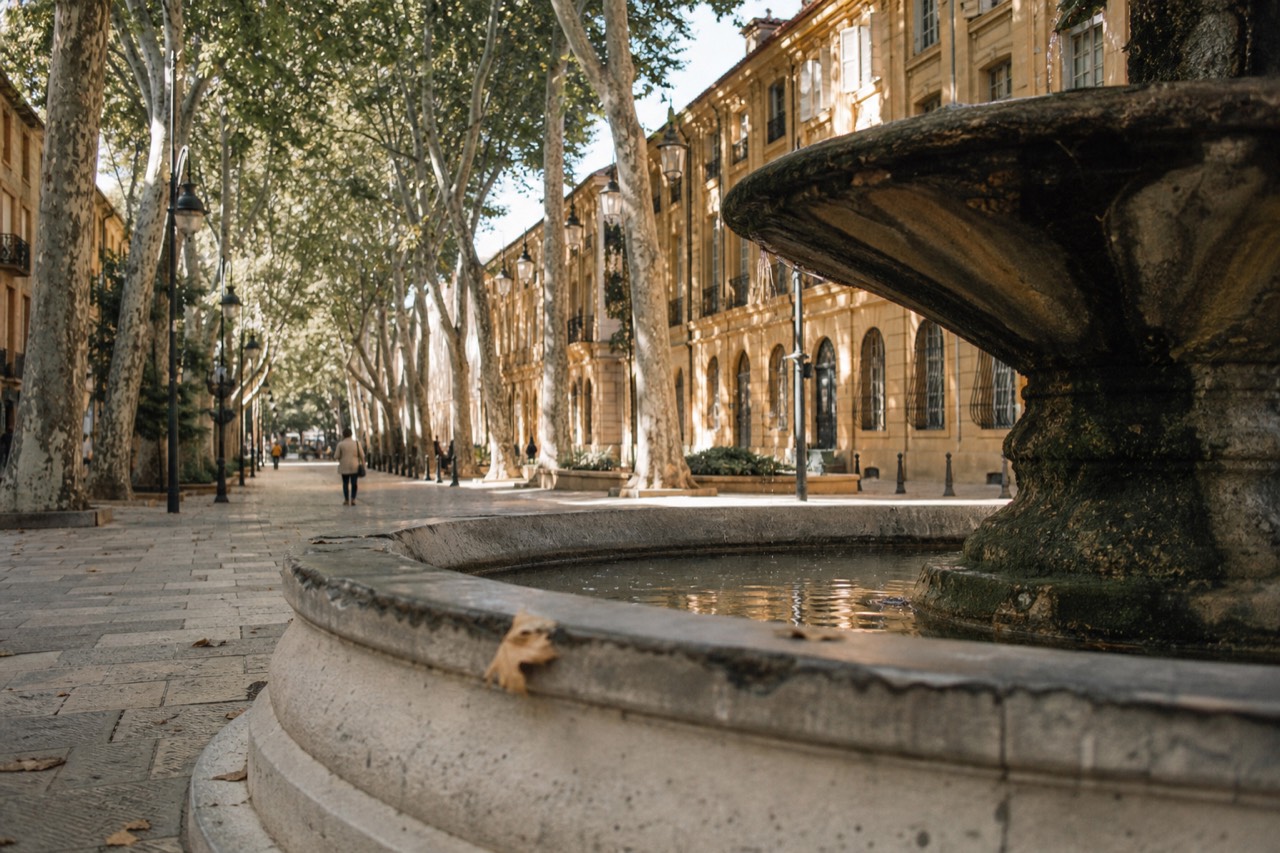
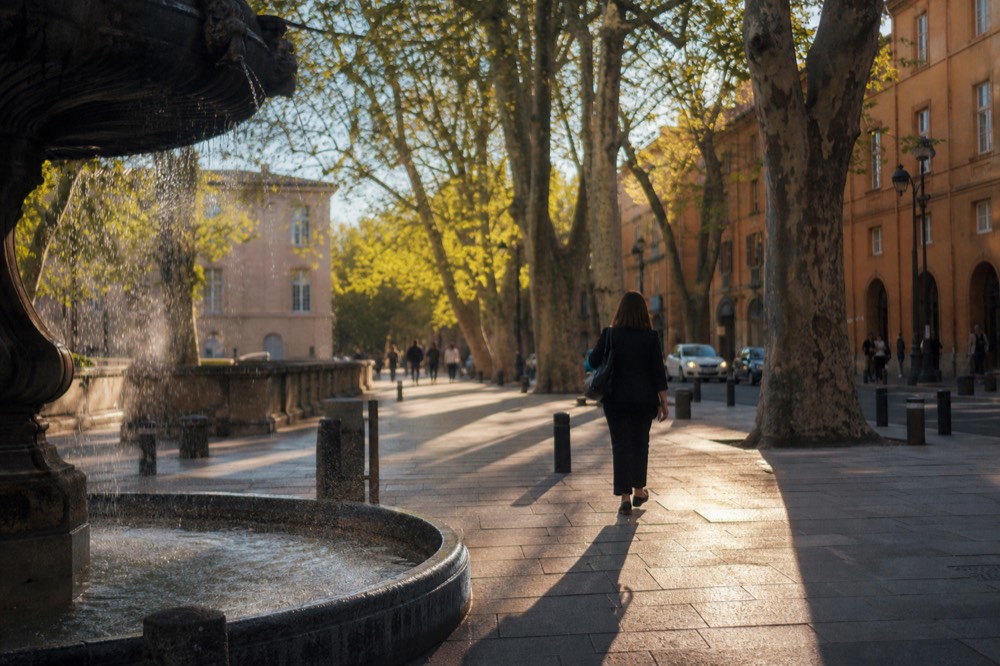
The fountain claim is not tourist-office padding. Aix was founded by the Romans around its thermal springs, and water has shaped the town ever since: the Rotonde fountain at the bottom of the Cours Mirabeau, the moss-covered four-dolphins fountain halfway along it, and dozens of smaller squares each with their own basin. The Cours Mirabeau itself is the single most pleasant twenty-minute walk in the region, plane trees on both sides, cafés underneath, book stalls on Saturdays.
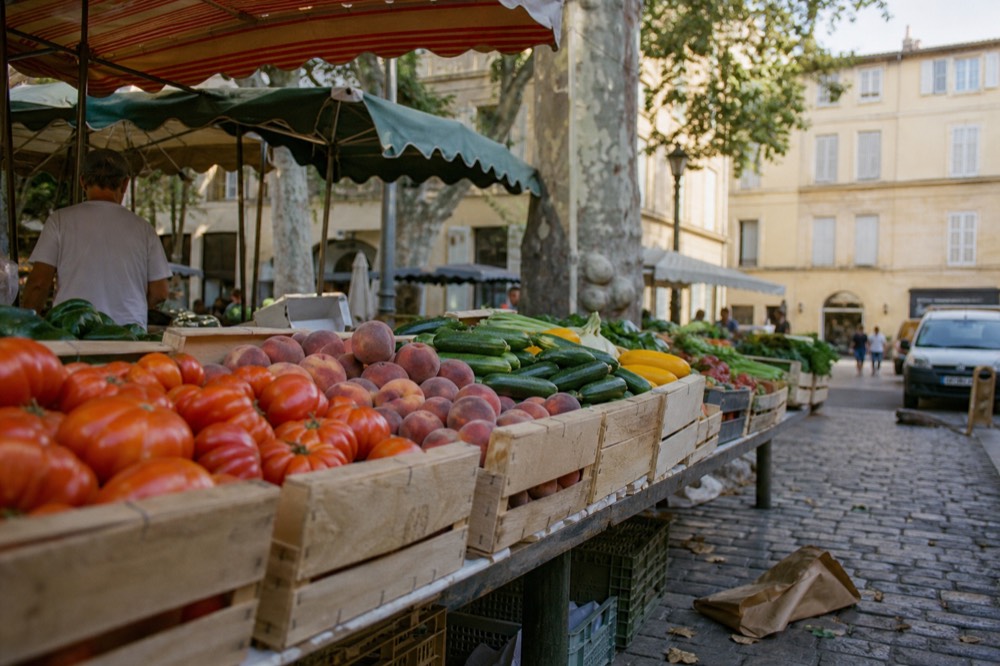
The market culture matters more to a visitor than any single monument. Place Richelme hosts a food market daily, while Place des Prêcheurs runs a larger one on Tuesday, Thursday and Saturday mornings, selling everything from Provençal herbs to the calissons d'Aix, the almond-paste sweet that is the town's signature confection. If your question is what food the town is known for, the calisson is the answer, and every shop on the Cours will let you taste before buying.
The university gives Aix a rhythm that pure tourist towns lack. Tens of thousands of students mean the restaurants, bars and bookshops stay open year-round, and the town does not shut down between festivals the way some coastal resorts do. It also means September and October feel lively rather than sad, which is worth knowing if you are planning a harvest-season trip.
Is Aix-en-Provence A Good Base For Wine Tours?
Yes, and it is one of the best in Provence. Ten small-group and private wine tours depart from Aix, more than from any other city on this site's roster except Avignon, covering Coteaux d'Aix, the Sainte-Victoire route, the Luberon, Bandol and Cassis, and even Châteauneuf-du-Pape. Tastings are included in the price on every Aix departure. The one weak spot is the southern Rhône: Aix to Châteauneuf-du-Pape is 89.3 km each way, so anyone whose heart is set on that appellation should read our guide to Châteauneuf-du-Pape wine tours and consider staying in Avignon instead.
The appellation arithmetic is worth spelling out. Coteaux d'Aix-en-Provence, recognised by the décret of 24 December 1985, wraps around the town on nearly every side, so even a short tour puts you in vines within half an hour. Drive east and you cross into the Sainte-Victoire sub-denomination of Côtes de Provence, approved by the INAO national committee in May 2004, where the vineyards sit under the mountain Cézanne painted. Northwest takes you into the Luberon, administratively a Rhône valley appellation rather than one of the three "Vins de Provence" AOPs, but sold, fairly, as a classic Provençal day out.
The most popular short option is the Sainte-Victoire Route tour, a three-hour small-group tasting trip at $114.97 per person, rated 4.8 across 273 reviews, with tastings included in the price and free cancellation. It is the tour we point first-time visitors towards, because it answers the wine question in an afternoon and leaves the rest of the day for the town. If you want a deeper read on the region's wines before choosing, start with our Provence wine tasting guide.
For travellers with more time, the half-day and full-day options change the calculus. The Half-Day Tasting tour runs 3.5 hours at $156.78 per person with a 4.7 rating across 111 reviews, while the Cézanne Country tour, also three hours from Aix at $117.01 per person, is rated 4.9 across 288 reviews and pairs the vineyards with the painter's landscape. At the top end, a private full day with pickup included runs $562.33 per person and carries a perfect 5 rating, though on a small base of 33 reviews.
One practical note that belongs in this section and nowhere else: France's drink-driving limit is 0.5 g/L of blood, and on a probationary licence, which covers anyone who passed their test in the last three years, it drops to 0.2 g/L, effectively zero glasses. That is the honest, statutory reason a driven tour beats a hire car on a tasting day, and it applies at every cellar door in the region.
Wondering Which Aix Tour Fits Your Trip?
Every Aix departure on this site offers free cancellation, so you can lock in a date now and adjust later.
How Many Days Should You Spend In Aix?
Two full days is the sweet spot for most visitors: one for the town itself, the Cours Mirabeau, the markets, Cézanne's studio and the Granet Museum, and one for a wine tour into the surrounding appellations. Three days lets you add a Luberon villages day or a second tasting route without rushing, while one day is enough to see the old centre but leaves the wine country out entirely. Anyone using Aix purely as a base for day trips could happily stay four or five.
The town day is denser than it looks. The old centre runs from the Rotonde fountain north through the Cours Mirabeau to the Quartier Mazarin, with Cézanne's studio at the eastern edge and the Granet Museum, which holds a serious collection including works by Cézanne himself, in the Mazarin district. Add a long market breakfast and an evening on a terrace, and the day is full without anything that feels like work.
The second day is where the region opens up. A three-hour tasting tour still leaves the afternoon free, so a two-day visitor can taste in the morning, see the studio in the late afternoon and finish on the Cours. That is a genuinely complete Aix weekend, and it is the itinerary we would recommend to a first-timer who is unsure whether the town justifies the journey.
If you are stretching to three days or more, the decisions get interesting. The 10-Hour Luberon Villages and Wine tour from Aix, $209.04 per person and rated 4.9 across 65 reviews, combines Bonnieux and the hill villages with cellar stops, and it eats a whole day in the best way. Alternatively, a second question worth settling early is where to sleep, and our piece on the best town to stay in Provence compares Aix with the alternatives.
What Are The Downsides Of Aix-en-Provence?
The honest downsides are cost, summer crowds and traffic: Aix is one of the pricier towns in Provence for hotels and dining, July and August bring the region's peak visitor pressure, and driving into the old centre is restricted and frustrating. It also has no beach and no single blockbuster monument, so travellers chasing either will be disappointed. None of these are reasons to skip it, but they are reasons to time and plan the visit.
The cost point is real. Aix is a prosperous town with a wealthy resident population, and restaurant and hotel prices reflect that more than in, say, Avignon or the Luberon villages. The compensation is that the market food is inexpensive and excellent, and the town's best experiences, walking the Cours and the fountains, cost nothing at all. Our write-up of free things to do in Aix shows how much of the town can be enjoyed without spending much.
Summer pressure is the second caveat, and it is a regional one rather than an Aix one. INSEE counts the summer tourist season as April to September, and in that 2025 window Provence-Alpes-Côte d'Azur recorded 43.1 million nights, up 1.9% on 2024. Within the region, 44% of short-term platform rental nights in 2022 fell in July and August, against 37% nationally, a figure that applies to platform bookings only, not to all accommodation, but it captures the shape of the crush: July and August are busy, and May, June and September are not.
Traffic and parking deserve a plain warning. The old centre is largely pedestrian or permit-restricted, hotels rarely have simple parking, and the ring roads jam at peak times. The practical answer is to arrive by train, Aix has a TGV station with connections to the centre, or to book accommodation with parking and walk everywhere once you are in. This is also a quiet argument for taking organised wine tours rather than driving yourself out of the city each day.
When Is The Best Time To Visit Aix For A Wine Tour?
May, June, September and early October are the best months: warm, less crowded than July and August, and close to the harvest, which begins in the earliest parcels in the second half of August and runs into September. Spring visitors should pack a windproof layer, because the mistral blows hardest in winter and spring, averaging around 50 km/h with gusts of 80 to 100 km/h. Summer works too, if you accept the crowds and book ahead.
The mistral point deserves its sentence of explanation, because it surprises people. The wind runs down the Rhône valley and across Provence, strongest between Orange, Avignon, Istres and Arles, and an episode can last several days or more than a week. The useful detail for Aix travellers: mistral days are dry and usually very sunny, because the wind clears the cloud. It is a comfort issue, a cold wind on an outdoor tasting terrace, not a rain risk, and it is more likely on a spring Rhône-side trip than on a summer Sainte-Victoire afternoon.
Harvest season is the most atmospheric window. The CIVP, the Provençal wine interprofession, reported the first secateur cuts of the 2025 harvest around 12 August in the earliest parcels, with later sectors picking through mid-September. A September visit therefore coincides with the tail of the vendange in the surrounding appellations, and the vineyards look at their best, though a precise region-wide start and end date does not exist and shifts every year.
One thing not to plan around is cellar opening hours. There is no region-wide schedule; opening patterns are set estate by estate, and no official body publishes typical hours. A booked tour arrives at a cellar the operator has arranged, which is the real reason booking beats turning up on spec, whatever the month.
Aix Versus The Alternatives: How Does It Compare?
Aix beats Avignon for wine-country variety within an hour's drive and beats the coast towns for atmosphere, but loses to Avignon for Châteauneuf-du-Pape access and to the Luberon villages for postcard calm. Marseille is cheaper and closer to Cassis and Bandol, at 25.7 km and 54.9 km respectively, while Aix is 31.8 km from Marseille itself. The right base depends on which appellations you actually want to taste.
Here is the honest comparison in one table, using real road distances and free-flow drive times:
| Base | Best for | Key wine distance | Trade-off |
|---|---|---|---|
| Aix-en-Provence | Coteaux d'Aix, Sainte-Victoire, Luberon | Puyloubier 24.5 km / 31 min | Châteauneuf-du-Pape 89.3 km each way |
| Avignon | Châteauneuf-du-Pape, Gigondas, Vacqueyras | Châteauneuf-du-Pape 17.4 km / 23 min | Less charm as a town, fewer rosé routes |
| Marseille | Cassis, Bandol | Cassis 25.7 km / 33 min | Big city, less walkable centre |
| Nice or Cannes | Côtes de Provence heartland | Les Arcs 85.6 km / 68 min from Nice | Long transfers to classic Provence |
The pattern in that table is the whole argument of this article compressed. Aix is the compromise that compromises least: it is not the closest town to any single famous appellation except its own, but it is within striking distance of more of them than any other base. If your trip is Châteauneuf-first, our piece on whether it is worth staying in Châteauneuf-du-Pape itself makes the case for Avignon instead.
For travellers already committed to the region rather than one appellation, the Aix roster covers the spread. The private full day from Aix, $562.33 per person with pickup included and a 5 rating across 33 reviews, is the flexible option for anyone who wants to set their own route, and it is the tour we would point a group with strong opinions towards.
For readers still deciding between the two most-loved towns in the region, our comparison of Avignon or Aix-en-Provence works through the trade-offs in detail, and the wider question of how many days are enough for Provence is worth settling before you book anything.
The Verdict On Aix-en-Provence
Aix-en-Provence is worth going to for the large majority of travellers: it pairs one of France's most pleasant medium-sized old towns with the best all-round wine-tour base in Provence, and two or three days is enough to do both properly. Skip it only if your priority is a single Rhône appellation, a beach, or the smallest possible budget.
The town rewards the traveller who wants a base rather than a checklist. Mornings at the market, afternoons in vines under Sainte-Victoire, evenings on the Cours Mirabeau: that loop is the Aix experience, and it is one of the few Provençal itineraries that genuinely improves when you add wine country to it rather than just extending it. Provence Wine Tours exists precisely because that combination, town plus vines, is what most visitors to this region are actually shopping for.
Before you go, the three departures below are the ones we would shortlist from Aix, and every one of them includes tastings in the price with free cancellation.
Most questions about Aix come down to time, budget and which wines you want to taste, and the short answers are: two or three days, more than you might expect, and everything except the southern Rhône. The details below cover the questions travellers ask most often before booking.
Common Questions About Visiting Aix-en-Provence
Is It Worth Going To Aix-en-Provence?
Yes, for most travellers. Aix combines a beautiful baroque old centre, a daily market culture, the Cézanne trail and its own surrounding wine appellation, Coteaux d'Aix-en-Provence. Two or three days is the right length, with one day for the town and one or two for wine tours into Sainte-Victoire, the Luberon or Bandol and Cassis.
How Many Days Do You Need In Aix-en-Provence?
Two full days covers the town and one wine tour. Three days lets you add a Luberon villages day or a second tasting route. One day is enough for the old centre, the Cours Mirabeau and the markets, but leaves the surrounding wine country out entirely.
Is Aix-en-Provence A Good Base For Wine Tours?
Yes. Ten small-group and private tours depart from Aix, covering Coteaux d'Aix, the Sainte-Victoire route, the Luberon, Bandol and Cassis, and Châteauneuf-du-Pape. The one caveat is the southern Rhône: Châteauneuf-du-Pape is 89.3 km and about 67 minutes of driving each way, so Avignon is the better base for that appellation.
What Is Aix-en-Provence Famous For?
Three things: Paul Cézanne, who was born there and painted the nearby Sainte-Victoire mountain repeatedly; its fountains and daily markets, including the year-round food market on Place Richelme; and the calisson d'Aix, the almond-paste sweet that is the town's signature confection.
Is Aix-en-Provence Expensive?
It is one of the pricier towns in Provence for hotels and restaurants, reflecting its wealthy resident population. Market food and the town's best free experiences, such as walking the Cours Mirabeau and the fountain squares, cost little or nothing.
When Is The Best Time To Visit Aix-en-Provence?
May, June, September and early October: warm, quieter than July and August, and close to the harvest, which starts in the earliest parcels in the second half of August and runs into September. Spring visitors should bring a windproof layer for the mistral, which averages around 50 km/h and is strongest in winter and spring.