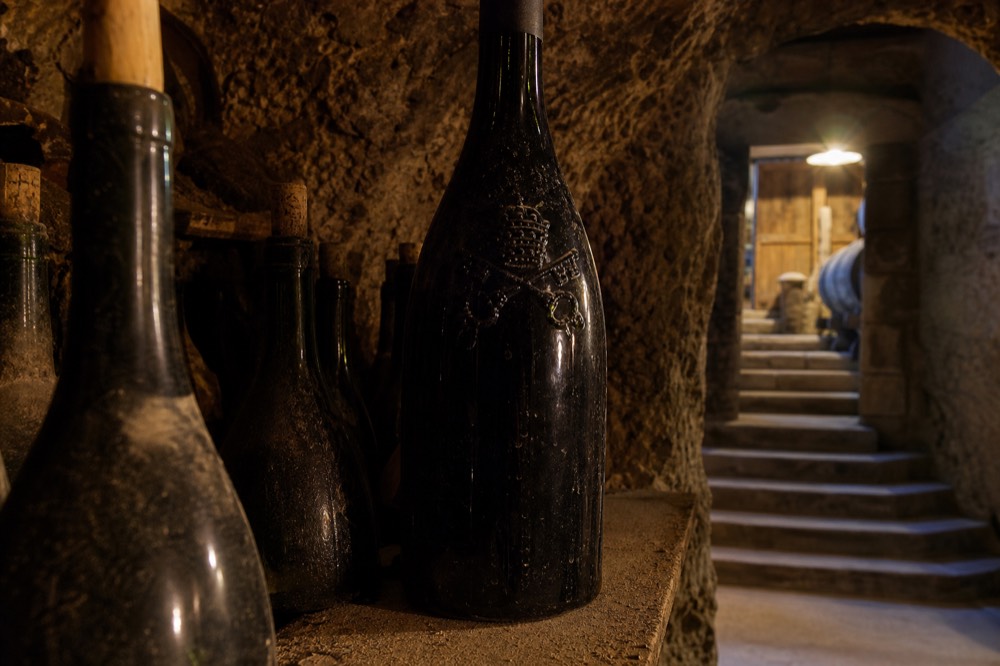
Châteauneuf-du-Pape Wine Tours: Best Tastings & Day Trips From Avignon
Châteauneuf-du-Pape is the heavyweight of the southern Rhône, a village whose name on a bottle still commands the table. This guide breaks down the best wine tours from Avignon, the honest reason a designated driver beats a rental car, and what you'll actually taste at the cellar door.
Short answer
The best Châteauneuf-du-Pape wine tour is a half-day small-group trip from Avignon, visiting two or three domaines with all tasting fees included, for around $103.36 per person. For a deeper dive, a full-day three-estate tour adds a restaurant lunch and covers more of the appellation's five communes.
What Makes Châteauneuf-du-Pape A Legendary Wine Appellation?
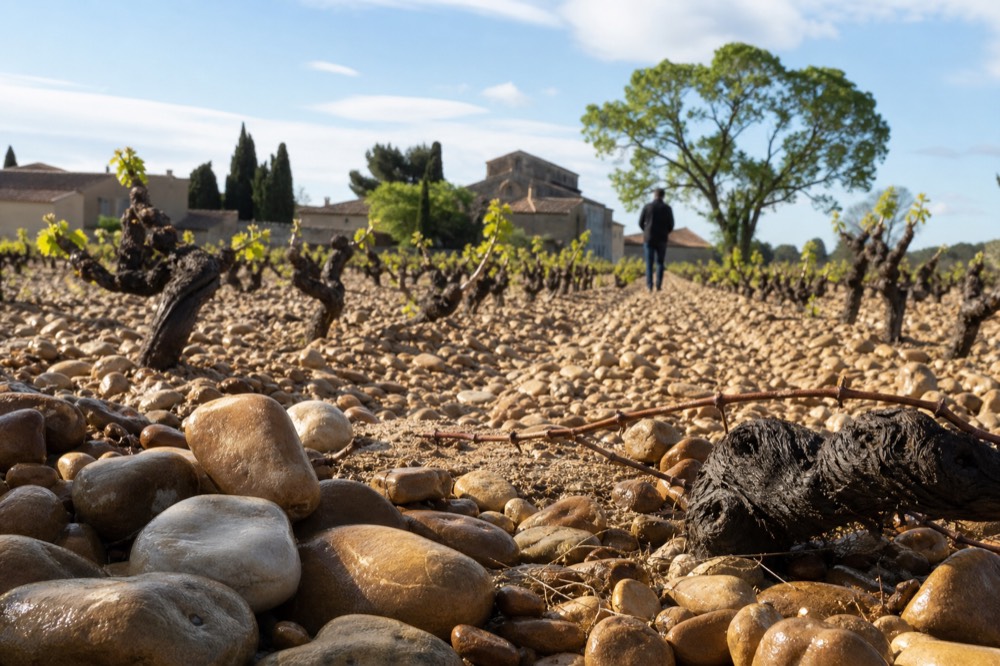
Châteauneuf-du-Pape was one of France's first six AOCs, decreed on 15 May 1936, and its current spec lists 18 grape entries, collapsing to the familiar 13 when you group colour mutations. The vineyards sit on a plateau of galets roulés, large rounded stones that store heat and ripen Grenache to alcohol levels that routinely exceed 14%.
The village's reputation was built long before the AOC system existed. In 1923, Baron Le Roy de Boiseaumarie and local growers founded the first syndicate to defend the origin, drafting rules on permitted grapes, minimum alcohol, and fruit sorting. Those rules fed directly into the 1936 decree, but the appellation was not "the first AOC" as often claimed: it was one of six created on the same day, alongside Cassis, Tavel, Arbois, Cognac, and Monbazillac.
The appellation covers about 3,200 hectares (a 2010 figure) across five communes: Châteauneuf-du-Pape itself, plus Courthézon, Orange, Bédarrides, and Sorgues. The famous galets roulés are quartzite stones left by the Rhône glacier, and they're the reason Grenache thrives here. At Provence Wine Tours we've found that first-time visitors are often surprised that white Châteauneuf exists, but the spec permits both colours, and the whites, led by Grenache Blanc, Clairette, and Roussanne, can be outstanding. For a wider look at the region's appellations, read our guide to the Provence wine region.
The 18-entries count includes separate listings for each colour mutation of Grenache, Clairette, and Piquepoul. When you collapse those, you get 13 distinct grape varieties, a number that still makes Châteauneuf-du-Pape the most grape-diverse appellation in France. The table below shows the full set.
| Grape (colour mutations grouped) | Colour | Typical role |
|---|---|---|
| Grenache (Noir, Blanc, Gris) | Red, White | Backbone of reds, warmth and red fruit; whites are full-bodied |
| Syrah | Red | Structure, spice, and colour |
| Mourvèdre | Red | Tannin, gamey notes, ageability |
| Cinsaut | Red | Softness, used in rosé |
| Counoise | Red | Bright acidity, lift in blends |
| Muscardin | Red | Floral, rare |
| Vaccarèse (Brun Argenté) | Red | Light, peppery |
| Terret Noir | Red | Freshness |
| Clairette (Blanche, Rose) | White, Rosé | Whites: body and alcohol; rosé: blending |
| Bourboulenc | White | Freshness, citrus |
| Picardan | White | Delicate, low alcohol |
| Piquepoul (Blanc, Gris, Noir) | White, Red | Acidity, used in whites and occasionally reds |
| Roussanne | White | Aromatics, weight |
The breadth of the grape list is not a historical accident but a direct inheritance from the 1923 syndicate rules, which insisted on permitted varieties rather than a single mandated grape. That choice still shapes how the appellation feels today. Because Grenache, Syrah, and Mourvèdre dominate the red plantings while the remaining varieties sit in small pockets, every cellar in the village works with a slightly different palette, and the same blend of thirteen possibilities can produce anything from a soft, early-drinking red to a wine built for decades. The colour mutations matter in practice, too: Grenache Gris and Piquepoul Gris are rarely bottled on their own, but their separate entries in the spec mean growers can keep old, mixed parcels in production rather than grubbing them up to satisfy a narrower rulebook.
The galets roulés themselves deserve a closer look, because they do more than one job. The quartzite stones absorb the southern Rhône sun during the day and release that stored warmth through the night, which keeps the ripening process going after sunset and pushes Grenache to those alcohol levels above 14%. They also form a protective layer over the soil, helping the vines survive the fierce summer heat and the mistral, the northerly wind that sweeps down the Rhône corridor and keeps the vineyards dry. That dryness matters for grape health: a windy, low-humidity site means less disease pressure, which is one reason the appellation has historically been farmed with relative ease even in difficult vintages.
For visitors, the practical takeaway from the 2010 INAO snapshot is scale. Roughly 320 holdings share about 3,200 hectares, which averages out near ten hectares per holding, yet the spread is wide: some domaines farm tiny parcels of old-vine Grenache among the galets, while larger operations cover substantial stretches across more than one of the five communes. Tasting your way through the village, you will notice that wines from the stone-covered plateau around Châteauneuf-du-Pape itself tend to show the warmth and richness the galets encourage, while sites in Courthézon, Orange, Bédarrides, and Sorgues bring their own soil variations into the glass. The whites are the insider's pour: ask for a Grenache Blanc, Clairette, or Roussanne-based bottle at the cellar door, and you will taste a side of the appellation that most day-trippers never discover.
The legacy of Baron Le Roy de Boiseaumarie reaches beyond the village limits. His 1923 syndicate did not just protect a local name; it provided a working model of origin-based rules that the wider French system later adopted, which is why Châteauneuf-du-Pape is so often described as a testing ground for the AOC concept itself. Visitors who want to see that history up close can still walk the village streets, where the ruins of the medieval château that gave the appellation its name sit above the vineyards, a reminder that wine and place have been linked here for centuries.
If you are planning a tasting itinerary, the appellation's small size works in your favour (see Tasting Costs & Planning). The five communes sit close together, so a single day can comfortably combine a cellar on the galet-strewn plateau near the village with a second stop in Courthézon or Orange, where the soils shift and the wines show it. Ask each cellar about the share of Grenache in the blend and whether any of the minor varieties, such as Counoise or Terret Noir, appear in the bottle: the answers vary widely from domaine to domaine, and they tell you more about the wine in the glass than any label alone. Finish with a white, ideally one built on Roussanne, and you will leave with a fuller picture of what those thirteen grapes, and the rules written in 1923, still make possible.
Why Take A Guided Wine Tour Instead Of Driving Yourself?
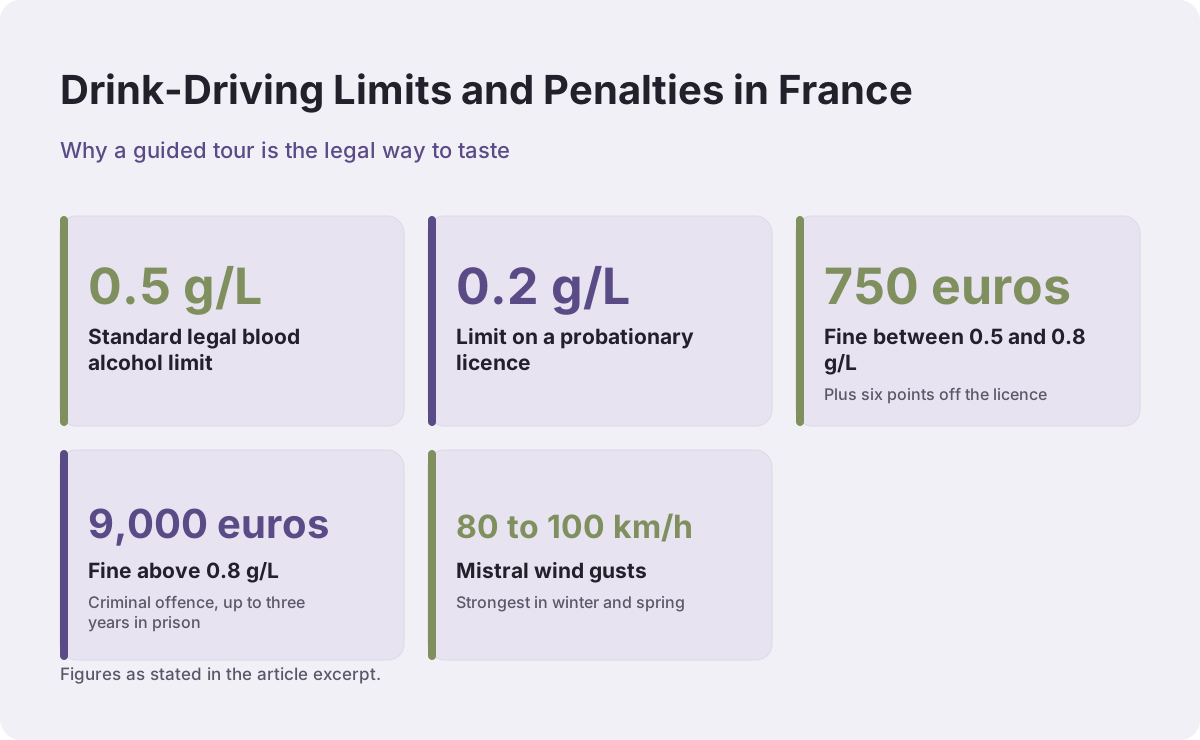
France's drink-driving limit is 0.5 g/L of blood, but for anyone on a probationary licence (the first three years after passing the test) it drops to 0.2 g/L, effectively zero glasses. A single tasting pour at a cellar door puts a driver over the limit, making a guided tour the only legal way to taste across multiple domaines without risking a fine, a licence suspension, or worse.
The legal reality is stark. A driver caught between 0.5 and 0.8 g/L faces a fine of up to 750 euros and six points off their licence. Above 0.8 g/L, it becomes a criminal offence with a fine of up to 9,000 euros, up to three years in prison, and possible vehicle confiscation. For the growing number of visitors on a probationary licence, the 0.2 g/L threshold is reached after a single small glass of wine. The penalty for selling alcohol to a minor is 7,500 euros, and the legal drinking age is 18.
A guided tour removes that worry entirely. The operator handles navigation on narrow vineyard roads, books the appointments at domaines that don't always welcome drop-in visitors, and provides context on the wines you're tasting. Tours leave from central meeting points in Avignon, so a rental car is optional. The mistral wind, which can gust to 80 to 100 km/h, is strongest in winter and spring, and a guide knows which domaines offer sheltered tastings.
The half-day tour is the most popular choice for a reason: it covers two well-chosen domaines, returns by early afternoon, and costs $103.36 per person. The seven-hour three-estate tour runs at $207 per person, while the nine-hour full day with lunch is $197.43, while the private day out to Gigondas and Châteauneuf-du-Pape gives you a chauffeur-guide and a completely tailored itinerary for $1,219.42 per group of up to eight.
What Are The Best Châteauneuf-du-Pape Wine Tours From Avignon?
The top-rated options from Avignon are a 4-hour half-day tour ($103.36 per person, 4.8 stars across 456 reviews), a 7-hour three-estate tour ($207 per person, 5 stars across 553 reviews) and a 9-hour full-day tour with lunch ($197.43 per person, 4.8 stars across 89 reviews). Both are small-group, include all tasting fees, and offer free cancellation.
The half-day tour departs in the morning or afternoon and visits two domaines. It's the most booked Châteauneuf-du-Pape experience on the live listings, and the 4.8 rating across 456 reviews reflects consistent quality. The guide explains the appellation's history, the galets roulés, and the 13 grapes as you taste.
For a quick but thorough introduction, the half-day tour is the most popular choice. Check availability
The three-estate full-day tour stretches to 7 hours and includes a sit-down lunch at a restaurant or a domaine. It visits three wineries, giving you a broader view of the appellation's styles, from powerful reds to rare whites. At $207 per person with all tastings included, it's the best value for a full day out.
Half-Day Vs Full-Day: Which Tour Fits Your Schedule?
A half-day tour typically visits two domaines over 4 hours and returns to Avignon by early afternoon, while a full-day tour adds a third estate, a sit-down lunch, and more time in the vineyards, lasting 7 to 9 hours. The price difference is about $100, with the half-day at $103.36 and the full-day at $207 per person.
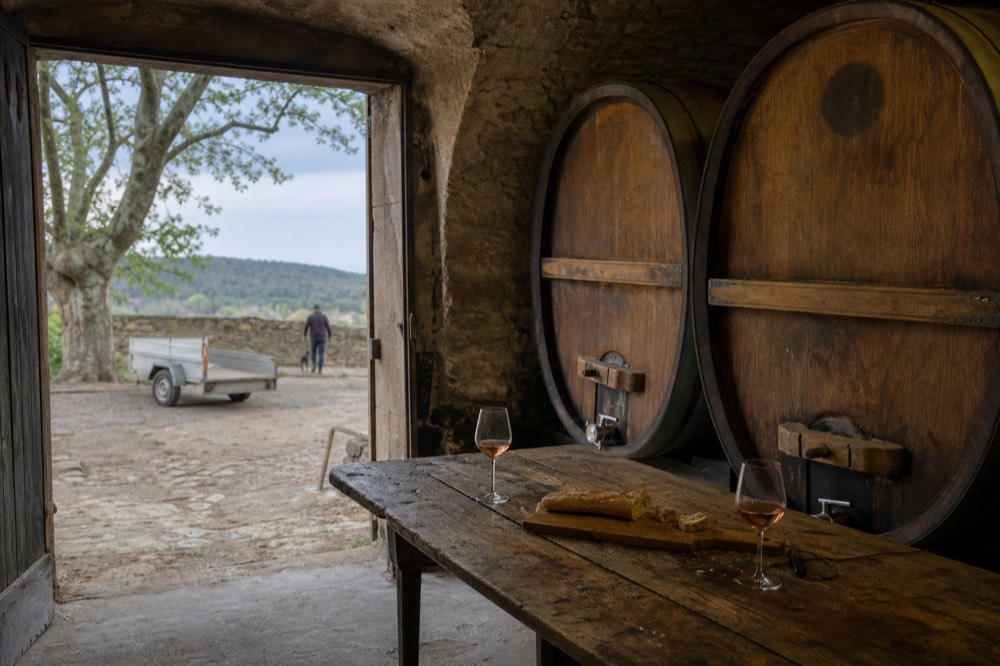
If you're short on time or want to combine a tasting with sightseeing in Avignon, the half-day tour is the obvious pick. It covers the essentials: two well-regarded domaines, a walk through the galets, and a guided tasting in the cellar. You'll be back in town by 1 p.m. or 5 p.m. depending on the departure.
The full-day tour is better if you want to understand the appellation's diversity. The third winery often focuses on whites or older vintages, and the included lunch is a genuine Provençal meal, not a boxed sandwich. The extra time also means you can visit a domaine in one of the outlying communes like Courthézon or Bédarrides.
For travellers who want complete control, a private tour like the Gigondas and Châteauneuf-du-Pape day is worth considering. It carries a higher price tag but gives you a personal chauffeur-guide and the freedom to set the pace. The cost is $1,219.42 per group of up to eight, and tasting fees are paid separately at the cellar door.
What Can You Expect On A Châteauneuf-du-Pape Wine Tasting Tour?
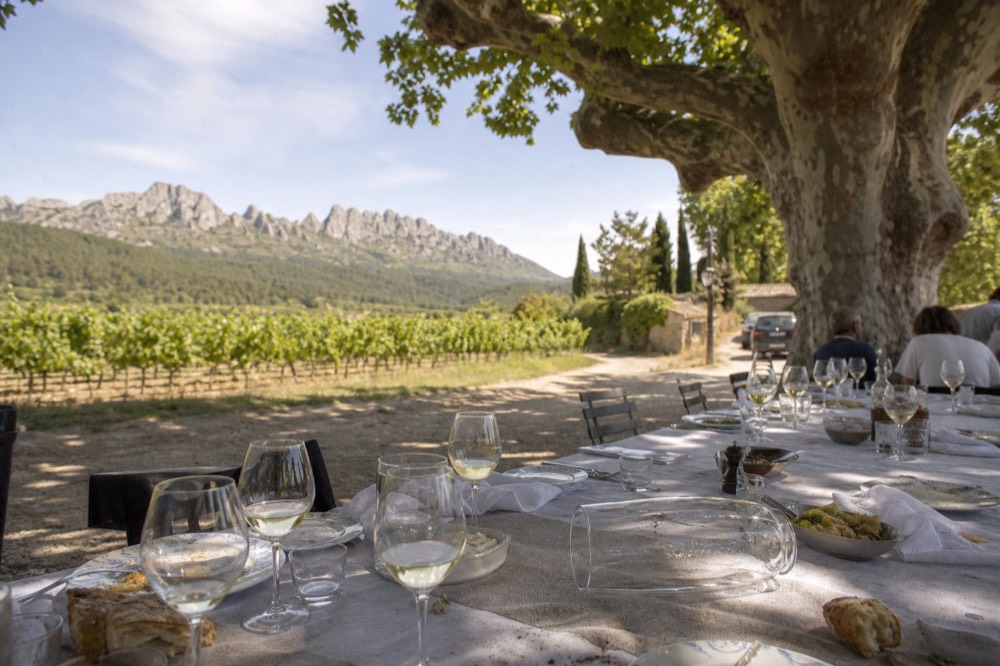
A typical tour picks you up in Avignon and drives 15 to 20 minutes into the vineyards, visiting two or three domaines where you'll taste five to six wines at each stop. The guide explains the galets roulés, the 13 grapes, and the winemaking, and all tasting fees are included in the tour price.
Most tours follow a similar rhythm. After pickup, the guide gives a short introduction to the appellation during the drive. At the first domaine, you'll walk through the vines, see the galets up close, and then head inside for a seated tasting. The wines usually progress from a fresh Côtes du Rhône or a young red to the domaine's top cuvée, often a 100% Grenache from old vines or a blend dominated by Mourvèdre.
The second stop often includes a barrel-room visit or a look at the concrete vats and foudres. Some full-day tours add a third domaine that specialises in white Châteauneuf-du-Pape, a tiny share of the appellation's production but a revelation for many visitors. The mistral wind can be a factor, especially in spring; guides know which tasting rooms are sheltered.
| Tour type | Duration | Domaines visited | Tastings included | Lunch | Price guide |
|---|---|---|---|---|---|
| Half-day small-group | 4 hours | 2 | Included | No | $103.36 per person |
| Full-day three-estate | 7 hours | 3 | Included | No | $207 per person |
| Private full-day (Gigondas & CdP) | 8 hours | Custom | Paid separately at cellar door | No (can be arranged) | $1,219.42 per group (up to 8) |
Private Vs Small-Group Tours: Which Is Right For You?
Small-group tours run from $103.36 to $207 per person, while the one private option, a Gigondas and Chateauneuf-du-Pape day, costs $1,219.42 per group for up to 8, with a dedicated guide and a fully custom itinerary. Private tours are ideal for special occasions or if you want to focus on specific domaines.
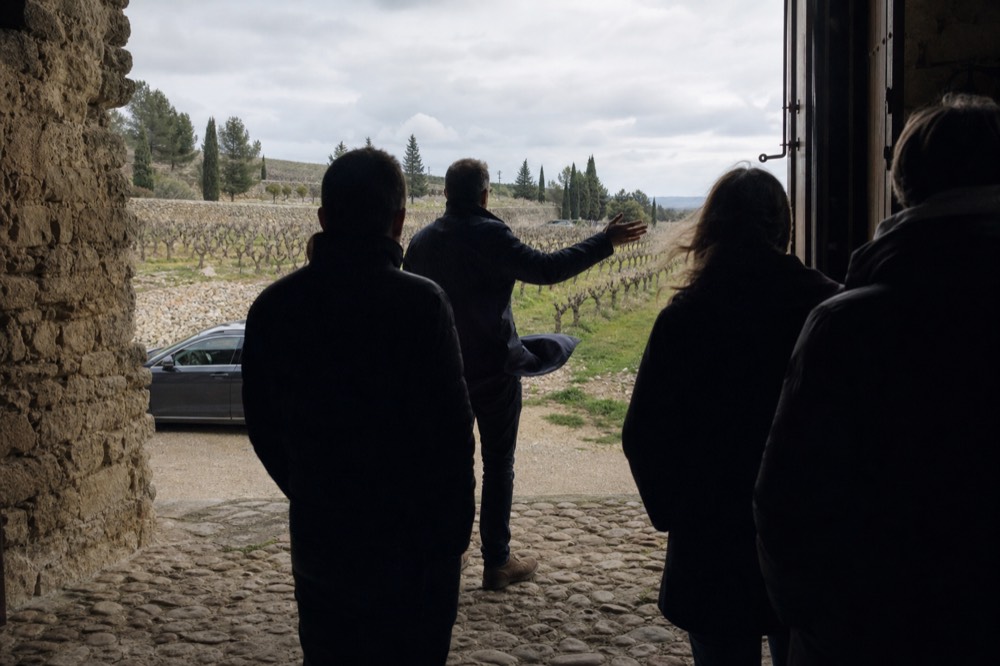
Small-group tours are the default for most visitors. They're social, well-priced, and the guides are skilled at keeping the group engaged. The fixed itinerary means you don't have to research wineries, and the operator has standing relationships with the domaines, so you'll get a warm welcome.
Private tours flip the dynamic. You choose the pickup time, the pace, and often the wineries. The Gigondas and Châteauneuf-du-Pape private day, for example, covers two appellations in a single day with a chauffeur-guide who handles all the logistics. Tasting fees are paid directly at the cellar door, so you control that part of the budget. The price of $1,219.42 per group covers up to 8 people on a full-day tasting, which can be competitive with the small-group tours if you fill the vehicle.
| Feature | Small-group tour | Private tour |
|---|---|---|
| Group size | Up to 8 | Your group only |
| Price | $103.36 to $207 per person | $1,219.42 per group, up to 8 |
| Tasting fees | Included | Included or paid separately |
| Itinerary | Fixed | Customisable |
| Guide | Shared | Dedicated chauffeur-guide |
| Best for | Solo travellers, couples, budget-conscious | Families, special occasions, serious collectors |
Where Is Châteauneuf-du-Pape And How To Get There?
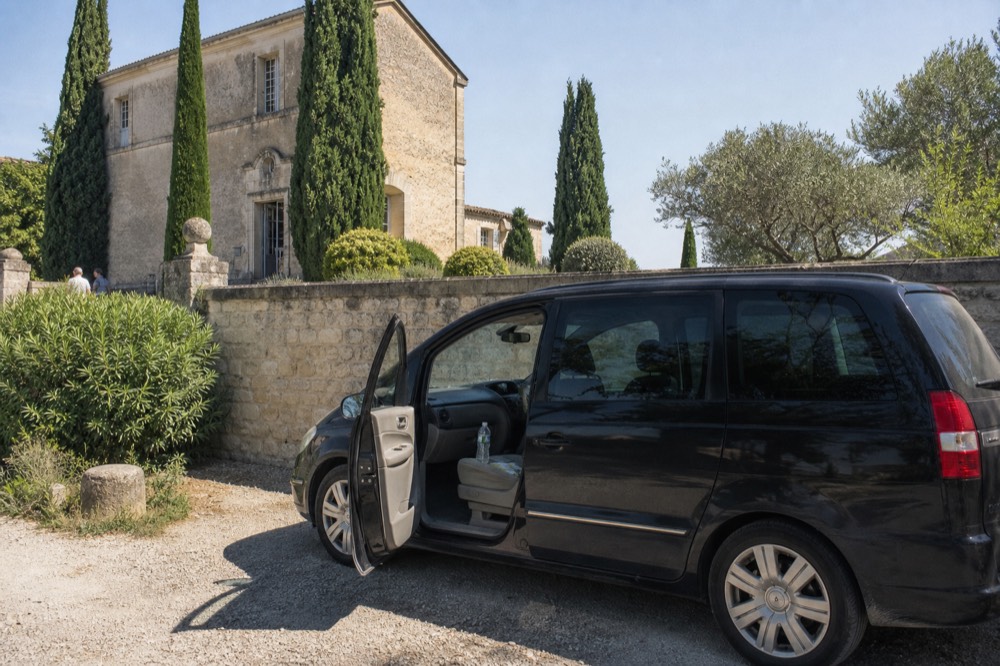
The village sits 17.4 km northeast of Avignon, a 23-minute drive on the D907. From Aix-en-Provence it's 89.3 km (67 minutes), and from Marseille it's a longer drive of roughly 90 minutes. Most tours include hotel pickup in Avignon, so you don't need a car.
Châteauneuf-du-Pape is one of the easiest appellations to reach from a major city. Avignon's TGV station puts you within 20 minutes of the vineyards, and local roads are well-signed. If you're staying in Aix or Marseille, the drive is longer but still manageable as a day trip; however, the 89.3 km from Aix means nearly two hours of driving round-trip before you taste anything, which is another argument for letting a guide take the wheel. If you're also visiting the coast, our Bandol and Cassis wine tours guide covers the Mediterranean appellations.
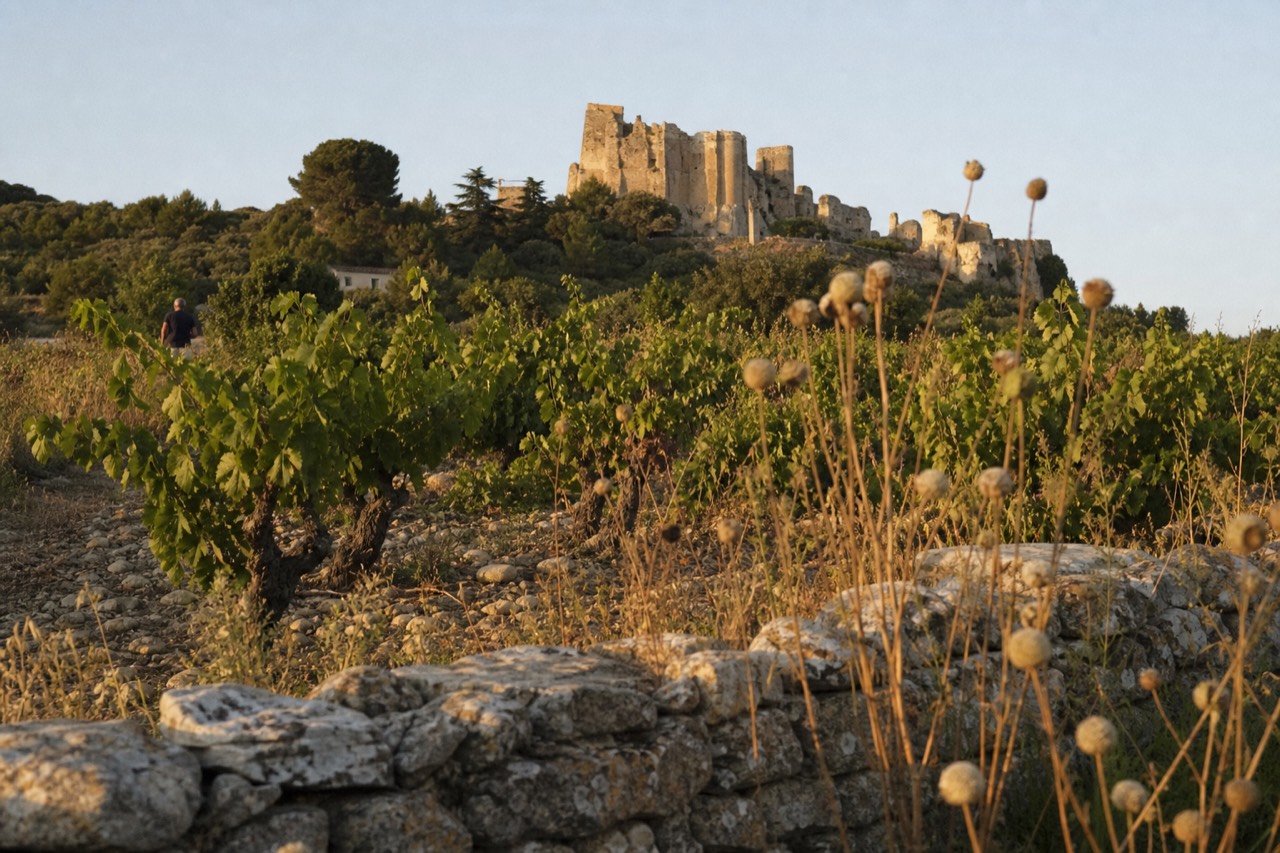
The appellation spans five communes, but most tours concentrate on the core around the village of Châteauneuf-du-Pape and the neighbouring Courthézon. The famous ruined castle that gives the village its name sits on the hilltop and is visible from many vineyards.
| Departure city | Distance to Châteauneuf-du-Pape | Free-flow driving time |
|---|---|---|
| Avignon | 17.4 km | 23 min |
| Orange | About 10 km | 15 min |
| Aix-en-Provence | 89.3 km | 67 min |
Here are the answers to the questions visitors ask most often before booking a Châteauneuf-du-Pape wine tour.
Common Questions About Châteauneuf-du-Pape Wine Tours
What Is Wine Tasting Like In Châteauneuf-du-Pape?
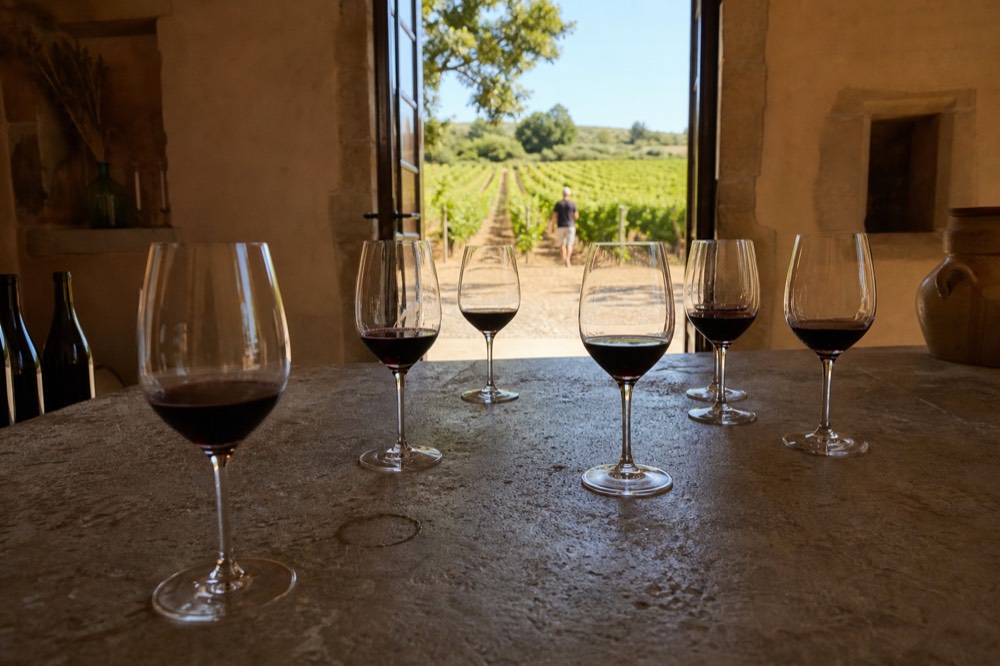
Tastings are usually seated at a table in the cellar or on a terrace overlooking the vines. You'll taste your way through the domaine's range, moving from lighter reds and whites to the flagship cuvée. The guide or the winemaker explains the blend, the vintage, and the vineyard parcel. Spittoons are provided, and nobody expects you to finish every glass.
Which Châteauneuf-du-Pape Wineries Should I Visit?
The best domaines to visit depend on your taste, but many half-day tours include a historic estate like Château de Beaucastel or Domaine du Vieux Télégraphe, paired with a smaller family-run domaine. The operator's live listing usually names the wineries for a given date, so you can check before booking.
Is There A Châteauneuf-du-Pape Winery Map?
There is no single official map, but the tourist office in the village provides a free brochure with a map of the appellation's five communes and the location of domaines that accept visitors. Most guided tours cover the key areas without you having to drive the vineyard roads.
What Is The Best Time Of Year For A Châteauneuf-du-Pape Wine Tour?
Spring (April to June) and autumn (September to October) offer mild weather and fewer crowds than July and August. The harvest runs from late August into September, which is a fascinating time to visit, though some domaines are too busy to host tours during the peak of picking. The mistral wind is strongest in winter and spring, so bring a windproof layer if you're visiting between November and April.
Can I Visit Châteauneuf-du-Pape Wineries Without A Tour?
Some domaines accept walk-in visitors, but many require an appointment, especially the well-known names. A guided tour removes the guesswork and includes transport, so you don't have to drive after tasting. If you prefer to go independently, contact the domaine at least a day ahead.
Is Châteauneuf-du-Pape Wine Expensive?
Entry-level Châteauneuf-du-Pape reds start around $35 to $50 a bottle at the cellar door, while top cuvées from famous estates can exceed $150. The wines are priced as premium AOC, but the quality and ageing potential justify the cost for many buyers.