Is It Worth Staying In Châteauneuf-du-Pape?
Weigh the pros and cons of spending the night in Châteauneuf-du-Pape village versus day-tripping from Avignon. Distances, things to do, and local tips.
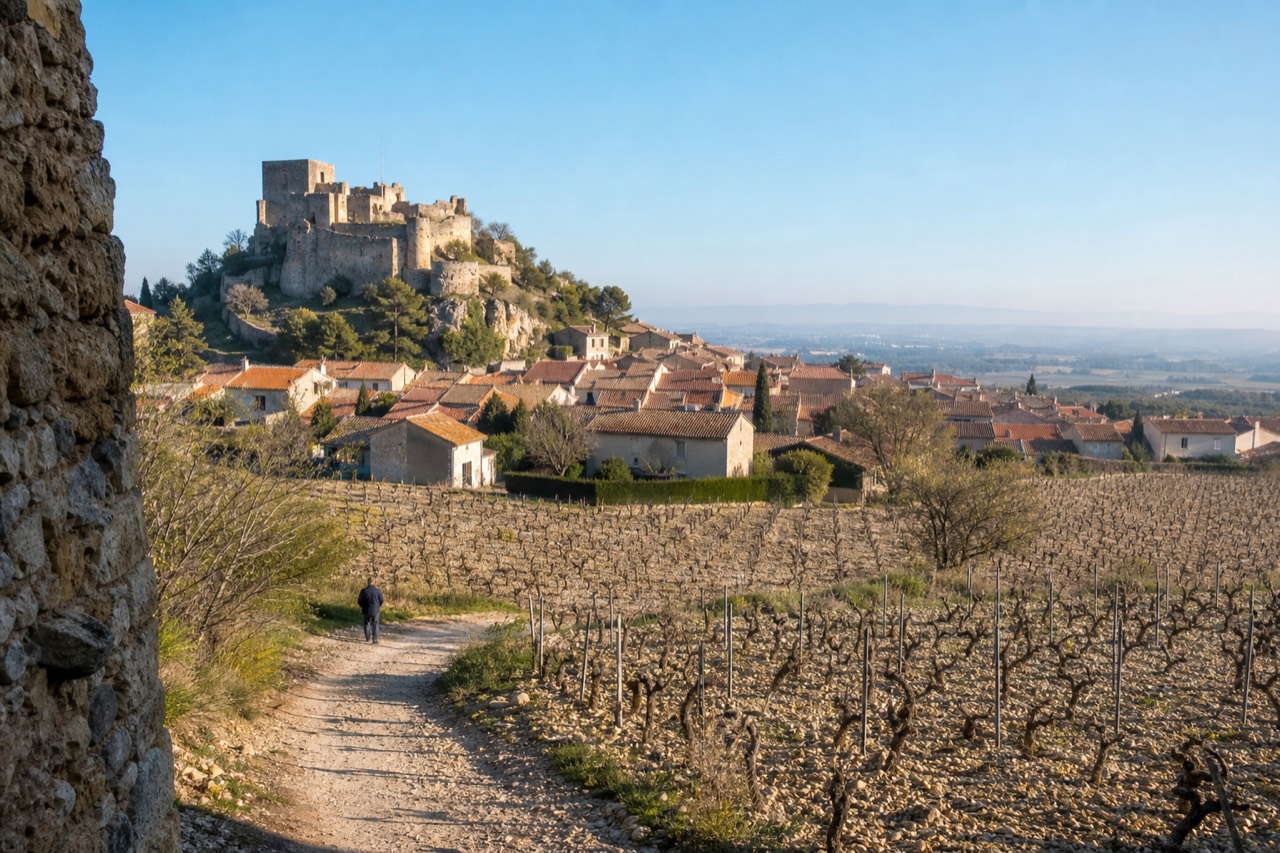
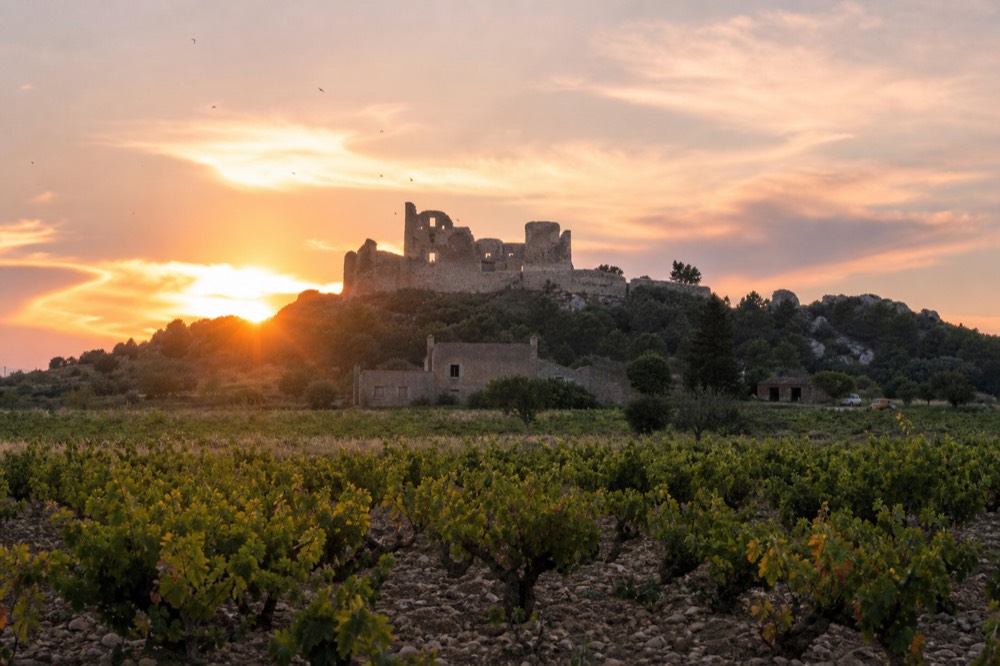
Châteauneuf-du-Pape is one of the most famous wine names in the world, and its hilltop ruin still crowns the village above the vines. The village sits 17.4 kilometres from Avignon, a drive of about 23 minutes on open roads. That short distance shapes almost every decision about where to sleep. This guide weighs the real trade-offs: what the village offers after the cellar doors close, how the mistral behaves, and whether a room among the vines is a memory worth the premium.
Is It Worth Staying In Châteauneuf-du-Pape?
For most visitors, staying overnight in Châteauneuf-du-Pape is not the best use of a Provence itinerary. The village is small, with limited evening activity, and Avignon is only 23 minutes away by car. The honest case for an overnight stay is narrow: you want a vineyard sunrise and a quiet dinner. One night can be a memorable splurge, but two nights are rarely justified unless you are a serious wine buyer or a cyclist.
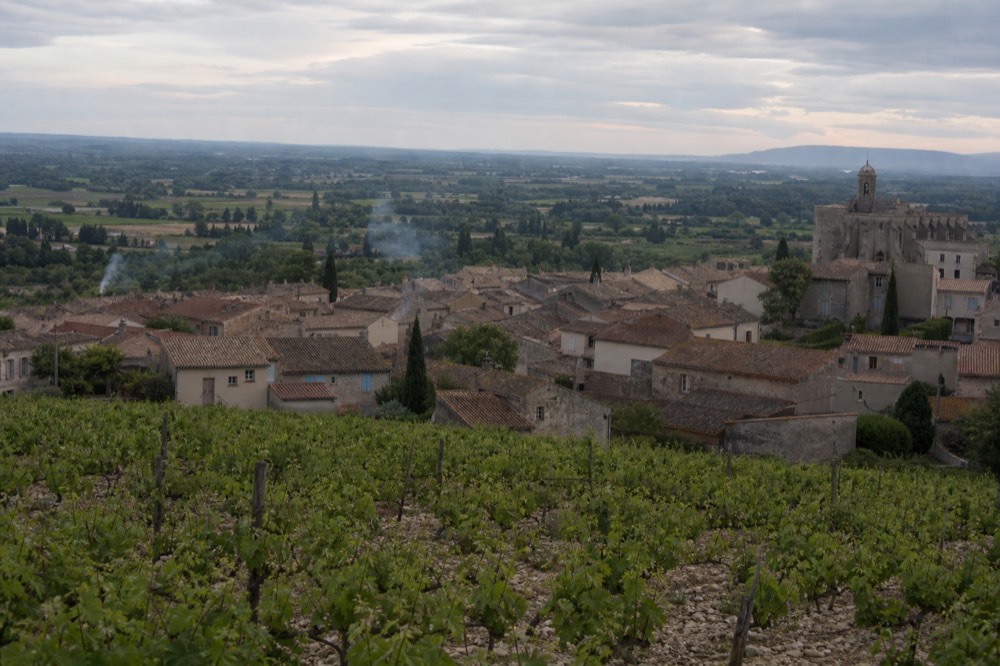
The village has a modest permanent population and a compact centre of stone lanes, a handful of tasting rooms, a boulangerie, a small grocery, and a few restaurants. The ruin of the papal summer castle sits at the top of the hill, visible from kilometres away, and the view from the terrace takes in the Rhône valley and the Dentelles de Montmirail. That is the daytime draw. In the evening, options shrink to dinner and a walk. There is no cinema, no late bar scene, and no public transport link after dark. If you stay, you are there for the quiet.
The village’s fame rests on its wine, not its nightlife. Châteauneuf-du-Pape is a red-wine appellation first, and the tasting rooms that line the main street mostly close by early evening. A few restaurants serve the growers and the visitors who have booked a room, but the number of tables is small. In high season, those tables fill early. The alternative is to drive back to Avignon, where the choice of restaurants, bars, and evening walks is a different order of magnitude. The 23-minute drive is short enough that you can finish a late-afternoon tasting and still be seated for dinner in Avignon by eight.
The mistral wind is another factor that matters more for an overnight stay than for a day trip. Météo-France records that the mistral can blow at an average of 50 km/h and gust to 80 or even 100 km/h, and its strongest zone runs through the lower Rhône valley, right across Châteauneuf-du-Pape. The wind is most frequent in winter and spring, and it can last for days. A spring evening on a vineyard terrace sounds romantic, but a mistral gust can make it feel closer to a wind tunnel. If you are staying the night, a windproof layer is not optional, and a room with good double glazing matters more than a vineyard view.
How Far Is Châteauneuf-du-Pape From Avignon And Other Towns?
Châteauneuf-du-Pape sits 17.4 kilometres from Avignon, a free-flow drive of about 23 minutes. That proximity is the single most important fact for anyone deciding where to stay. Every major southern Rhône wine village can be reached on a day trip from Avignon, so staying in Châteauneuf itself saves only a few minutes on one leg.
The table below shows real road distances and free-flow driving times, routed over the OpenStreetMap network. These are not tour timings, and they do not account for August coastal traffic or the time spent parked at a cellar door. They are the honest starting point for planning a day.
| Village | Distance from Avignon (km) | Free-flow driving time (min) |
|---|---|---|
| Châteauneuf-du-Pape | 17.4 | 23 |
| Vacqueyras | 34.5 | 39 |
| Gigondas | 46.7 | 44 |
| Les Baux-de-Provence | 30.7 | 40 |
The practical takeaway is that an overnight in Châteauneuf-du-Pape does not unlock a cluster of villages you could not otherwise reach. It only saves you the 23-minute drive back to Avignon at the end of the day. For most people, that small saving does not outweigh the loss of Avignon’s evening choice.
What Is There To Do In Châteauneuf-du-Pape After The Tasting Rooms Close?
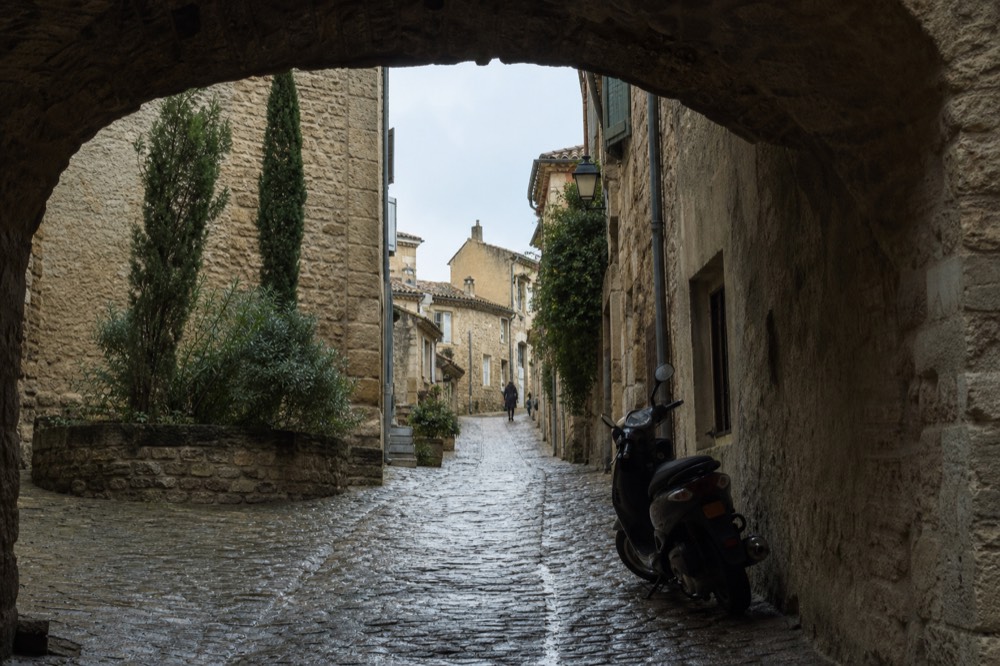
The honest answer is not much. Once the cellar doors shut, the village offers a quiet dinner and a walk up to the castle ruin, but no cinema, no late bar, and no public transport after dark. The appeal is the silence and the view. If you want a lively evening, Avignon is 23 minutes away with dozens of restaurants and wine bars.
That does not mean a night in Châteauneuf-du-Pape is unpleasant. On a calm summer evening, the terrace of a restaurant like La Mère Germaine or Le Verger des Papes is genuinely lovely. The light on the Rhône valley can be spectacular. And if you have booked a room at a wine estate, the experience of walking out into the vineyard at sunrise is something a day trip cannot replicate. That is the trade-off: you swap choice and convenience for a single, quiet, immersive moment.
The mistral, however, can cancel that moment. When the wind is blowing hard, outdoor dining becomes impossible, and the sound of the gusts against old shutters can keep light sleepers awake. The mistral is most common in winter and spring, but it can appear in any season. If you are booking a room months ahead, you cannot predict the wind. Avignon, with its thicker-walled hotels and indoor restaurant courtyards, is a more reliable bet in windy weather.
The castle ruin itself is worth the climb, even in the evening. It was the summer residence of the Avignon popes in the 14th century, and only the outer walls remain. The view from the top takes in the entire appellation, from the galets roulés of the plateau to the sandy soils near the river. On a clear evening, you can see the Dentelles de Montmirail and, on the far horizon, Mont Ventoux. The walk up takes about ten minutes from the village centre, and there is no entry fee.
One practical point shapes every evening plan here: the village has no train station, and the nearest rail connection is in Avignon, 17.4 km away. That 23-minute drive is the only realistic link to a fuller night out, so it needs to be organised in advance. If you are staying in the village and want dinner in Avignon, arrange a taxi or a designated driver before you leave, because there is no public transport back after dark. The reverse also works well: many visitors base themselves in Avignon, where the restaurants and wine bars stay open later, and drive out to Châteauneuf-du-Pape for the daytime tastings before returning to the city for the evening.
It also helps to know what kind of wine village you are visiting before you plan the night around it. Châteauneuf-du-Pape was one of France's first six AOCs, decreed on 15 May 1936 alongside Cassis, Tavel, and three others, and it is overwhelmingly a red-wine appellation, quite unlike Provence as a whole, where 89 percent of production is rosé. The official grape list names 18 varieties, though collapsing the colour mutations gives the familiar 13, led by grenache, syrah, and mourvèdre. This matters for the evening because the cellar-door culture here is built around serious reds meant to be lingered over, not a quick glass before moving on to a bar. Once the tasting rooms close, that rhythm simply stops, and the village settles into quiet.
The wind deserves one more line of respect when you are packing. The mistral can gust to 100 km/h in the Rhône valley, and Châteauneuf sits in the strongest zone, so a breezy forecast in the valley can mean a genuinely violent wind on the plateau. Light sleepers should consider earplugs regardless of season, and anyone planning a sunset walk to the castle ruin should check conditions first, since the exposed outer walls offer no shelter. On the evenings when the wind is absent, the combination of the quiet village, the view over the appellation, and the early night is exactly what most visitors came for.
Timing matters more here than in a city, because the village runs on a seasonal rhythm. Cellars set their own schedules estate by estate, so a booked tour lands at one that is arranged, so the last pour of the day comes early. Dinner service in the village tends to start around 7 pm, and the restaurants themselves keep shorter hours, and some close for the winter months, which thins the evening options even further in the low season. If you are visiting outside summer, check opening days before you build a plan around a village dinner.
There is one reliable exception to the early shutdown: the summer concert series at the Château de la Gardine estate, held on Thursday evenings in July and August. It is the closest thing the village has to a night out, and it pairs naturally with a tasting on the same estate earlier in the day. For everything else, the honest arithmetic holds: a calm evening here is a short dinner, a ten-minute walk, and an early night, with Avignon waiting 23 minutes down the road if the quiet gets too quiet.
What Are The Best Wine Tours That Include Châteauneuf-du-Pape?
The best wine tours that include Châteauneuf-du-Pape are guided half-day or full-day excursions from Avignon, which handle cellar-door appointments, allow you to taste without driving, and comply with France’s strict drink-driving limits of 0.5 g/L blood (0.2 g/L for probationary licence holders).
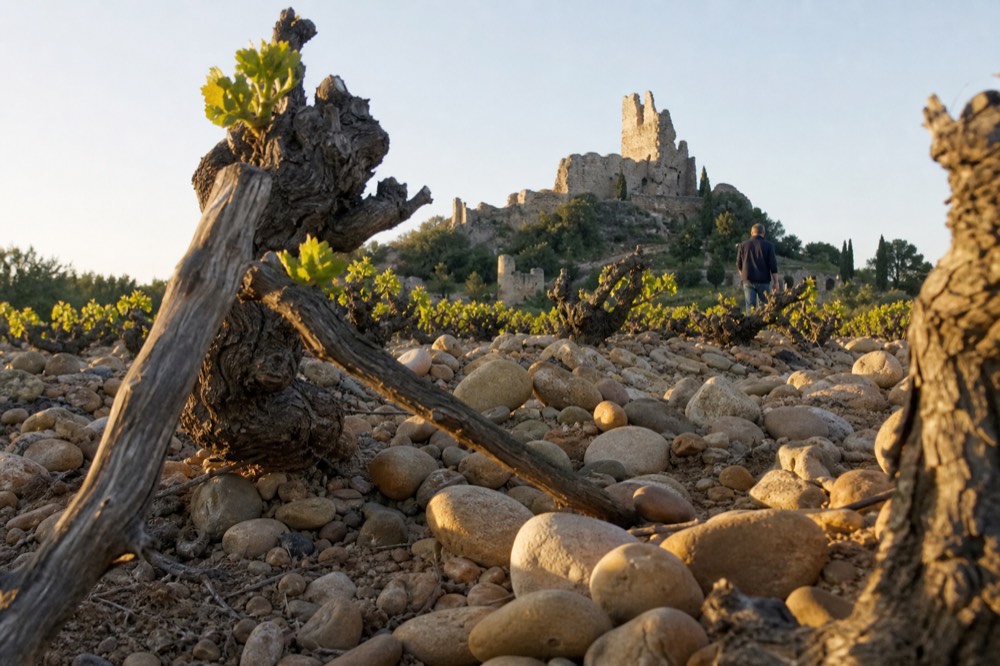
The half-day tour from Avignon is the most popular entry point. It runs for four hours, visits two or three domaines, and includes all tasting fees in the price. The full-day three-estates tour adds a longer lunch break and a deeper walk through the appellation’s varied terroirs, from the galets roulés of the plateau to the sandy soils near the river. Both tours are small-group and offer free cancellation.
For visitors who want a more tailored experience, a private full-day tour from Carpentras covers Gigondas as well as Châteauneuf-du-Pape. The price is per group, not per person, so it can work for a small party of four or more. Tasting fees are paid separately at the cellar door, which lets the guide adapt the stops to your interests. The private tour packs a two-appellation Rhône day into a single outing, and it is the best fit for a group that wants to compare the power of Châteauneuf reds with the elegance of Gigondas.
The key advantage of a tour over a self-drive stay is the legal certainty. The probationary-licence limit of 0.2 g/L is effectively zero glasses, and even a full-licence driver who tastes across two or three domaines can approach the 0.5 g/L limit faster than expected. A tour driver handles the road, and you handle the glass. That is the honest reason a driven wine tour exists on this site.
Is Châteauneuf-du-Pape A Good Base For Exploring The Wider Region?
No. Châteauneuf-du-Pape is a poor base for exploring Provence beyond its own appellation. The village sits on the western edge, with no train station and only one main road. Avignon, by contrast, has a TGV station and direct road links to the Luberon, the Alpilles, and the Rhône villages. If your trip includes more than one wine area, Avignon is the stronger hub.
The distance table earlier in this article shows that the southern Rhône villages are reachable from Avignon in under an hour. From Châteauneuf-du-Pape, you add the 23-minute backtrack to Avignon before you can head anywhere else. That extra leg adds up over a multi-day stay. A traveller who books three nights in Châteauneuf-du-Pape and wants to see the Luberon, Les Baux, and the Pont du Gard will spend more time in the car than someone based in Avignon.
The village does work as a one-night add-on to an Avignon stay. You can check out of your Avignon hotel, drive to Châteauneuf in the late morning, taste through the afternoon, have dinner, sleep, and then head onward the next day. That pattern gives you the sunrise vineyard moment without locking you into a remote base. It also lets you pick a calm weather window, which matters when the mistral is forecast.
For a wider Provence itinerary, the Provence Wine Tours guides cover day-trip options from Avignon, Aix-en-Provence, Marseille, and Nice. The Châteauneuf-du-Pape wine tours page lays out the full-day and half-day choices in one place, and the wine tours from Avignon guide compares departure points across the southern Rhône. If you are still weighing Avignon against other cities, the post on Avignon or Aix-en-Provence breaks down the differences.
Common Questions About Staying In Châteauneuf-du-Pape
Is It Worth Staying In Châteauneuf-du-Pape?
For most travellers, no. The village is small and quiet, with limited evening options, and Avignon is only 23 minutes away. An overnight stay makes sense only if you want a vineyard sunrise and a calm dinner, and even then one night is usually enough.
How Far Is Châteauneuf-du-Pape From Avignon?
The road distance is 17.4 kilometres, and the free-flow driving time is about 23 minutes. That short trip is why most visitors day-trip from Avignon rather than staying in the village.
What Is There To Do In Châteauneuf-du-Pape At Night?
Very little. A few restaurants serve dinner, and the castle ruin is open for a walk, but there is no cinema, no late bar, and no public transport after dark. The evening is about quiet and the view.
Is Châteauneuf-du-Pape A Good Base For Exploring Provence?
No. The village lacks a train station and sits on the western edge of the region. Avignon is a far better hub for reaching the Luberon, the Alpilles, and the wider Rhône valley.
How Many Days Do You Need In Châteauneuf-du-Pape?
One day, or one night at most. A half-day or full-day tour from Avignon covers the key domaines, and an overnight stay adds a quiet evening and a morning walk. Two nights are rarely justified unless you are cycling or on a buying trip.