What Is The No 1 Rosé In Provence?
There is no single official ranking for Provence rosé, but the Côtes de Provence appellation and its Sainte-Victoire sub-appellation are widely regarded as producing the region's most refined rosés, while brands like Whispering Angel and Domaines Ott dominate global recognition.
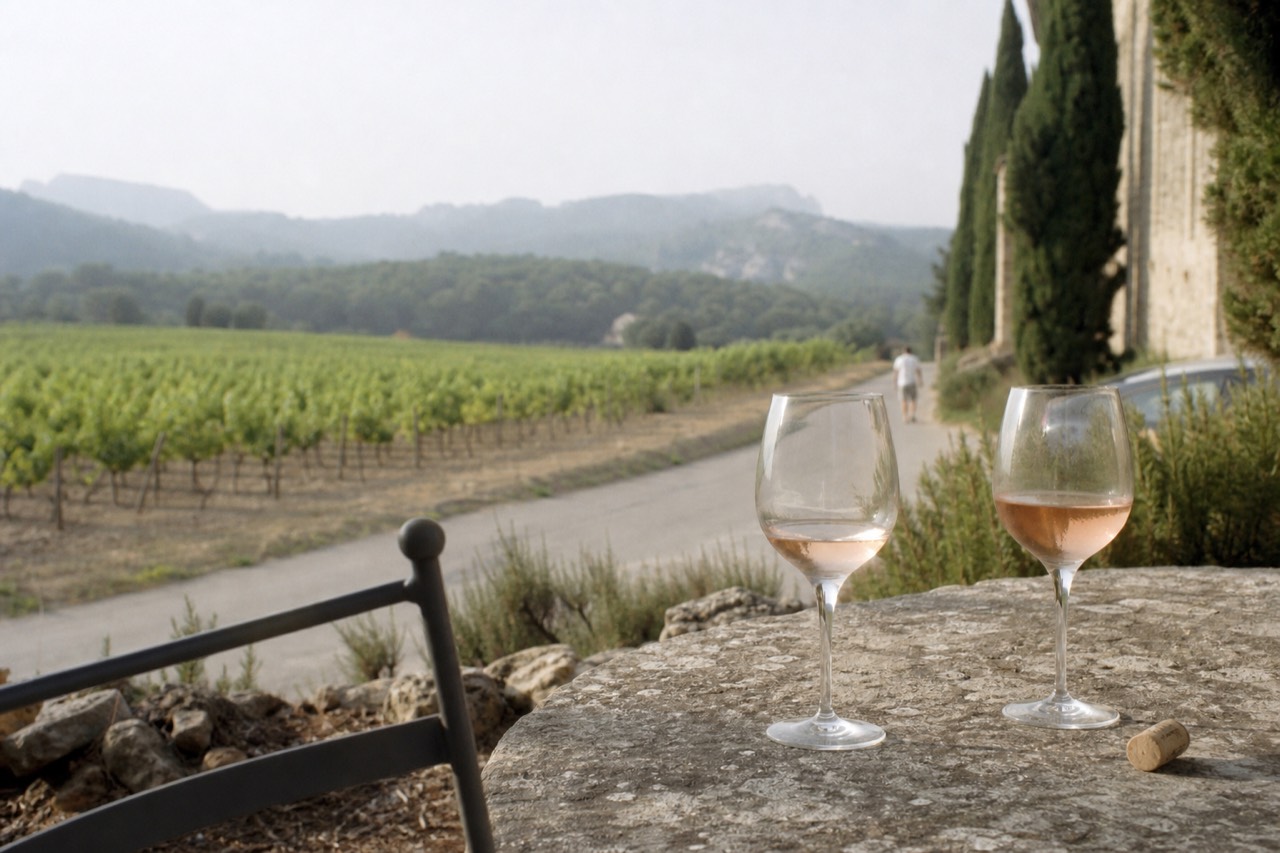
What Is The No 1 Rosé In Provence?
There is no single official "number one" rosé in Provence, but the Côtes de Provence appellation and its Sainte-Victoire sub-appellation are widely regarded as producing the region's most refined rosés. Among individual brands, Whispering Angel is the best-known globally, while Domaines Ott and Château Miraval command top prestige. The Sainte-Victoire hillside consistently appears at the top of every shortlist.
The idea that one rosé can be crowned the absolute best in Provence is a question that trips up even seasoned wine writers, because the region is not a single monolithic wine style. Provence spans nine AOC appellations, from the limestone slopes of the Sainte-Victoire sub-denomination to the schist terraces of Bandol and the coastal white-dominant vineyards of Cassis. The rosé that a sommelier in New York calls number one is almost certainly a different bottle from the one a local restaurateur in Aix-en-Provence pours by the glass every summer. Still, if you look at the data, the critical consensus, and the export figures, a clear picture emerges: the Côtes de Provence appellation, and within it the Sainte-Victoire zone, is the engine room of the world's most admired rosé, and a handful of estates have turned that reputation into global brands.
In the 2024 vintage, the Côtes de Provence appellation alone accounted for 71% of the harvest of the three "Vins de Provence" AOPs, according to the CIVP's 2024 key figures. In the 2024 vintage, those three AOPs produced 1,130,139 hectolitres of wine, and a staggering 89% of it was rosé. That is not a niche: it is an entire region built around pink wine. Within Côtes de Provence, the five sub-denominations (dénominations géographiques complémentaires, or DGCs) add an extra layer of quality. Sainte-Victoire, Fréjus, La Londe, Pierrefeu and Notre-Dame des Anges each have stricter yield limits (8,500 kg/ha maximum parcel load versus 9,500 kg/ha for plain Côtes de Provence) and tighter rules on grape varieties and ripeness. Among them, Sainte-Victoire is the one that critics, importers and collectors consistently name as the source of the most elegant, mineral-driven rosés. Its pale colour, delicate red-berry fruit and saline finish have become the template for what the world thinks of as "Provence rosé." For a deeper look at the appellation, see our guide to Côtes de Provence wine.
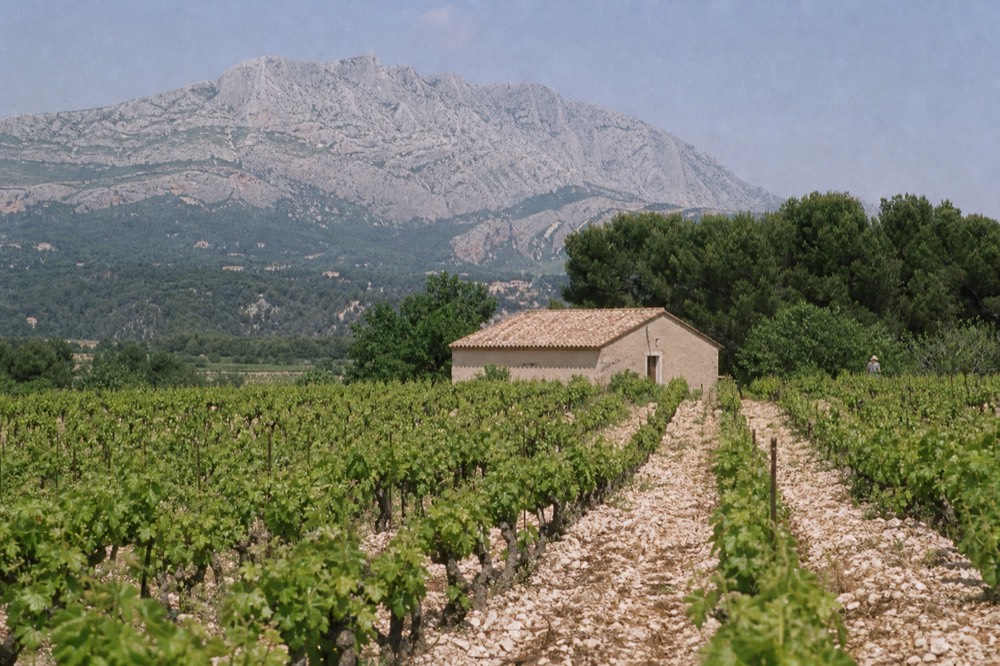
The Sainte-Victoire DGC covers a cluster of communes east of Aix-en-Provence, anchored by the white limestone massif that gives the zone its name. The mountain itself is not just a pretty backdrop; it shapes the climate by reflecting sunlight onto the vines and funneling the mistral wind through the valleys, which keeps the grapes dry and disease-free. The INAO approved the Sainte-Victoire production area at its sitting of 27 and 28 May 2004, making it the first of the Côtes de Provence sub-denominations to gain official recognition. The permitted grapes for reds and rosés here include grenache, syrah, cinsaut, mourvèdre and the local tibouren, a variety that is unique to Provence and prized for the floral lift it gives to rosé blends. The combination of limestone soils, high sunshine hours and cooling wind produces rosés that are paler, more aromatic and longer-lived than the regional average. Many of the bottles that top "best Provence rosé" lists, from estates like Château Gassier, Château Coussin and Domaine de la Grande Séouve, carry the Sainte-Victoire designation on the label.
But the Sainte-Victoire story is only part of the answer. The question "what is the number one rosé in Provence?" is also a question about brands, and here three names dominate the conversation: Whispering Angel, Domaines Ott, and Miraval. Whispering Angel, made by Château d'Esclans in the Côtes de Provence appellation near Fréjus, is the commercial phenomenon. It is the rosé that broke out of the wine shop and into the beach club, the rooftop bar and the Hamptons party circuit. Its pale salmon colour, soft red-berry fruit and whisper of acidity make it instantly likeable, and its distribution reach means it is often the first Provence rosé a drinker encounters. Domaines Ott, by contrast, is the old-guard prestige player. Founded over a century ago and now owned by Louis Roederer, Ott produces three estate rosés (Château de Selle, Clos Mireille and Château Romassan) that age in barrel and sell at a price point that signals serious intent. Château Miraval, the estate in Correns acquired by Brad Pitt and the Perrin family, sits somewhere between the two: a celebrity halo, but with genuine winemaking credentials and a focus on organic viticulture in the Côtes de Provence appellation (see Brad Pitt’s Winery).
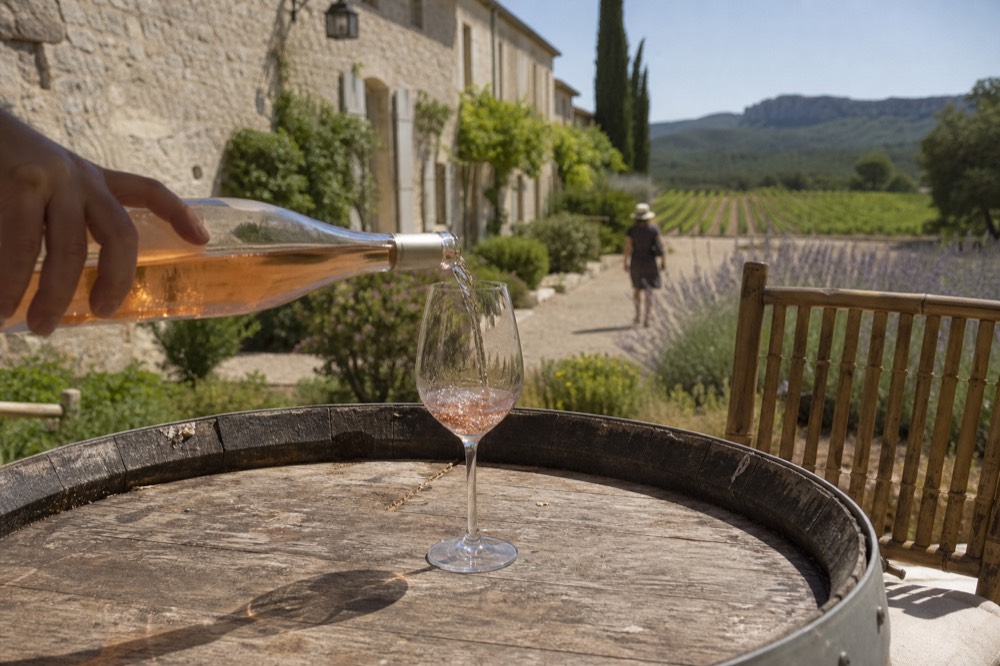
If you ask a wine professional to name the number one rosé, the answer often comes back to a specific estate rather than a brand. Château Simone, in the tiny Palette AOC just outside Aix, makes a rosé that is richer, more textured and longer-lived than the pale, delicate style that dominates the export market. Domaine Tempier in Bandol produces a rosé that is famously age-worthy, with the mourvèdre grape giving it structure and a savoury edge that sets it apart from the Côtes de Provence norm. And then there are the cult producers: Clos Cibonne, with its unique aged rosé made from the tibouren grape under a veil of flor; Domaine de la Bégude in Bandol, whose rosé is built for the cellar; and Château de Roquefort, a biodynamic estate in the Côtes de Provence whose "Gueule de Loup" rosé has a cult following. None of these is the world's biggest seller, but each has a claim to being the number one rosé for a certain kind of drinker.
This is where the question gets interesting for a visitor. The best way to find your own number one rosé in Provence is to taste across the appellations, and a well-chosen wine tour is the most honest way to do it. The French drink-driving limit is 0.5 g/L of alcohol in the blood for a full licence, but only 0.2 g/L for anyone on a probationary licence (which lasts three years, or two after accompanied driving). Even a single small glass of rosé can push a driver over the lower limit, which is why a driven tour is not a luxury but a practical necessity. A tour also gets you into cellars that are not always open to walk-ins, and it puts a guide between you and the geography so you can focus on what is in the glass.
The three tours above cover the rosé spectrum in a single day. The Bandol and Cassis full-day tour from Aix-en-Provence visits the two appellations that produce the most structured, food-friendly rosés in Provence. Bandol rosé must contain at least 20% mourvèdre, and in practice many estates use 30% to 40%, which gives the wine a grip and a savoury, herbal character that stands up to grilled fish and bouillabaisse. Cassis, by contrast, is officially white-dominant (about 70% of production is white), but its rosé, made from grenache, cinsaut and mourvèdre, is a crisp, saline, seaside wine that tastes like a Mediterranean lunch. The Côtes de Provence half-day tasting from Aix spends three hours in the Sainte-Victoire foothills, the exact zone that critics single out as the source of Provence's most elegant rosés. And the Châteauneuf-du-Pape half-day from Avignon is the wildcard: Châteauneuf is overwhelmingly a red-wine appellation, but its rosé, made from the same 13 permitted grape varieties (18 if you count the colour mutations of clairette, grenache and piquepoul separately), is a richer, spicier style that shows what happens when you take Provence rosé into Rhône territory.
Why Is Côtes De Provence The Dominant Rosé Appellation?
The Côtes de Provence appellation is the dominant rosé producer because it covers the largest vineyard area (about 20,300 hectares), accounts for 71% of total Provence AOP wine production, and has built an export machine that shipped 434,445 hectolitres worth 353,301,951 euros in 2024. Its five sub-denominations add a quality ladder that allows estates to differentiate themselves, and the appellation's pale, dry, aromatic style has become the global benchmark for premium rosé.
The numbers are the most direct answer. In the 2024 vintage, Côtes de Provence produced 721,686 hectolitres of rosé out of a total Provence AOP rosé harvest of 1,001,589 hectolitres, making it the dominant appellation by volume. The sheer scale means that when an importer in London or New York looks for a Provence rosé to list, the bottle is statistically most likely to come from Côtes de Provence. The appellation's 84 communes stretch across three departments (68 in the Var, 15 in the Bouches-du-Rhône, and one, Villars-sur-Var, in the Alpes-Maritimes), giving it a geographic reach that no other Provence AOC can match.
But volume alone does not explain why Côtes de Provence rosé is considered the number one style. The appellation's internal structure is the real engine. The five DGCs, Sainte-Victoire, Fréjus, La Londe, Pierrefeu and Notre-Dame des Anges, were created between 2004 and 2008 to recognise distinct terroirs within the larger appellation. Each has a stricter yield limit (8,500 kg/ha versus 9,500 kg/ha) and additional rules on grape varieties and vineyard practices. For a consumer, a bottle labelled "Côtes de Provence Sainte-Victoire" is a guarantee that the wine comes from a specific hillside with limestone soils, that the yields were kept low, and that the wine was tasted and approved by a panel. This is the same quality-signalling mechanism that made sub-appellations like premier cru and grand cru work in Burgundy, and it is why Sainte-Victoire rosé consistently outscores generic Côtes de Provence in blind tastings.
The export data from the CIVP's 2024 key figures report tells the rest of the story. Provence rosé is not just a French phenomenon; it is a global one. The 434,445 hectolitres exported in 2024 were worth 353,301,951 euros, up from 404,344 hectolitres and 283,255,046 euros in 2019. The United States is the largest export market, and American consumers have been trained by a decade of marketing to associate pale pink wine with the Côtes de Provence name. Whispering Angel alone is estimated to account for a significant share of that volume, and its success has pulled a whole fleet of Côtes de Provence rosés into the American market. The appellation has become the default answer to "what is Provence rosé?" in the same way that Champagne became the default answer to "what is sparkling wine?"
The grape varieties also play a role. Côtes de Provence permits a wide palette, but the principal varieties for rosé (cinsaut, grenache, mourvèdre, syrah and tibouren) produce a wine that is naturally pale when pressed gently and fermented at cool temperatures. Tibouren, in particular, is a grape that is almost unique to Provence and gives a distinctive floral, peppery note that is absent from rosés made elsewhere. The appellation's rules do not mandate a specific colour, but the market has spoken: the palest rosés command the highest prices, and the Côtes de Provence style has evolved to meet that demand.
| Appellation | Rosé share of production | Key rosé grapes | Notable rosé style |
|---|---|---|---|
| Côtes de Provence | 89% | Grenache, Cinsaut, Syrah, Mourvèdre, Tibouren | Pale, aromatic, dry, with red berry and floral notes |
| Coteaux d'Aix-en-Provence | Rosé-led | Grenache, Syrah, Cinsaut, Counoise, Mourvèdre | Slightly fuller, with more red fruit and a herbal edge |
| Bandol | Significant but not dominant (reds lead) | Mourvèdre (min 20%), Grenache, Cinsaut | Structured, savoury, age-worthy, with grip and spice |
| Cassis | Minority (70% white) | Grenache, Cinsaut, Mourvèdre | Crisp, saline, seaside, light-bodied |
The table above shows why a serious rosé drinker eventually gravitates beyond Côtes de Provence. Bandol rosé, with its mandatory mourvèdre component and its ability to age for five to ten years, is a completely different animal from the pale, early-drinking style of the Sainte-Victoire hills. Cassis rosé, made in tiny quantities in a white-wine appellation, is a refreshing curiosity that tastes of the Mediterranean coast. The "number one" rosé in Provence might well be a Côtes de Provence Sainte-Victoire for everyday drinking, but it shifts to a Bandol when the meal calls for something with more structure.
What Are The Most Famous Provence Rosé Brands?
Whispering Angel from Château d'Esclans is the most famous Provence rosé brand by sales volume and global recognition, while Domaines Ott and Château Miraval compete for the top prestige slot. Other estates like Château Gassier, Château Minuty and Ultimate Provence have built strong followings, but the "number one" crown in the consumer market belongs to Whispering Angel.
The rise of Whispering Angel is one of the most remarkable stories in modern wine. Launched by Sacha Lichine at Château d'Esclans, the brand took a pale, easy-drinking rosé and marketed it with the precision of a luxury fashion house. The bottle, with its frosted glass and minimalist label, became a status symbol on the Côte d'Azur and in the Hamptons. The wine itself is made from grenache, cinsaut and vermentino (rolle), and it is deliberately crafted to be soft, round and instantly appealing. Critics sometimes dismiss it as a marketing creation, but the numbers are undeniable: Whispering Angel is the Provence rosé with the widest name recognition in the United States, and its success has lifted the entire category.
Domaines Ott represents the opposite end of the spectrum. The three estate rosés, Château de Selle (Côtes de Provence), Clos Mireille (Côtes de Provence, near the coast) and Château Romassan (Bandol), are made with a seriousness that borders on red-wine methodology. The grapes are hand-harvested, the wines are aged in large oak foudres, and the bottles are released only when the estate deems them ready. An Ott rosé is paler and more delicate than the Bandol norm but has a texture and a length that set it apart from the mass market. The price reflects that: a bottle of Château de Selle can cost three or four times as much as a Whispering Angel. For many sommeliers, Ott is the number one rosé in Provence because it refuses to compromise on quality, even if that means producing far less wine than the market would absorb.
Château Miraval occupies the middle ground, but with a celebrity twist. The estate in Correns was acquired by Brad Pitt and Angelina Jolie, and the wines are made in partnership with the Perrin family of Château de Beaucastel in Châteauneuf-du-Pape. The Miraval rosé is a blend of cinsaut, grenache, syrah and rolle, and it is made from organically farmed grapes in the Côtes de Provence appellation. The wine is consistently well-reviewed, and the celebrity association has made it a global brand. The estate also produces a higher-end rosé, "Muse de Miraval," which is aged in barrel and priced to compete with Domaines Ott. Whether Miraval is the number one rosé depends on whether you value organic farming, celebrity cachet, or the Perrin family's winemaking prowess, but it is undeniably in the conversation.
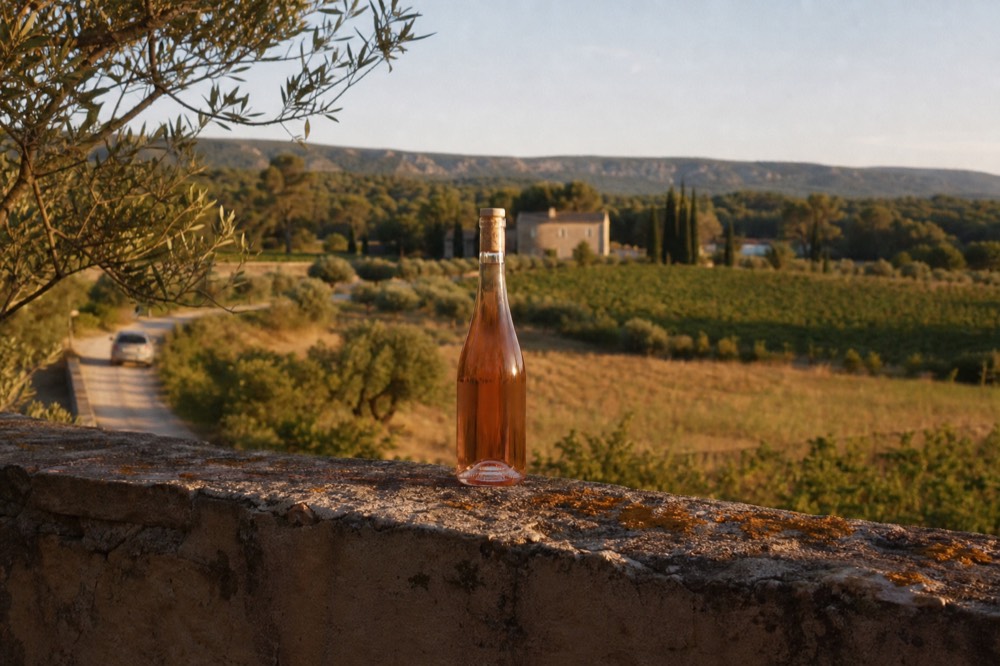
Other brands have carved out their own niches. Château Minuty, based in Gassin near Saint-Tropez, is a family-run estate that produces a range of Côtes de Provence rosés, from the entry-level "M" to the prestige cuvée. Minuty's style is crisp, precise and focused on purity of fruit, and it has a strong following on the French Riviera. Château Gassier, in the Sainte-Victoire zone, is one of the appellation's largest organic producers and makes a rosé that is frequently featured in "best of" lists. Ultimate Provence, a relatively new brand from the owners of Château de Berne, has taken the Whispering Angel playbook and added an urban, design-led edge. And then there are the historic estates like Château de Selle (the Ott property), Château Simone in Palette, and Domaine Tempier in Bandol, which have been making rosé for generations and whose reputations are built on decades of consistency rather than marketing campaigns.
The brand question is ultimately a question of access. A visitor to Provence can walk into a supermarket and buy a bottle of Whispering Angel or Minuty for a reasonable price, but the cult rosés, Clos Cibonne, Domaine de la Bégude, Château de Roquefort, are sold mainly at the cellar door or through specialised wine shops. A wine tour that visits the estates directly is the only way to taste these wines in context, and it is also the only way to understand why a rosé that costs 30 euros at the cellar door can sell for 60 dollars in a New York restaurant.
The Bandol and Cassis full-day tour from Aix-en-Provence is built around this idea. It visits estates in both appellations, giving you a side-by-side comparison of a structured, mourvèdre-driven Bandol rosé and a crisp, saline Cassis rosé. The tour includes all tasting fees and runs for eight hours, with free cancellation on the operator's live listing. For anyone trying to answer the "number one" question through direct experience, this tour covers the two appellations that most often challenge Côtes de Provence for the rosé crown.
What Makes Bandol Rosé Different From Côtes De Provence Rosé?
Bandol rosé is different from Côtes de Provence rosé because it must contain at least 20% mourvèdre (often 30 to 40%), which gives it more structure, a savoury, spicy character, and the ability to age for five to ten years. Côtes de Provence rosé is typically paler, more aromatic, and made for early drinking, while Bandol rosé is a gastronomic wine built to stand up to food.
The mourvèdre grape is the key. Bandol's AOC rules, set by the INAO, require that mourvèdre makes up between 50% and 95% of the red-wine plantings, and for rosé the minimum is 20%. In practice, many Bandol estates use 30% to 40% mourvèdre in their rosé blends, which is far higher than anything found in Côtes de Provence. Mourvèdre is a late-ripening, thick-skinned grape that thrives in the heat and the schist soils of the Bandol amphitheatre. It gives the wine a deep, savoury core, notes of garrigue herbs, black pepper and sometimes a hint of game, and a firm tannic grip that is almost unheard of in rosé from other regions. A young Bandol rosé can be tight and a little austere, but after two or three years in bottle it softens into something complex and layered, with flavours of dried strawberry, orange peel and spice.
Côtes de Provence rosé, by contrast, is built on grenache, cinsaut and syrah, grapes that produce a paler, fruitier, more immediately charming wine. The best examples, especially from the Sainte-Victoire sub-denomination, have a delicate red-berry fruit, a floral lift from tibouren, and a saline, mineral finish that comes from the limestone soils. They are designed to be drunk within a year or two of the vintage, and they are at their best served cold on a hot day. This is not a criticism; it is a stylistic choice. A Côtes de Provence rosé is a wine of refreshment, while a Bandol rosé is a wine of contemplation. For more on Bandol and Cassis, read our Bandol and Cassis wine tours guide.
The table below summarises the structural differences between the two styles.
| Characteristic | Côtes de Provence rosé (typical) | Bandol rosé (typical) |
|---|---|---|
| Colour | Very pale pink, often with a silvery rim | Pale to medium pink, sometimes with an orange tint |
| Primary grapes | Grenache, Cinsaut, Syrah, Tibouren | Mourvèdre (min 20%), Grenache, Cinsaut |
| Body | Light to medium | Medium to full |
| Tannin | Very low | Low to moderate, grippy when young |
| Aromas | Red berries, white flowers, citrus zest | Strawberry, garrigue herbs, spice, orange peel |
| Ageability | 1 to 3 years | 3 to 10 years |
| Food pairing | Salads, grilled fish, aperitif | Bouillabaisse, lamb, roast chicken, hard cheeses |
The ageability point is where Bandol rosé makes its strongest claim to being the number one rosé in Provence. A wine that can evolve in bottle and develop secondary flavours over five or ten years is, by any measure, a more serious wine than one that fades after eighteen months. Domaine Tempier's rosé, the benchmark for the appellation, is famous for its ability to age, and older vintages are sought after by collectors. This is not to say that Côtes de Provence rosé cannot age; some Sainte-Victoire cuvées, particularly those made with a higher proportion of mourvèdre or aged in barrel, can develop for several years. But the appellation's identity is built on freshness, and the market rewards wines that are released early and consumed quickly.
For a visitor, tasting the two styles side by side is the most direct way to understand the difference. The Bandol and Cassis full-day tour from Aix-en-Provence includes visits to Bandol estates where you taste rosé alongside the estate's reds and whites, giving a full picture of what mourvèdre can do. The Côtes de Provence half-day tasting from Aix, meanwhile, focuses on the Sainte-Victoire hillside and the pale, aromatic style that defines the appellation. Together, they cover the rosé spectrum from light and delicate to structured and age-worthy.
How Does The Sainte-Victoire Sub-Appellation Influence Rosé Quality?
The Sainte-Victoire sub-appellation influences rosé quality through its limestone soils, high elevation, cooling mistral winds, and stricter yield limits of 8,500 kg/ha. These factors produce rosés that are paler, more aromatic, and more mineral-driven than generic Côtes de Provence, and the designation on the label is a reliable indicator of a wine that has passed a higher quality bar.
The Sainte-Victoire DGC covers a specific set of communes east of Aix-en-Provence, including Puyloubier, Rousset, Châteauneuf-le-Rouge, Meyreuil, Peynier, Le Tholonet and Trets. The mountain itself, a white limestone massif that rises above the vineyards, is the defining feature. It reflects sunlight onto the vines, increasing the total light exposure without raising the temperature excessively, and it channels the mistral wind down through the valleys. The mistral, a regional wind that can blow at an average speed of 50 km/h and gust to 80 or 100 km/h, is strongest in winter and spring, but it is a constant presence that dries the vines after rain and reduces disease pressure. The result is that Sainte-Victoire vineyards can be farmed with fewer chemical inputs, and the grapes arrive at the winery in pristine condition.
The soils are a mix of limestone scree, clay and sand, with excellent drainage. The limestone contributes to the wine's minerality and its pale colour, because the vines are stressed just enough to limit vigour and concentrate the fruit without producing harsh tannins. The permitted grape varieties for rosé include grenache, syrah, cinsaut, mourvèdre and tibouren, and the best estates blend them to achieve a balance of fruit, structure and aromatic complexity. Tibouren, in particular, is a grape that thrives in the Sainte-Victoire zone and gives the rosés a distinctive floral, peppery lift that is absent from wines made further south in the Var.
The quality bar is enforced by the INAO's rules. The maximum average parcel load is 8,500 kg/ha, compared to 9,500 kg/ha for plain Côtes de Provence, and the wines must pass a tasting panel before they can carry the Sainte-Victoire name. This is not a guarantee that every bottle will be exceptional, but it is a filter that eliminates the weakest wines. In practice, the Sainte-Victoire designation is a shortcut for buyers who want a rosé that is a step above the generic Côtes de Provence level.
The table below lists some of the communes in the Sainte-Victoire DGC and their approximate distance from Aix-en-Provence, based on real road routing over the OpenStreetMap network. These distances matter for a visitor planning a tasting day, because the drive from Aix to Puyloubier is only about 31 minutes, making it an easy half-day trip.
| Commune | Distance from Aix-en-Provence | Free-flow driving time |
|---|---|---|
| Puyloubier | 24.5 km | 31 min |
| Rousset | 18.0 km | 22 min |
| Châteauneuf-le-Rouge | 15.2 km | 19 min |
| Le Tholonet | 9.8 km | 14 min |
| Trets | 28.3 km | 34 min |
A half-day tasting tour from Aix-en-Provence can comfortably visit two or three estates in the Sainte-Victoire zone, and the short driving times mean more time in the cellar and less time on the road. The Côtes de Provence half-day tasting from Aix, listed above, is a three-hour tour that focuses on exactly this area, making it a practical way to taste the rosés that critics consistently rank as Provence's finest.
The Côtes de Provence half-day tasting from Aix is a three-hour small-group tour that visits estates in the Sainte-Victoire foothills. Tastings are included in the price of $114.97 per person, and the tour is rated 4.8 across 273 reviews on the operator's live listing, with free cancellation. It is the most direct route from the question "what is the number one rosé in Provence?" to a glass of the wine that is most often the answer.
What Role Does The Mistral Wind Play In Provence Rosé?
The mistral wind plays an important role in Provence rosé by drying the vineyards, reducing disease pressure, and concentrating the grapes. It blows strongest in the Rhône valley and the Sainte-Victoire zone, where it can reach gusts of 80 to 100 km/h, and it is the main reason Provence rosé can be farmed with fewer chemical sprays than many other wine regions.
The mistral is a regional wind that blows from the north down the Rhône valley and across Provence to the Mediterranean. Météo-France describes it as turbulent, generally dry, and capable of blowing at an average speed of 50 km/h with gusts of 80 to 100 km/h. It is strongest in winter and spring, and an episode can last several days or even more than a week. The strongest zone is between Orange, Avignon, Istres and Arles, where Istres records roughly ten days a year with gusts above 100 km/h. This is the exact area that includes Châteauneuf-du-Pape, the Côtes du Rhône villages, and the northern edge of the Côtes de Provence appellation. For more on how the mistral shapes wine across the region, Provence Wine Tours has detailed guides to each appellation.
For rosé production, the mistral is a double-edged sword. On the positive side, it dries the vines after rain, which is critical in a region where late-summer thunderstorms can bring rot and mildew. It also cools the vineyards during heatwaves, preserving the acidity that is essential for a fresh, balanced rosé. The wind's drying effect means that many Provence estates can farm organically or with minimal sprays, because the natural airflow keeps disease pressure low. The CIVP's 2024 key figures report that 51% of the Côtes de Provence vineyard area is organic or HVE certified, and the mistral is a significant factor in making that possible.
On the negative side, the mistral can damage young shoots in spring and knock leaves off the vines, reducing photosynthesis. It can also make outdoor tastings uncomfortable, particularly in the Avignon and Châteauneuf-du-Pape area, where the wind is at its strongest. A visitor to a Rhône-side tasting room in March or April should bring a windproof layer, because the terrace might be sunny but the wind can be biting. This is not a reason to avoid the region, but it is a reason to plan a tour that includes indoor tasting spaces, or to visit in the summer months when the mistral is less frequent.
The mistral's influence on the wine itself is indirect but real. The combination of wind, sun and limestone soils in the Sainte-Victoire zone produces grapes with thick skins and concentrated flavours, which translate into rosés with more aromatic intensity and a longer finish. The pale colour that is so prized in Provence rosé is partly a result of the gentle pressing that the region's winemakers use, but it is also a function of the grape's natural balance: the mistral helps keep the fruit healthy and the yields low, so the juice is naturally more concentrated and the colour extraction is more controlled.
Which Wine Tour Covers The Top Rosé Appellations In One Day?
If you want to cover the top rosé appellations in one day, the Bandol and Cassis full-day tour from Aix-en-Provence is the answer, as it visits estates in both the renowned Bandol and the coastal Cassis appellations, delivering a focused and deeply satisfying rosé immersion.
The geography of Provence makes it impossible to visit all nine AOC appellations in a single day. The distance from Cassis on the coast to Châteauneuf-du-Pape in the Rhône valley is over 120 km, and the driving time, even on a good day, is more than two hours each way. A well-planned tour focuses on one or two appellations and does them properly, with time to taste, walk the vineyards and talk to the winemaker. The Bandol and Cassis full-day tour from Aix-en-Provence is the best option for a rosé-focused day because it pairs two appellations that are geographically close (Bandol is about 55 km from Marseille, Cassis is 26 km from Marseille) but stylistically distinct. You taste a structured, age-worthy Bandol rosé in the morning and a crisp, saline Cassis rosé in the afternoon, with a seafood lunch in between.
The Côtes de Provence half-day tasting from Aix is the Sainte-Victoire specialist. It spends three hours in the foothills east of Aix, visiting estates that produce the pale, aromatic rosés that define the appellation's reputation. This tour is ideal for someone who wants to understand why the Sainte-Victoire designation matters, and it is short enough to leave the afternoon free for exploring Aix.
For visitors based on the French Riviera, the Côtes de Provence full-day tour from Nice covers a wider swath of the Var, including estates near Fréjus and the Maures massif. This is the area where Whispering Angel and Château Minuty are based, and the tour gives a sense of the scale of Côtes de Provence production. The Luberon full-day tour from Aix adds a different dimension: Luberon is technically a Rhône-valley appellation, not one of the three Vins de Provence AOPs, but its rosé, made from grenache, syrah and cinsaut, is a fuller, more rustic style that contrasts with the elegance of the Sainte-Victoire wines. The tour visits hilltop villages as well as vineyards, so it is a good choice for a day that mixes wine and scenery.
The infogain box above pulls together the key figures that underpin any answer to the "number one rosé" question. The dominance of rosé in Provence is not a trend; it is a structural fact, and the appellation system, the export machine, and the mistral-driven farming conditions all reinforce it.
The second selection band above returns to the three tours that cover the rosé spectrum: Bandol and Cassis for structured, food-friendly rosés; Côtes de Provence Sainte-Victoire for the pale, elegant style that critics love; and Châteauneuf-du-Pape for a richer, spicier take on pink wine. The question "what is the number one rosé in Provence?" does not have a single bottle as its answer, but it does have a single place: the Sainte-Victoire hillside, tasted on a tour that lets you compare it directly with the other contenders.
Common Questions About What Is The No 1 Rosé In Provence?
What Is The No 1 Rosé In Provence?
There is no single official ranking, but the Côtes de Provence appellation and its Sainte-Victoire sub-appellation are widely regarded as producing the region's most refined rosés. Among brands, Whispering Angel is the best-known globally, while Domaines Ott and Château Miraval command top prestige. The answer depends on whether you measure by sales, critical scores, or winemaking precision.
Which Appellation Makes The Best Rosé In Provence?
The Côtes de Provence appellation, particularly its Sainte-Victoire sub-denomination, is most frequently cited as the source of the best rosé. Bandol also produces exceptional, age-worthy rosé with more structure. The "best" depends on your taste: Sainte-Victoire for elegance, Bandol for depth.
Is Whispering Angel The Best Provence Rosé?
Whispering Angel is the best-selling and most famous Provence rosé globally, but many wine professionals consider Domaines Ott, Château Miraval, or cult estates like Clos Cibonne and Domaine Tempier to be superior in quality. It is a matter of personal preference and context.
What Makes Sainte-Victoire Rosé Special?
Sainte-Victoire rosé benefits from limestone soils, high elevation, cooling mistral winds, and stricter yield limits of 8,500 kg/ha. These factors produce paler, more aromatic, and more mineral-driven rosés than generic Côtes de Provence, and the designation on the label signals a higher quality tier.
Can You Visit The Estates That Make The Top Rosés?
Many top estates welcome visitors by appointment, but a guided wine tour is the most practical way to visit multiple producers in a day, especially given France's strict drink-driving laws. Tours from Aix-en-Provence, Nice, and Avignon cover the key rosé appellations.
How Is Bandol Rosé Different From Other Provence Rosés?
Bandol rosé must contain at least 20% mourvèdre, which gives it more structure, a savoury, spicy character, and the ability to age for five to ten years. Most other Provence rosés are paler, fruitier, and made for early drinking.