Provence Rosé Wine: The Region, The Grapes, And How To Taste It
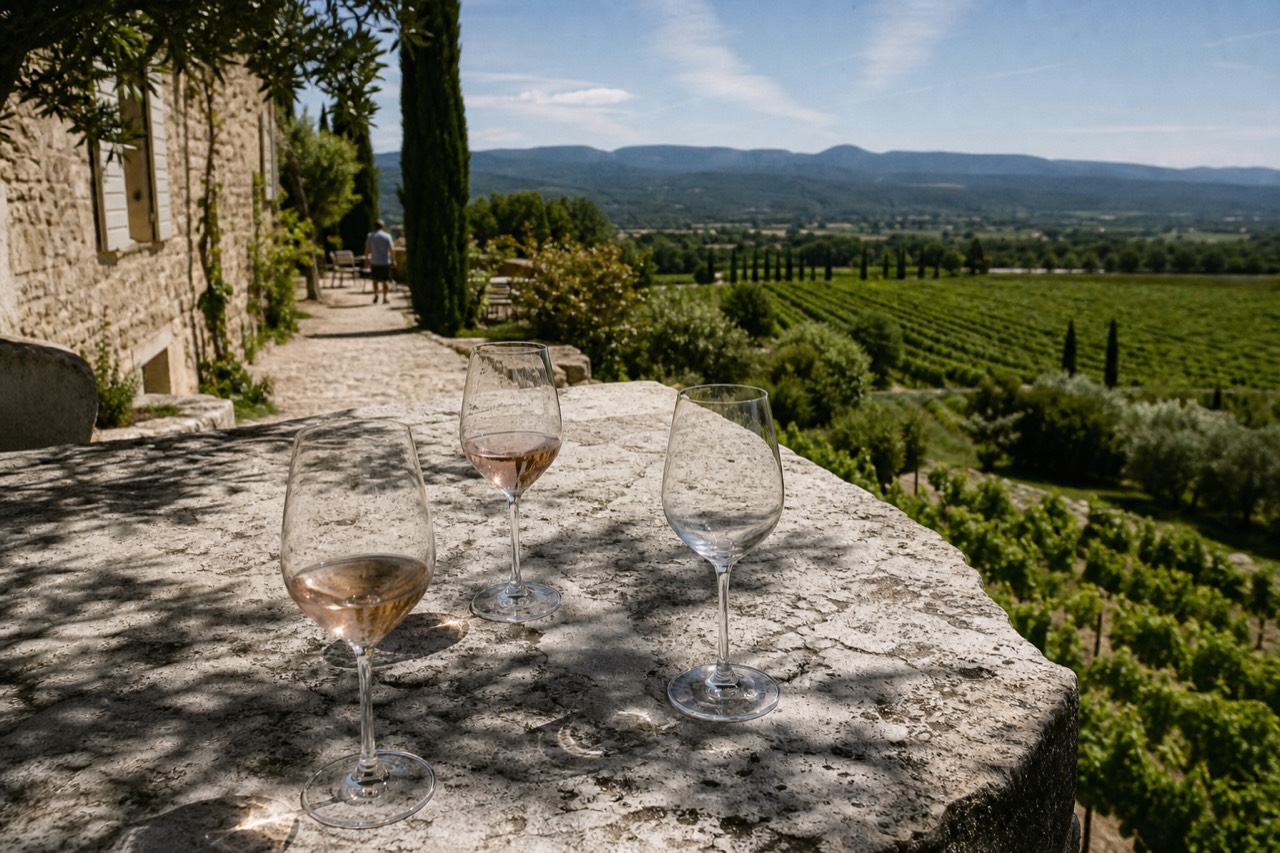
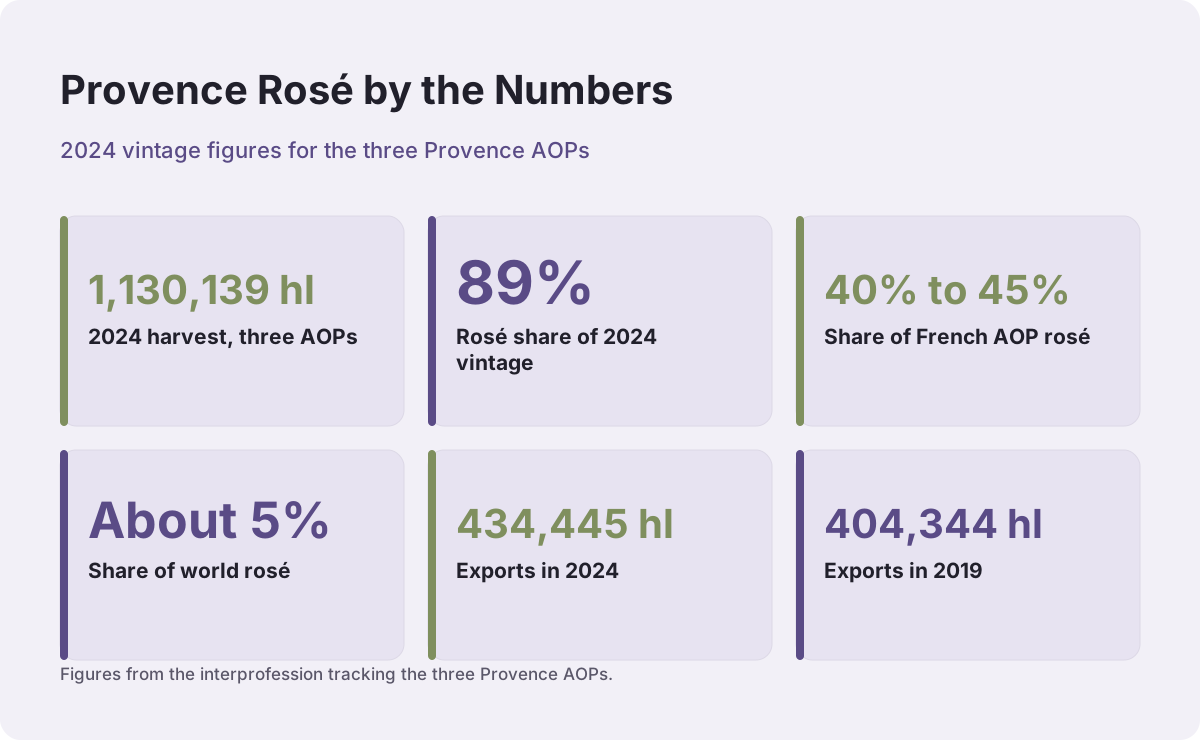
Provence rosé wine is the world's benchmark pale dry rosé, and the numbers behind it are bigger than most visitors expect: the region makes 40% to 45% of France's AOP rosé and about 5% of the world's.
Short answer
Provence rosé is a dry, pale wine made by pressing red grapes and bleeding off the juice early, across three AOPs: Côtes de Provence, Coteaux d'Aix-en-Provence and Coteaux Varois en Provence. The 2024 vintage was 89% rosé, and tastings from Aix or Avignon run from $103.36 per person.
Provence rosé wine is not a style the region dabbles in, it is the region's economic engine. Of the 1,130,139 hectolitres the three Provence AOPs produced in the 2024 vintage, 89% was rosé, and the interprofession that tracks those numbers states it plainly: Provence accounts for 40% to 45% of French AOP rosé production and roughly 5% of world rosé. Those are the figures behind the pale pink bottles that have spread from Saint-Tropez beach clubs to supermarket shelves worldwide.
This guide covers what Provence rosé actually is, how it is made, which grapes and appellations produce it, and how to plan a tasting day around it, with the real numbers attached. Where a figure is not verifiable, this page says so rather than inventing it.
What Is Provence Rosé Wine?
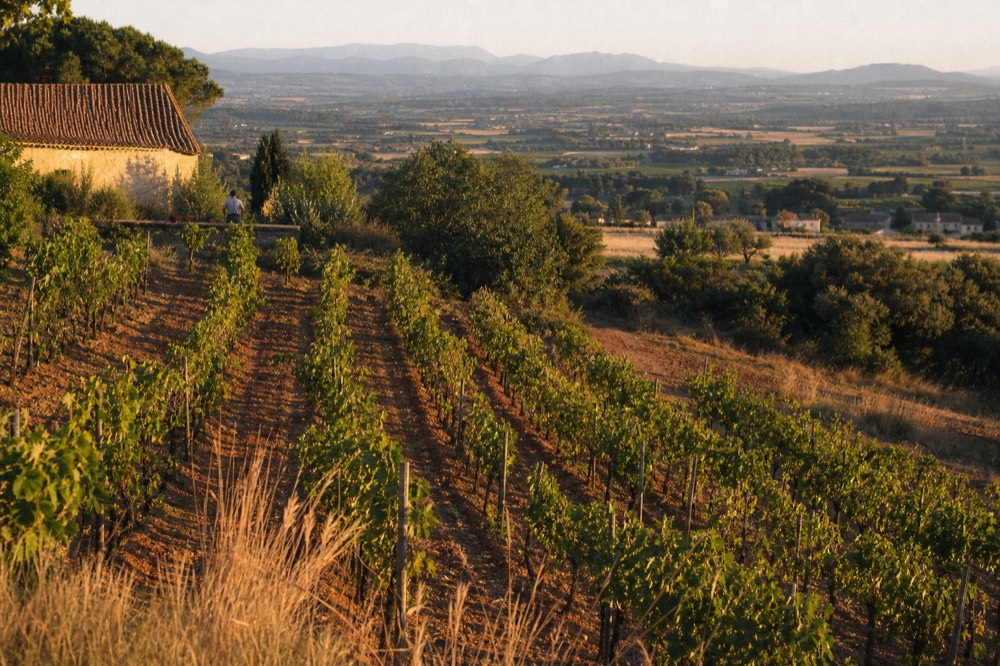
Provence rosé wine is a dry, pale-coloured rosé produced under three protected appellations in south-eastern France, Côtes de Provence, Coteaux d'Aix-en-Provence and Coteaux Varois en Provence, and it is made almost entirely from red grape varieties whose juice spends only hours in contact with the skins. It is the reference point that most of the world's rosé now imitates.
The word "Provence" on a rosé label carries legal weight only when it is one of those three AOP names, or one of the region's other appellations such as Bandol, Cassis or Les Baux-de-Provence. The interprofession, the CIVP, treats "Vins de Provence" as exactly the three big AOPs, which is why the rosé statistics you read about Provence never include Bandol or Cassis. That distinction matters when you are tasting your way around: a Cassis cellar pouring white is still in Provence, but it is outside the rosé numbers.
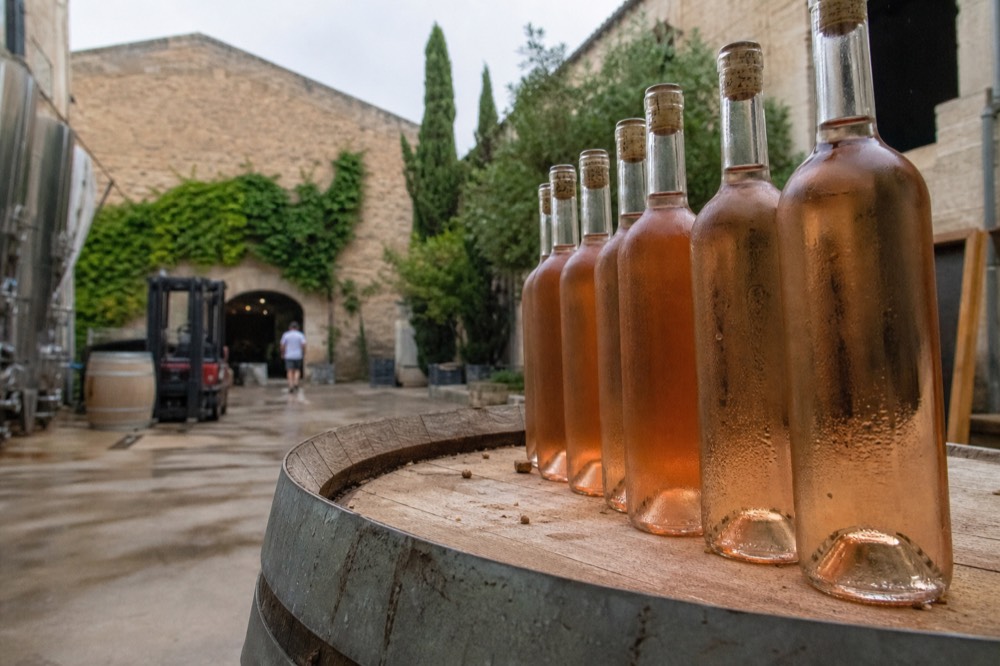
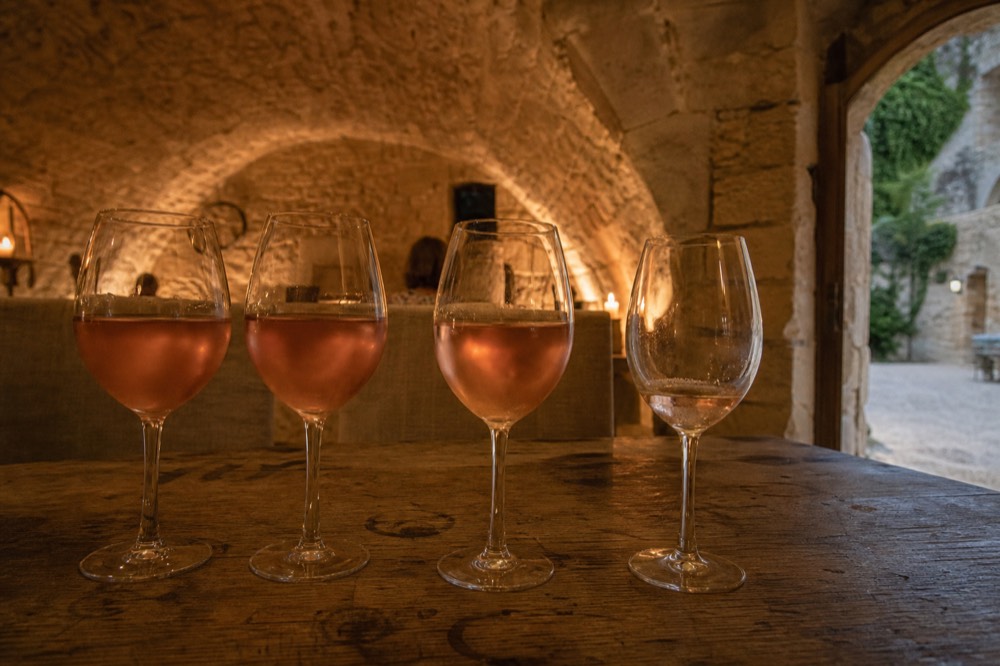
Dryness is the other defining trait. Provence rosé is fermented to near-total dryness as a rule, and the residual sugar that characterises sweeter rosé styles from elsewhere is essentially absent. The colour, famously, runs from pale onion-skin to light salmon, and the paleness is a deliberate winemaking choice rather than an accident of the terroir.
The scale is easy to underestimate. More than 550 producers make the three Provence AOPs, spread across 53 cooperative cellars, 456 private estates and 46 vinifying négociants. This is not a boutique curiosity, it is one of the largest coherent rosé-producing zones on earth, and the export volume backs that up: 434,445 hectolitres left France in 2024, up from 404,344 hectolitres in 2019.
Why Does Provence Dominate World Rosé?
Provence dominates rosé because it has the longest continuous winemaking history in France, a climate and soil suited to the grapes that make the style, and a production base that has specialised to the point where rosé is not a by-product but the point: 89% of the 2024 harvest across the three AOPs was pink. The region supplies 40% to 45% of French AOP rosé and about 5% of world rosé.
The Greeks brought vines to Massalia, modern Marseille, in antiquity, making Provence France's oldest wine region. For most of that history, pale rosé was simply what the hot, dry climate produced: grapes picked early for freshness, pressed gently, fermented cool. Red wine struggles to ripen fully in parts of the coastal zone, and the early-picked, short-maceration style that suits the climate happens to be the style the world now wants.
The specialisation is measurable in the appellation rules themselves. Côtes de Provence, the largest of the three AOPs at 20,300 hectares, permits 84 communes across three departments, and its principal red and rosé varieties, cinsault, grenache, mourvèdre, syrah and tibouren, are exactly the grapes that perform well in the Provençal heat. Tibouren is the local one to ask about at a cellar door: it is a variety native to Provence and it sits on the principal list.
| Measure | Figure | Scope |
|---|---|---|
| 2024 harvest | 1,130,139 hl | Three Provence AOPs combined |
| Rosé share of 2024 vintage | 89% | Three Provence AOPs combined |
| French AOP rosé share | 40% to 45% | AOP rosé only, not all French rosé |
| World rosé share | About 5% | Global rosé production |
| Export volume 2024 | 434,445 hl | All three AOPs |
| Export volume 2019 | 404,344 hl | All three AOPs |
One caution worth carrying: a flat claim that "Provence makes 40% of French rosé" is wrong. The French figure is AOP rosé only, and France produces a large volume of IGP and vin de France rosé outside the appellation system. Both the range and the scope travel with the number.
If tasting that specialisation in person is the goal, these three tours cover the rosé heartland from three different angles.
How Is Provence Rosé Made?
Provence rosé is made by limiting skin contact: red grapes are crushed and the juice is drained or pressed off the skins within hours, so only a little colour and tannin is extracted, then fermented cool and dry. The two methods are direct pressing and short maceration, and many estates blend both to hit their target colour and texture.
The colour in every rosé comes from anthocyanins in the grape skins. Red grapes have clear pulp, so if you press them immediately, the juice runs out nearly white: that is direct pressing, the paler method. If you let the crushed grapes sit for a few hours first, the juice picks up colour, flavour and a touch of structure: that is maceration, the saignée-adjacent method used deliberately in Provence rather than as a by-product of red winemaking.
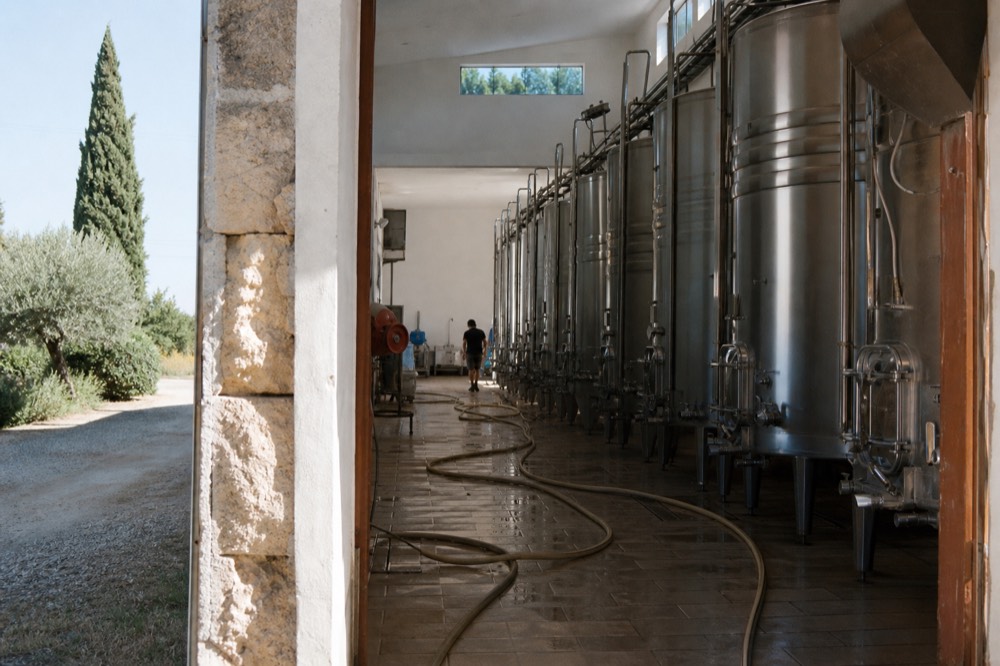
Temperature control is where modern Provence rosé earns its reputation. Cool fermentation in stainless steel preserves the delicate aromatics that boil off in a warm cellar, and it is one reason the region's wine changed so much in quality over the past few decades. Fermentation runs to dryness, leaving the wine crisp rather than sweet.
Blending is legal and common in Provence, and it is not a shortcut: a winemaker may combine different grape varieties, parcels or pressing fractions to build the wine's final profile. A single-variety rosé is the exception here, not the rule, and grenache, cinsault and syrah might all appear in one bottle.
There is a persistent myth that saignée, "bleeding" juice off a red wine ferment, is how Provence rosé is made. In practice the region's best producers treat rosé as the primary product and pick grapes specifically for it, at ripeness levels chosen for rosé, not for red. That intention is the real quality marker to ask about in a tasting room.
Wondering how to actually get to the cellar door? A booked tour arrives at estates the operator has arranged in advance, which matters because opening hours are set estate by estate and no region-wide rule exists.
Which Grapes Go Into Provence Rosé?
The principal rosé grapes of the three Provence AOPs are cinsault, grenache, mourvèdre, syrah and tibouren, with accessory varieties including vermentino, ugni blanc and carignan. Grenache and cinsault give fruit and body, syrah gives colour and spice, mourvèdre gives structure, and tibouren is the local aromatic signature found almost nowhere else.
Each appellation's official specification, the cahier des charges held by the INAO, fixes its own list. The lists overlap heavily but differ at the edges, and Coteaux d'Aix-en-Provence, unusually for the region, permits cabernet-sauvignon as an accessory variety. Knowing a few of these names turns a tasting from a blur of pink into a conversation.
| Grape | Role in Provence rosé | What it contributes |
|---|---|---|
| Grenache | Principal, all three AOPs | Body, red fruit, alcohol warmth |
| Cinsault | Principal, all three AOPs | Freshness, delicacy, pale colour |
| Syrah | Principal, all three AOPs | Colour, spice, aromatic lift |
| Mourvèdre | Principal, all three AOPs | Structure, savoury depth, ageing |
| Tibouren | Principal, Côtes de Provence | Perfume, distinctive local character |
| Vermentino | Accessory / white principal | Freshness in blends, white wines |
| Cabernet-sauvignon | Accessory, Coteaux d'Aix only | Colour and green-pepper note |
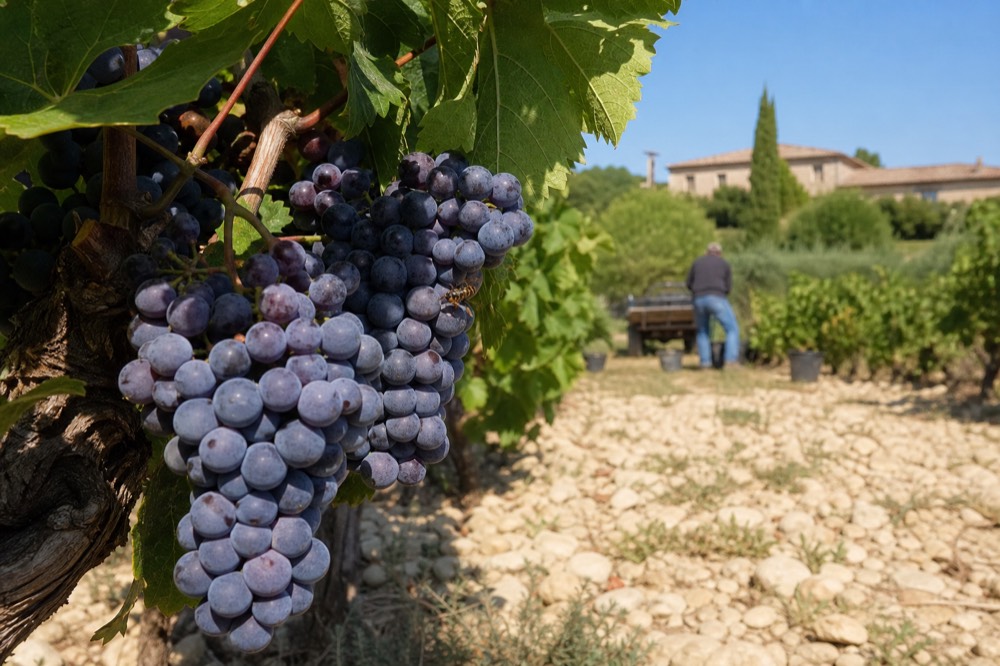
Tibouren deserves a second mention because it is the variety a knowledgeable visitor can actually impress a cellar master with. It is prone to rot and low-yielding, so plenty of estates have pulled it out, but the ones that kept it prize its perfume, and it appears on the principal list of the Côtes de Provence specification. Asking whether a rosé contains tibouren is a fair question at any Var cellar door.
Mourvèdre is the grape to watch in Bandol, where the appellation rules require it at 50% to 95% of red plantings and a minimum of 20% in the rosés, often 30% to 40% in practice. That is why Bandol rosé, at its best, is a broader, more structured wine than the coastal norm: the grape and the 18-month barrel ageing the reds must have both push it toward seriousness.
A short tasting route through the Sainte-Victoire sub-denomination, one of the five Côtes de Provence geographic names, is the easiest way to try these grapes side by side. The Sainte-Victoire Route tour from Aix runs 3 hours at $114.97 per person, rated 4.8 across 273 reviews, with tastings included and free cancellation.
What Do The Three Provence Aops Cover?
The three Provence AOPs are Côtes de Provence, Coteaux d'Aix-en-Provence and Coteaux Varois en Provence, recognised by decrees of 24 October 1977 and 24 December 1985 respectively for the first two, and together they made 1,130,139 hectolitres in 2024. Côtes de Provence alone covers 20,300 hectares and 84 communes.
Côtes de Provence is the giant: 71% of the 2024 harvest came from it, and its vineyards run from the hills behind Saint-Tropez to the Var interior and one commune in the Alpes-Maritimes. Within it sit five named sub-denominations, Sainte-Victoire, Fréjus, La Londe, Pierrefeu and Notre-Dame des Anges, each with tighter rules than the base appellation: the maximum average parcel load drops from 9,500 kg per hectare to 8,500 for all five. That yield discipline is the concrete, checkable reason a sub-denomination bottle is not just a label variant.
| Appellation | Recognised | 2024 harvest share | Notes |
|---|---|---|---|
| Côtes de Provence | Décret of 24 October 1977 | 71% | 20,300 ha, 84 communes, five sub-denominations |
| Coteaux d'Aix-en-Provence | Décret of 24 December 1985 | 18% | 4,100+ ha (2009 figure), cabernet-sauvignon permitted |
| Coteaux Varois en Provence | Third of the three AOPs | 11% | Var interior, cooler limestone hills |
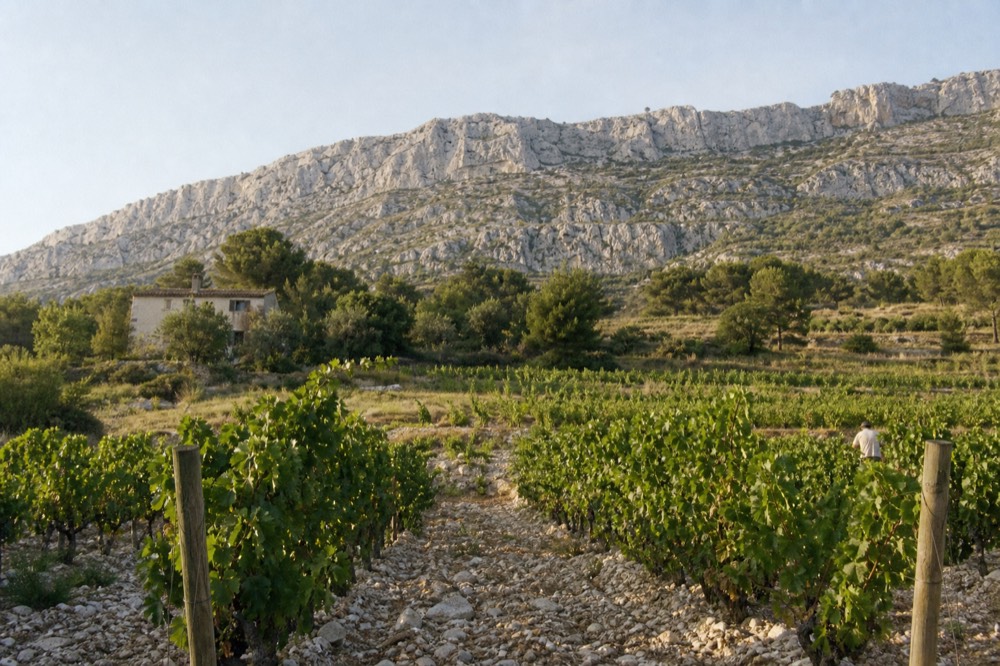
Coteaux d'Aix-en-Provence is the Aix appellation, and its 2009 snapshot in the official spec records more than 4,100 hectares shared between 12 cooperatives and 70 private estates. Its whites are built on vermentino, and its rosé list mirrors the regional standard with the cabernet-sauvignon quirk noted above. If you are staying in Aix, this is the countryside on your doorstep: Aix to Puyloubier below Sainte-Victoire is 24.5 km, about 31 minutes of free-flow driving.
Coteaux Varois en Provence, the smallest of the three at 11% of the harvest, sits on cooler limestone in the central Var, which tends to give rosés with a slightly firmer acid line. The three AOPs together produced 1,001,589 hectolitres of rosé in 2024, against 70,180 of white and 58,370 of red, and the harvest has been shrinking gently: 1,306,460 hl in 2022, 1,215,065 hl in 2023, 1,130,139 hl in 2024.
The colour split is not uniform across the three. Côtes de Provence sits at the heart of an 89% rosé harvest, while Coteaux d'Aix-en-Provence, with its white-leaning vermentino plantings, sat lower. For a fuller picture of how the region fits together, see the Provence wine region guide and the Provence wine map.
How Does Rosé Taste Outside The Big Three?
Outside the three rosé-focused AOPs, Provence's other appellations tell a different story: Cassis is officially white-dominant at about 70% of production, Bandol rosé is a structured mourvèdre-led wine, and Les Baux-de-Provence and the Luberon make rosé alongside reds and whites. These are not footnote regions, they are some of France's oldest appellations.
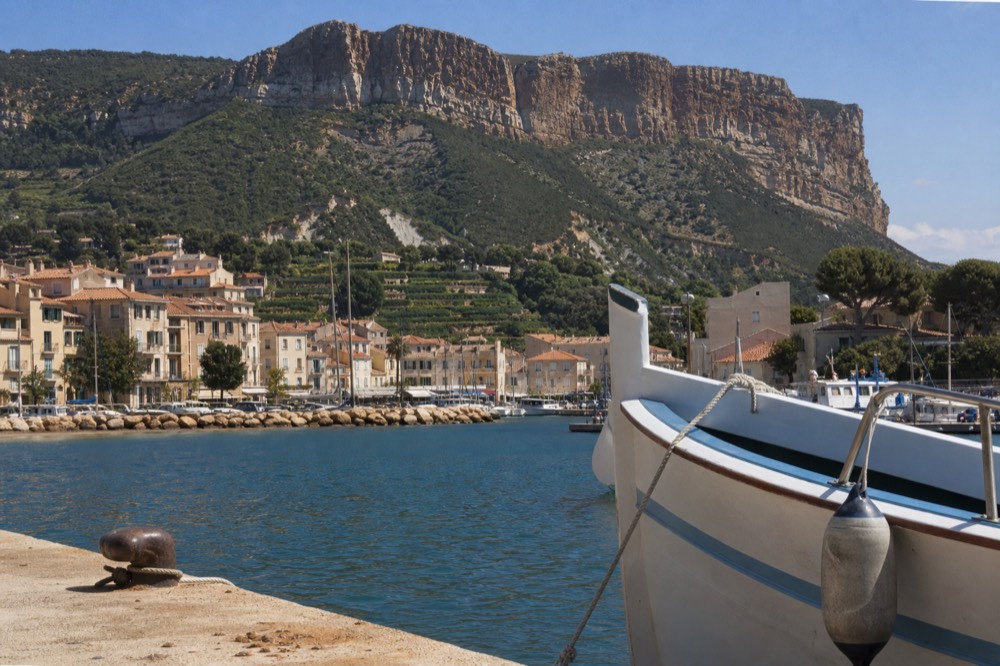
Cassis is the striking case. Its appellation, created by the decree of 15 May 1936, was one of France's first six wine AOCs alongside Châteauneuf-du-Pape, Arbois, Cognac, Monbazillac and Tavel, and its official specification states that white wine represents about 70% of total production. In a region famous for pink, the small Cassis amphitheatre above the sea makes a white wine from clairette and marsanne that locals drink with bouillabaisse, and has done since before rosé was fashionable.
Bandol, recognised by decree of 11 November 1941, is the counterweight: a red wine appellation first, whose mourvèdre-dominant reds must age at least 18 months in barrel or foudre before release. Its rosé, carrying that 20% to 40% mourvèdre, is closer to a light red in texture than the pale coastal style, and it is the rosé to taste if you want to understand the grape's range. Marseille to Cassis is 25.7 km, and Marseille to Bandol 54.9 km, so the two make a natural pairing from either Aix or Marseille.
Les Baux-de-Provence, an independent AOC only since the decree of 20 April 1995 after starting as a sub-denomination of Coteaux d'Aix, makes reds and rosés from grenache, mourvèdre and syrah in the Alpilles. The Luberon, first recognised as Côtes du Luberon in 1988 and renamed in 2009, is administratively a Rhône valley appellation even though it is sold to visitors as a Provence day out, so it should not be folded into the Provence rosé statistics.
The 8-hour Bandol and Cassis rosé-focused day from Aix covers exactly this contrast, the white-dominant Cassis and the mourvèdre Bandol, at $191.62 per person with tastings included, free cancellation and a small-group format. For more on these two appellations, see the Bandol and Cassis wine tours guide.
What Should You Expect To Pay For A Tasting Day?
Small-group Provence wine tours with tastings included run from $103.36 per person for a 4-hour half day to $209.04 for a 10-hour full day, depending on length and departure city. Private tours start at $516.80 per person from Saint-Tropez, and two private options are priced per group at $1,103.29 and $1,219.42 for the vehicle.
The price generally tracks hours and distance rather than wine quality: a 3-hour tasting near Aix costs about half a full day that drives to the coast or the Rhône. The half-day Châteauneuf-du-Pape from Avignon, at $103.36 per person for 4 hours with tastings included and a 4.8 rating across 456 reviews, is the cheapest full tasting experience on the roster, and it works because Avignon sits only 17.4 km, about 23 minutes, from Châteauneuf-du-Pape.
| Tour | Base | Length | Price | Rating |
|---|---|---|---|---|
| Half-Day Châteauneuf-du-Pape | Avignon | 4 hours | $103.36 pp | 4.8, 456 reviews |
| Sainte-Victoire Route tasting | Aix-en-Provence | 3 hours | $114.97 pp | 4.8, 273 reviews |
| Cézanne Country, Côtes de Provence | Aix-en-Provence | 3 hours | $117.01 pp | 4.9, 288 reviews |
| Bandol and Cassis, rosé focus | Aix-en-Provence | 8 hours | $191.62 pp | 5, 2 reviews |
| Three-Estates Châteauneuf-du-Pape | Avignon | 7 hours | $207 pp | 5, 553 reviews |
| Private full day, pickup included | Aix-en-Provence | 6-8 hours | $562.33 pp | 5, 33 reviews |
Two practical notes on those figures. First, tastings are included in the price on every small-group tour listed above, but the private luxury options from Saint-Tropez and Carpentras charge tastings separately at the cellar door, so compare on total cost. Second, a rating never stands alone honestly: a 5 across 553 reviews and a 5 across 2 reviews are different facts, and the review count is what makes quoting either of them fair.
If you are weighing a rosé-focused day against a Rhône red day, the half-day Châteauneuf-du-Pape option is the cheapest way to see the contrast, and it pairs naturally with a second day in the Côtes de Provence heartland. For departure-city specifics, the wine tours from Aix and wine tours from Avignon guides break the options down.
When Is The Best Time To Taste Provence Rosé?
The best time to taste Provence rosé is late spring through early autumn: the harvest starts in the second half of August in the earliest parcels and runs into September, the summer season runs April to September, and 43.1 million visitor nights were recorded in the region in that 2025 window. May, June and September balance good weather against thinner crowds.
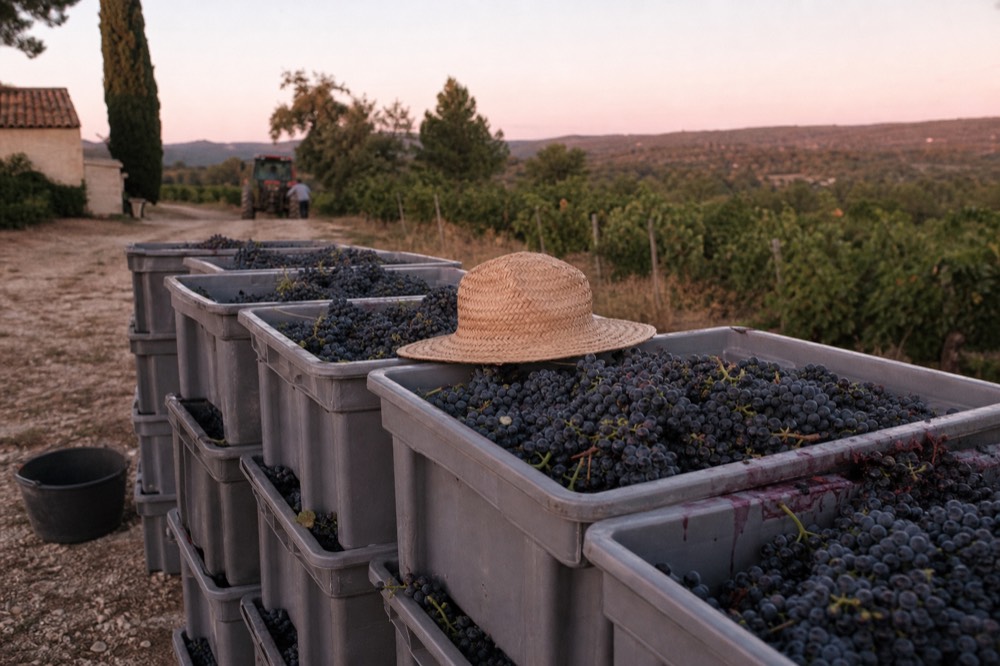
The harvest itself is the romantic window, and it is real but not bookable to a date. The interprofession reported the first secateur cuts of the 2025 harvest made around 12 August in the earliest parcels, with later sectors picking through mid-September, and a precise region-wide start date does not exist because it changes every year. What a visitor can count on is that a late-August or September visit coincides with the busiest, most aromatic period in the cellars.
One weather factor that surprises visitors is the mistral. It is a dry, usually sunny wind averaging around 50 km/h with gusts of 80 to 100 km/h, strongest in winter and spring, and it hits hardest between Orange, Avignon, Istres and Arles, exactly the Châteauneuf-du-Pape side of the region. It is a cold-and-comfort risk on an outdoor terrace, not a rain risk, so a windproof layer is better planning than a raincoat for a spring Rhône tasting.
On crowds, the honest scope matters: a widely quoted 44% July-August concentration figure covers platform-booked short-term rentals in 2022 only, not all accommodation and not wine-tour demand. The general summer season is April to September, and the region's 2025 season showed 43.1 million nights, up 1.9% on 2024, a smaller rise than France as a whole.
Beyond the timing, one legal point is worth every visitor knowing: France's drink-driving limit is 0.5 g per litre of blood generally, but 0.2 g per litre for anyone on a probationary licence, which covers drivers within three years of passing their test, or two after accompanied driving. That lower limit is effectively zero glasses, and it is the honest reason a driven wine tour exists. This is why Provence Wine Tours exists as a site at all: someone else should hold the wheel on a tasting day.
For more on the practicalities of a cellar visit, including what to wear, see can you wear jeans to a wine tour, and for the wider picture of what to taste, the which wine is Provence most famous for post sets rosé in context.
Whichever corner of the region you choose, these three tours cover the rosé heartland and its two most interesting contrasts.
Provence rosé is a dry, pale wine from the three Provence AOPs, made from red grapes with brief skin contact, and it accounts for 89% of the region's 2024 harvest. The questions below cover the essentials visitors ask most: sweetness, grapes, the rosé share, drink-driving law, and how Bandol rosé differs from the coastal style.
Common Questions About Provence Rosé Wine
What Is Provence Rosé Wine?
A dry, pale rosé made mostly from red grapes, cinsault, grenache, mourvèdre, syrah and tibouren, under the three Provence AOPs: Côtes de Provence, Coteaux d'Aix-en-Provence and Coteaux Varois en Provence. The 2024 vintage was 89% rosé across those appellations.
Is Provence Rosé Sweet Or Dry?
Dry. Provence rosé is fermented to near-total dryness as a standard, and the residual sugar associated with sweeter rosé styles is essentially absent. The pale colour comes from brief skin contact, not from sweetness.
Which Grapes Are Used In Provence Rosé?
The principal varieties are cinsault, grenache, mourvèdre, syrah and tibouren, with accessory varieties including vermentino, ugni blanc and carignan. Tibouren is native to Provence and appears on the principal list of the Côtes de Provence specification.
How Much Of Provence's Wine Is Rosé?
89% of the 2024 harvest across the three Provence AOPs, or 1,001,589 hectolitres out of 1,130,139 total. That figure covers the three big AOPs only, not Bandol, Cassis or Les Baux-de-Provence.
Can You Drink And Drive After A Wine Tasting In Provence?
Not safely within the legal limits. France's general limit is 0.5 g per litre of blood, and the probationary-licence limit is 0.2 g per litre, effectively zero, for anyone within three years of passing their test. A driven tour is the practical answer.
What Does Bandol Rosé Taste Like Compared To Côtes De Provence?
Bandol rosé must contain at least 20% mourvèdre, often 30% to 40%, giving it more structure and savoury depth than the pale coastal style. Côtes de Provence rosé is typically lighter, fresher and paler, built on grenache and cinsault.