Valensole Provence Lavender Fields Worth Visiting
An honest look at the Valensole plateau's lavender fields: what the visit actually involves, when to time it, how to pair it with Provence wine country, and what to know before you drive.
Valensole Provence Lavender Fields Worth Visiting
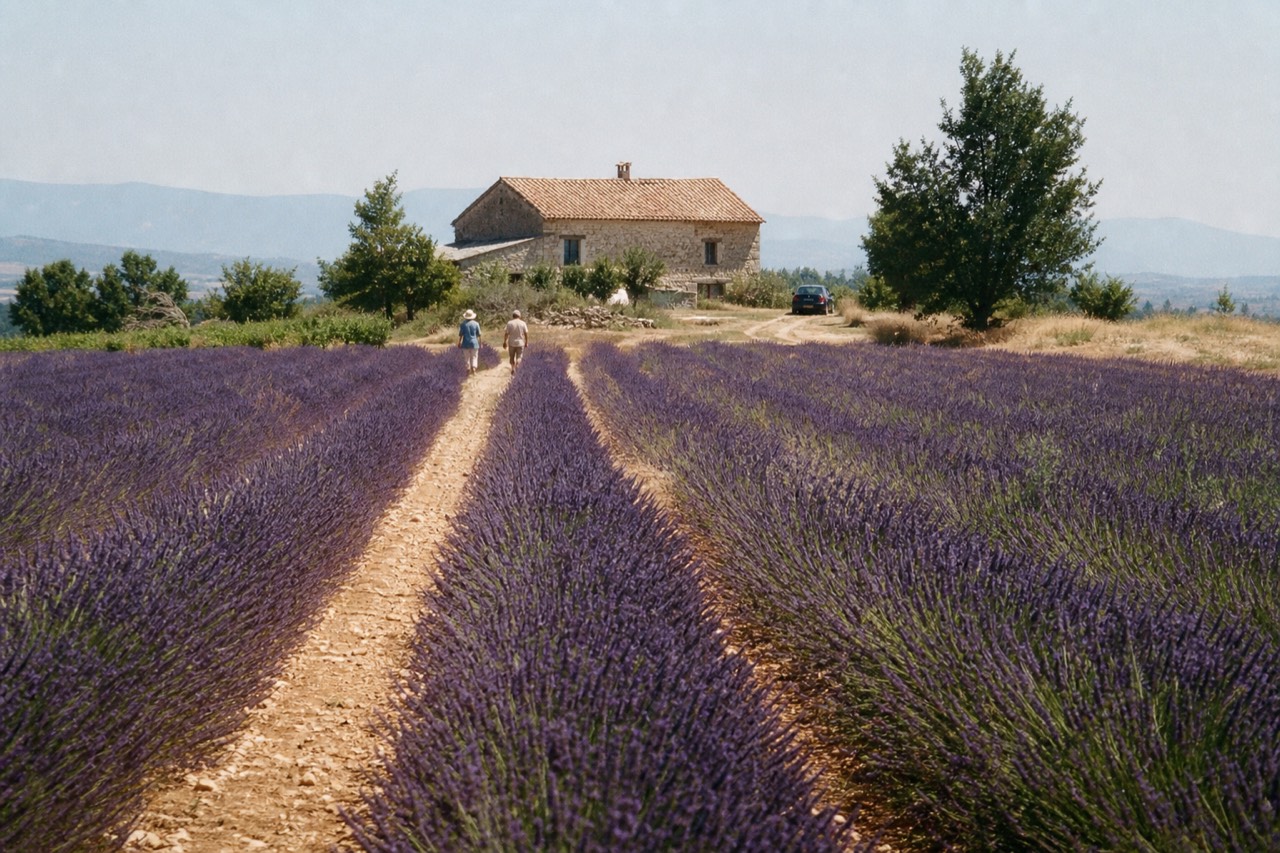
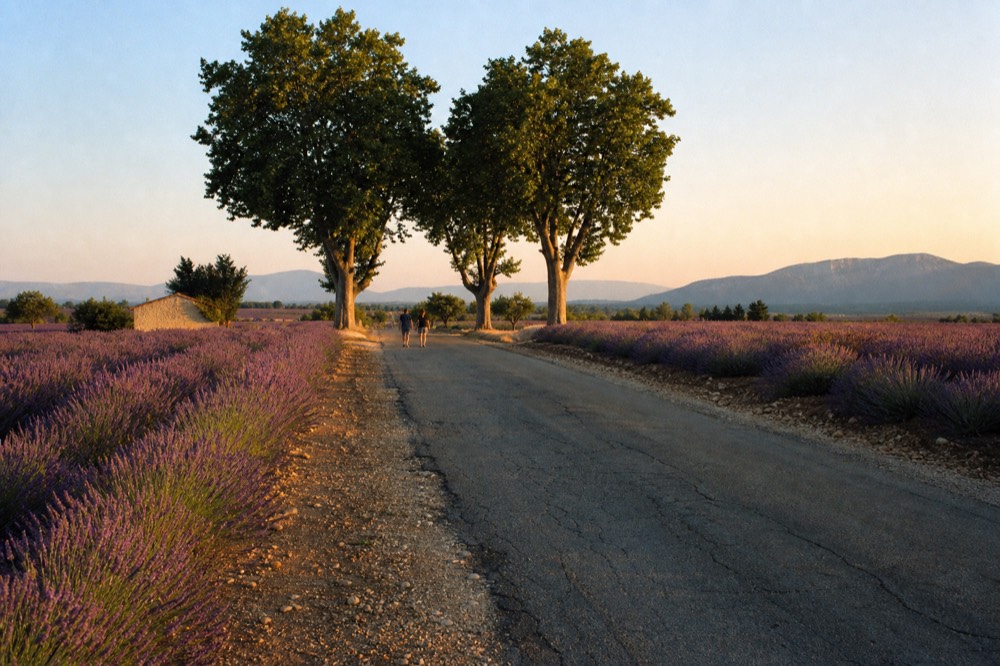
Yes, and for one specific reason: Valensole is a working farmed plateau rather than a garden planted for visitors, so the lavender you photograph is a crop, harvested like any other. That changes the visit. You are walking field edges on public roads among producers' land, not entering a park, and the scale is the draw: whole horizons of purple, worked by farms whose livelihood is oil and honey, not ticket sales.
The plateau sits inland from the Côte d'Azur, in the Alpes-de-Haute-Provence, and its name comes from its principal village: Valensole, a small town whose old streets and Tuesday-market square give the area a base with cafés, a bakery or two, and the practical services a day trip needs (see Best Base in Provence). The fields fan out from there across high, flat farmland, interrupted by stone farmhouses, almond trees and, in the distance, the ridgeline of the Luberon and the pre-Alps.
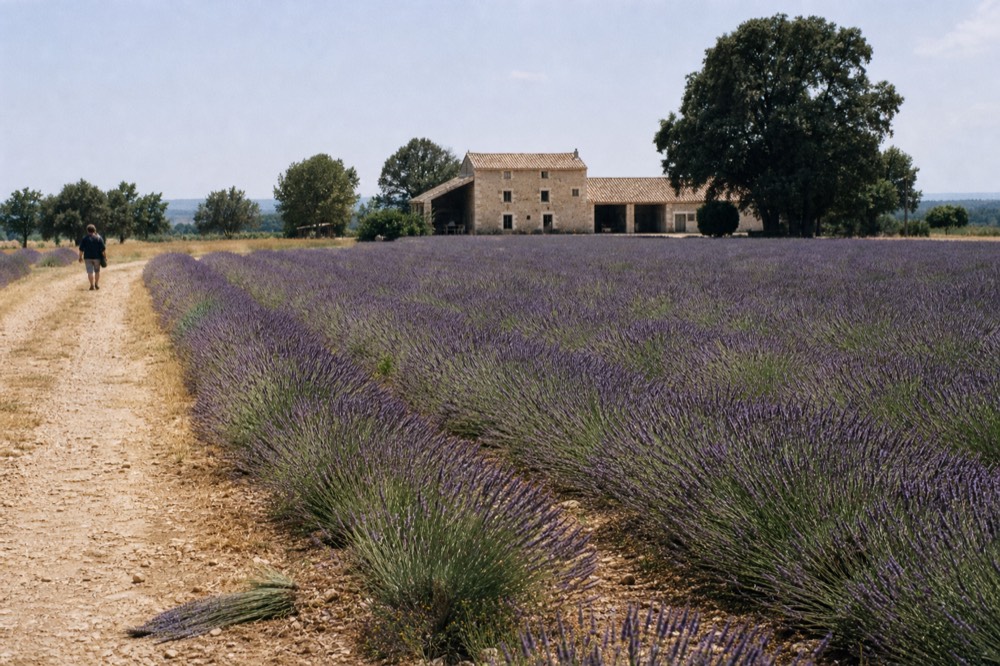
What surprises most first-time visitors is that the lavender is genuinely agricultural. Provence lavender has been grown for its essential oil for well over a century, and the plateau remains one of its heartlands, alongside the distilleries around Sault in the Vaucluse and the Ségriès plateau. Farmers plant it in long rows because rows suit the harvesters, and the harvest happens on the farmers' schedule, not the photographers'. A field that was the region's most-photographed on Monday can be cut flat by Friday.
That cuts both ways. It means the landscape you see is authentic, working Provence rather than a set dressed for tourists. It also means timing matters more than anywhere on the coast, and it means the etiquette of the visit is simple: stay on roads and public paths, never walk into the rows, and treat the farm tracks as someone's workplace. The farmers of the plateau have grown vocal in recent years about visitors trampling plants for photos, and respecting the field edges is both the courteous and the correct thing to do.
If your trip is anchored on the coast, at Cannes, Nice or Antibes, the plateau is a serious but doable day out, and many travelers pair it with a slower second day in the wine country closer to the coast. The three options below are the driven small-group wine days that pair most naturally with a lavender itinerary from the Riviera side.
When Is The Best Time Of Year For Lavender In Provence?
There is no fixed bloom calendar, and any source printing exact dates is guessing. Lavender flowering shifts with each year's weather, and no official body publishes a regional bloom forecast for the plateau. What can be said honestly is that the flowers come into color in early summer, peak around the height of the tourist season, and are harvested before the grape harvest begins, so a visit planned for the heart of July has the best odds of full color.
The honest framing matters here because the internet is full of confident, contradictory bloom charts. Official tourism figures still show the shape of the season around the flowers. INSEE, the French national statistics office, defines the summer tourist season in Provence-Alpes-Côte d'Azur as April to September, and in that window in 2025 the region recorded 43.1 million nights, up 1.9% on 2024. That is the pool of visitors you are sharing the plateau's narrow roads with, and it is largest in July and August.
One more figure, with its scope stated because it is often misquoted: for accommodation booked through short-term rental platforms in 2022, hotels and campsites excluded, 44% of nights in the region fell in July and August, against 37% nationally. That is a platform-rental figure, not a measure of all lodging and not a measure of wine-tour or lavender-viewing demand, but it tells you when the coast and its roads are at their fullest.
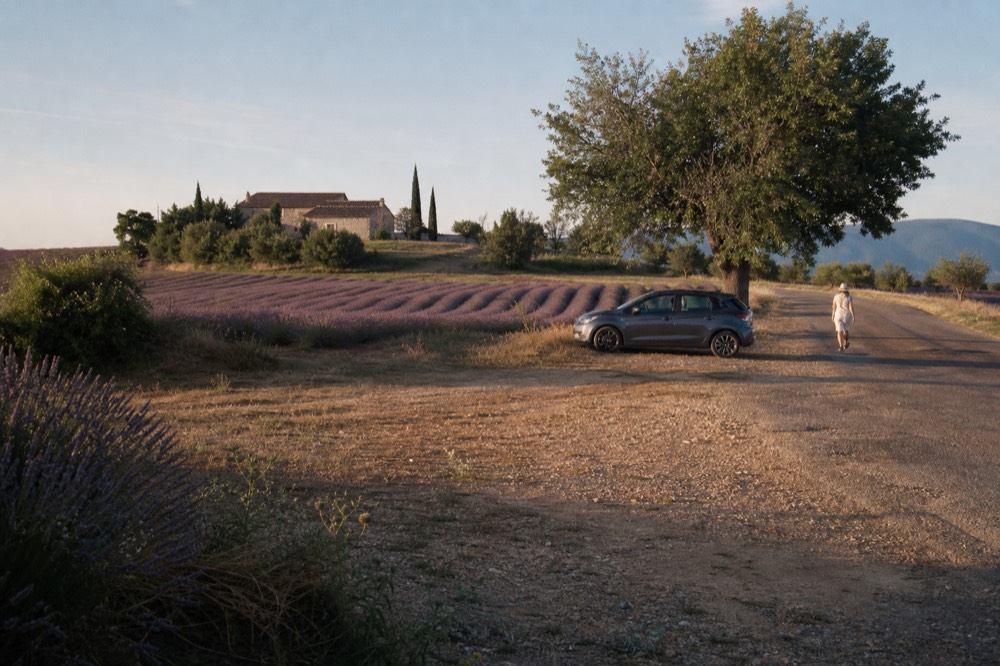
The practical read: the weeks when lavender color is most reliable are also the weeks when the region is busiest. If you want the flowers, accept the crowds and go early in the morning, when the light is better for photography anyway and the roadside pull-ins are still empty. If you would rather have the roads to yourself, late June or the quieter shoulder weeks carry more risk of cut fields. Whichever you choose, the harvest itself is a moving target: the Provence grape harvest begins in the earliest parcels in the second half of August and runs into September, and lavender cutting is finished well before that, so late-summer visitors should expect stubble, not purple.
For travelers deciding between months more broadly, our piece on the best month to visit Provence works through the same trade-off for the region as a whole, and the lavender question is one strand of it.
Is Valensole Worth The Drive From The Coast?
From the Riviera, yes, but plan it as a full day and be realistic about the distances. The plateau sits deep inland, and the drive from the Nice area is on the order of two and a half hours each way in free-flow conditions, longer in July and August traffic. Verified road routing puts Nice to Saint-Tropez at 111.9 km and 98 minutes of free-flow driving, and Valensole is considerably farther inland than that.
That is not a reason to skip it. It is a reason to decide what kind of day you want. If you are based in Cannes, Nice or Antibes and lavender is a priority, a single long day on the plateau, leaving early and returning for a late dinner, is a well-trodden plan and a rewarding one. What it is not is a quick stop on the way to something else; the plateau deserves, and frankly requires, most of a day.
The alternative is to split the trip. Many visitors spend a night or two inland, at Valensole itself, at Manosque, or in the Luberon villages, and use that base for both the lavender and the wine country of the interior. Aix-en-Provence is another common anchor: it is roughly an hour inland of Marseille and 31.8 km from the city by road, and from Aix the plateau, the Luberon and the Sainte-Victoire vineyards all fall inside comfortable day-trip range.
If you would rather not drive the inland roads at all, a driven tour solves it, and the coastal wine tours run by the same operators cover the same logistics for the cellar side of the trip. The 8-Hour Small Group tour from Cannes, at $207.88 per person and rated 4.9 across 56 reviews, includes tastings in the price and comes with free cancellation, which matters when your whole itinerary hangs on a bloom that shifts week to week. It pairs naturally with a lavender day as the slower, seated counterpart.
Can You Combine The Lavender Fields With Wine Tasting?
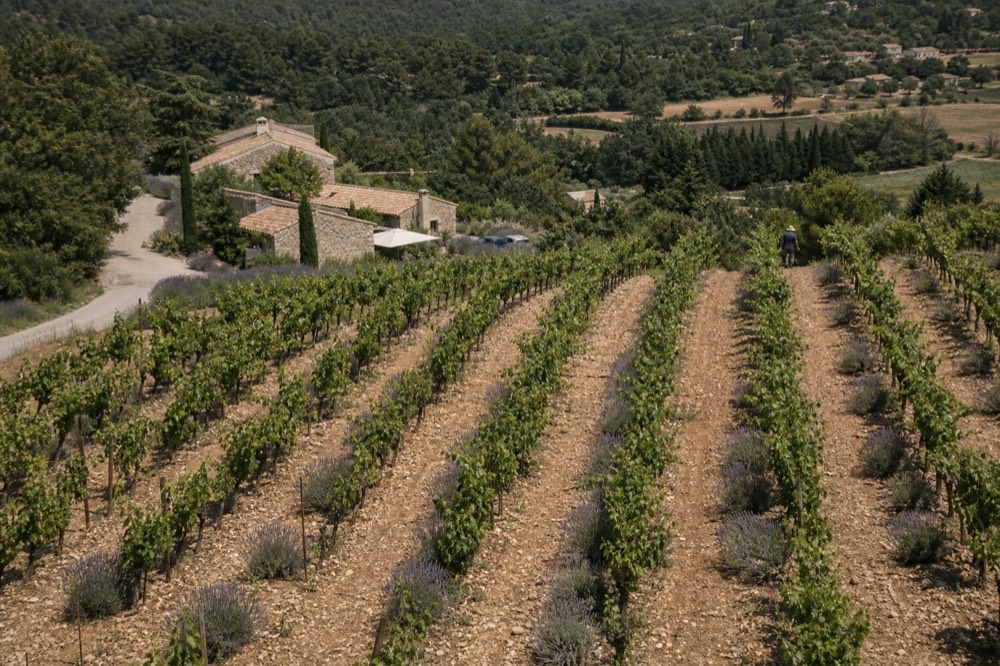
Yes, and the geography makes it easier than you might expect, because lavender and vines share the same inland Provence. The plateau's neighbors include the Luberon appellation and the Côtes de Provence heartland, and the two crops are often visible from the same viewpoint. A realistic plan is lavender in the morning, when the light is soft and the roads are quiet, then a cellar visit or a guided tasting in the afternoon.
The wine side of that plan deserves its own attention, and it is the subject of our Provence wine region guide. The short version for this itinerary: the Côtes de Provence appellation covers 84 communes across three departments, granted AOC status by the decree of 24 October 1977, and its 2024 vintage was 89% rosé, 6% white and 5% red across 1,130,139 hectolitres. That rosé dominance is why a lavender-and-wine day in this part of the world is, in practice, a lavender-and-rosé day.
For a tasting closer to the coast after a plateau morning, the small-group options from Cannes and Nice cover the Côtes de Provence cellars without you taking the wheel inland twice in one day. If your base is Aix instead, the Sainte-Victoire Route tour runs three hours at $114.97 per person, rated 4.8 across 273 reviews with tastings included, and the Sainte-Victoire sub-denomination itself is one of the appellation's five named zones, reserved for red and rosé only, with its production area approved by the INAO national committee in May 2004.
What Should You Know Before You Go?
Three practical things shape a Valensole day. First, the weather risk is wind and heat, not rain: the mistral blows hardest in winter and spring, averages around 50 km/h and can gust to 80 or 100 km/h. Second, if wine is on the itinerary, France's drink-driving limit is 0.5 g/L blood, and just 0.2 g/L on a probationary licence. Third, the legal drinking age is 18.
The mistral point deserves spelling out because it is counterintuitive. Météo-France describes it as a turbulent, generally dry regional wind, and mistral days are usually very sunny because the wind clears the cloud. Its strongest zone runs between Orange, Avignon, Istres and Arles, so the plateau catches its edge rather than its worst, but a spring visit can still meet a wind that flattens hats and steals picnic napkins. An episode can last several days, occasionally more than a week. Bring a windproof layer in spring and take the sun seriously in July, when shade on the plateau is scarce.
The drink-driving point is the honest reason a driven wine tour exists at all. The general French limit is 0.5 g/L of blood, or 0.25 mg per litre of breath, and for anyone on a probationary licence, which runs three years, or two after accompanied driving, the limit drops to 0.2 g/L. The road-safety authority ran the rule under the line that for a probationary holder, 0.2 g/L means zero glasses. Cellar staff are also required by law to check age, and the legal drinking age is 18. A hired car and a tasting day simply do not mix for those drivers, and penalties above 0.8 g/L cross into criminal territory. On the plateau side, the same logic applies to the lavender liqueurs and the local wines sold at farm gates: taste, buy, and let someone else drive.
A simple planning table for the pairing:
| Option | Base | Duration | Price | Rating | Tastings |
|---|---|---|---|---|---|
| 8-Hour Small Group wine tour | Cannes | 8 hours | $207.88 per person | 4.9 across 56 reviews | Included |
| Full-Day Côtes de Provence, hotel pickup | Nice | 8 hours | $191.62 per person | 4.9 across 237 reviews | Included |
| Sainte-Victoire Route tasting | Aix-en-Provence | 3 hours | $114.97 per person | 4.8 across 273 reviews | Included |
All three are small-group, driven days with free cancellation, which is the practical answer to the plateau's one planning headache: the bloom moves, and so should your ability to move with it.
One last planning note on where to anchor the whole trip. The coast gives you the Riviera and the longest drives; Aix gives you the shortest routes to both lavender and vines; Avignon puts you beside the Rhône appellations instead, 17.4 km and 23 free-flow minutes from Châteauneuf-du-Pape, which is a different wine world entirely. For a lavender-first itinerary, an inland base wins, and the pairing of plateau mornings with cellar afternoons is the version of Provence that Provence Wine Tours exists to help you plan.
The short answers below cover the questions readers ask most about the plateau: whether it is worth the trip, when the flowers are at their best, how far it is from the coast, and how to pair it with wine country. Each answer keeps to what is verified, and flags where no official figure exists.
Common Questions About The Valensole Lavender Fields
Valensole Provence Lavender Fields Worth Visiting?
Yes. The plateau is a working farming landscape of lavender grown for essential oil, not a tourist planting, and the scale of the bloom, whole horizons of purple around the village of Valensole, is the reason it became the region's signature image. Go early in the day, stay on public roads and field edges, and plan for a full day if you are coming from the coast.
When Do The Valensole Lavender Fields Bloom?
There is no official bloom calendar, and flowering shifts with each year's weather, so exact dates printed anywhere are estimates rather than facts. Color builds through early summer and peaks in the heart of the July-August visitor season, with the harvest finished before the grape harvest begins in the second half of August. Check local, on-the-ground reports shortly before you travel.
How Far Is Valensole From Nice Or Cannes?
It is a long inland run: the drive from the Nice area is on the order of two and a half hours each way in free-flow conditions, and longer in July and August traffic. Verified routing puts Nice to Saint-Tropez alone at 111.9 km and 98 minutes, and the plateau sits well beyond that. Many travelers break the journey with a night inland at Valensole, Manosque or in the Luberon.
Can You Visit Lavender Fields And Wineries On The Same Trip?
Yes. Lavender and vines share inland Provence, and a common plan is a plateau morning followed by an afternoon tasting in the Luberon or Côtes de Provence. Driven small-group wine tours from Cannes, Nice and Aix cover the cellar side, with tastings included in the price, so nobody in your party has to drive after pouring.
Is It Rude To Walk Into The Lavender Rows For Photos?
Yes, and increasingly the farms say so publicly. The fields are crops on working farmland, and trampled plants are lost yield for the growers. Stay on roads, paths and public field edges, leave gates as you find them, and photograph from the boundary. The views from the roadside are the famous ones anyway.
What Should You Pack For A Valensole Day?
Sun protection and water above all: the plateau is high, open and short on shade, and July days are hot. A windproof layer matters in spring, when the mistral can gust to 80 or 100 km/h even under clear skies. Comfortable shoes for farm-road walking, and a cooler bag for the honey, oil and wine you will almost certainly buy at a farm gate.