Coteaux d'Aix-en-Provence Wine: The Appellation Guide
Coteaux d'Aix-en-Provence is the appellation that wraps around Aix itself, and it is quietly the second-largest of the three core Provence AOPs. Here is what is in the glass, where the vines sit, and how to taste them without driving.
Short answer
Coteaux d'Aix-en-Provence is a French AOC created by the decree of 24 December 1985, making white, red and rosé across more than 4,100 hectares in 2009 around Aix-en-Provence. It produced 168,949 hectolitres of rosé in 2024, about 18% of the three Provence AOPs' harvest, with tastings from $114.97 per person from Aix.
What Is Coteaux d'Aix-en-Provence Wine?
Coteaux d'Aix-en-Provence is a French controlled appellation, granted by the decree of 24 December 1985, producing white, red and rosé wines from vineyards spread around Aix-en-Provence to the north and west of the city, and it is the second-largest of the three core Provence appellations after Côtes de Provence itself. The official specification records more than 4,100 hectares in 2009, with an average annual production of 195,000 hectolitres shared between 12 cooperative cellars and 70 private estates.
The appellation sits inside what the CIVP, the Provence wine interprofession, counts as "Vins de Provence": Côtes de Provence, Coteaux d'Aix-en-Provence and Coteaux Varois en Provence. In the 2024 vintage the three together produced 1,130,139 hectolitres, of which Coteaux d'Aix contributed about 18%. That is a serious volume of wine, yet the appellation gets a fraction of the attention given to its bigger neighbour, partly because so much of it is sold through cooperatives and partly because the Côtes de Provence name has the stronger hold on the rosé story.
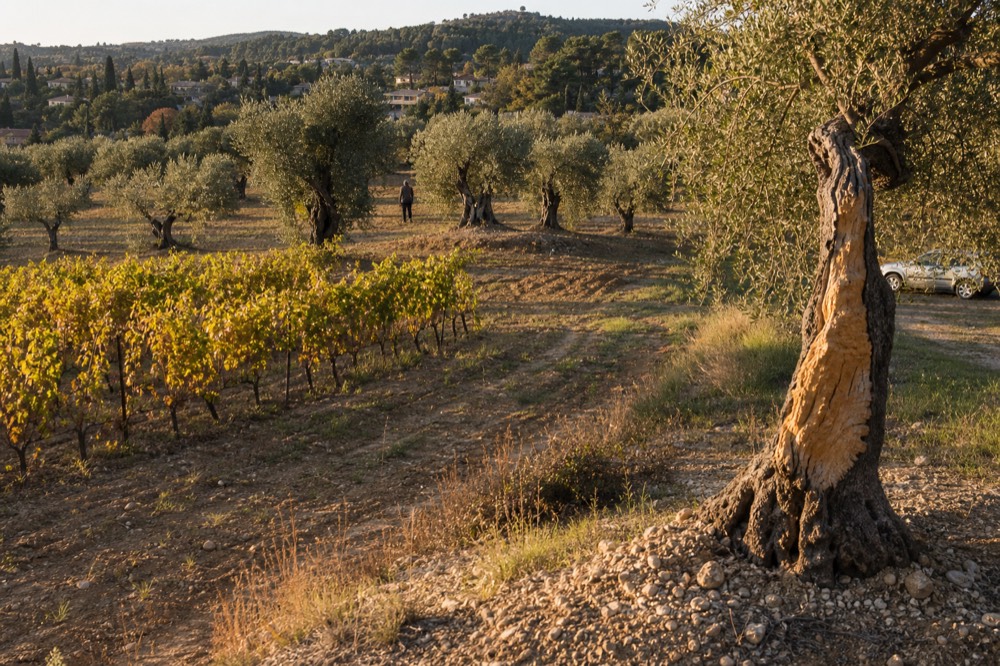
One point of history worth knowing: the appellation was recognised in 1985, which makes it young compared with Cassis or Châteauneuf-du-Pape, both decreed on 15 May 1936 as two of France's first six wine AOCs. But the vineyards are anything but new. The Durance valley and the hills around Aix have grown vines since Roman times, and the 1985 decree was a consolidation of that long history rather than a beginning. The current specification was approved by the INAO national committee and is published on the INAO official site.
If you are staying in Aix, this is the wine region on your doorstep. The appellation's cellars sit within an hour's drive of the city centre, and several of them are reachable on a half-day tour, which matters more than it sounds once you know the drink-driving rules, which we come to later.
| Fact | Detail |
|---|---|
| AOC decree | 24 December 1985 |
| Colours | White, red, rosé |
| Planted area | More than 4,100 hectares (2009 snapshot, per the INAO spec) |
| Average annual production | 195,000 hectolitres (2009 snapshot) |
| Structure | 12 cooperative cellars, 70 private estates (2009 snapshot) |
| Share of 2024 Provence AOP harvest | About 18% of 1,130,139 hl |
Where Are The Coteaux d'Aix Vineyards?
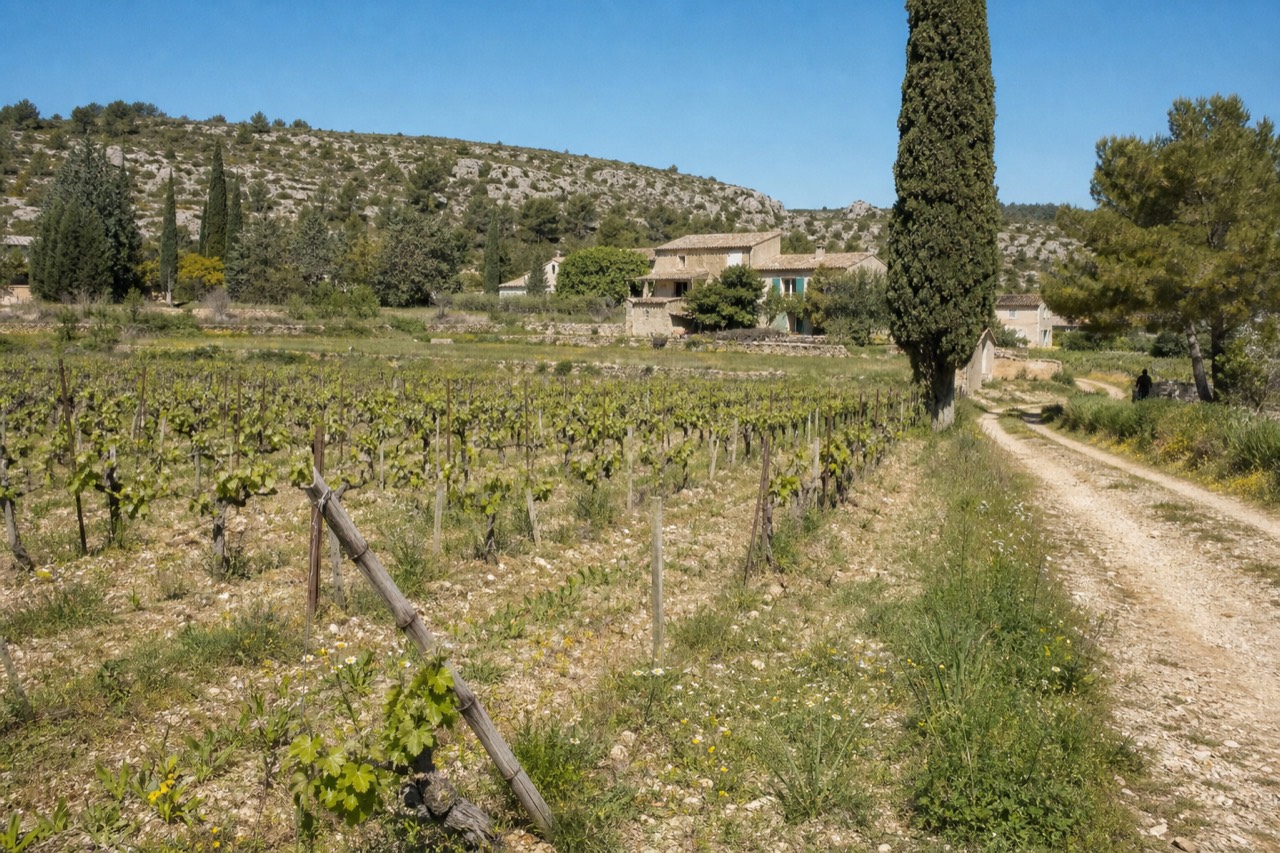
The vineyards form a wide arc around Aix-en-Provence, stretching north and west of the city across the Bouches-du-Rhône and into the Var, bounded broadly by the Durance river to the north and the Étang de Berre to the west. The landscape is one of low limestone hills, mixed olive groves and vineyards, with the Montagne Sainte-Victoire rising to the east as the appellation's most famous backdrop, even though the Sainte-Victoire slopes themselves belong to the Côtes de Provence sub-denomination of the same name.
That distinction trips up a lot of visitors. The postcard view of Sainte-Victoire with vines in the foreground, the one painted over and over by Cézanne, is largely Côtes de Provence Sainte-Victoire territory around Puyloubier, Le Tholonet and Rousset, not Coteaux d'Aix. The Coteaux d'Aix cellars you are most likely to visit sit the other side of Aix, towards the Durance and the rolling country west and north of the city. Aix to Puyloubier below Sainte-Victoire is 24.5 km and about 31 minutes of free-flow driving, so the two worlds sit close together, and a well-planned day can touch both appellations.
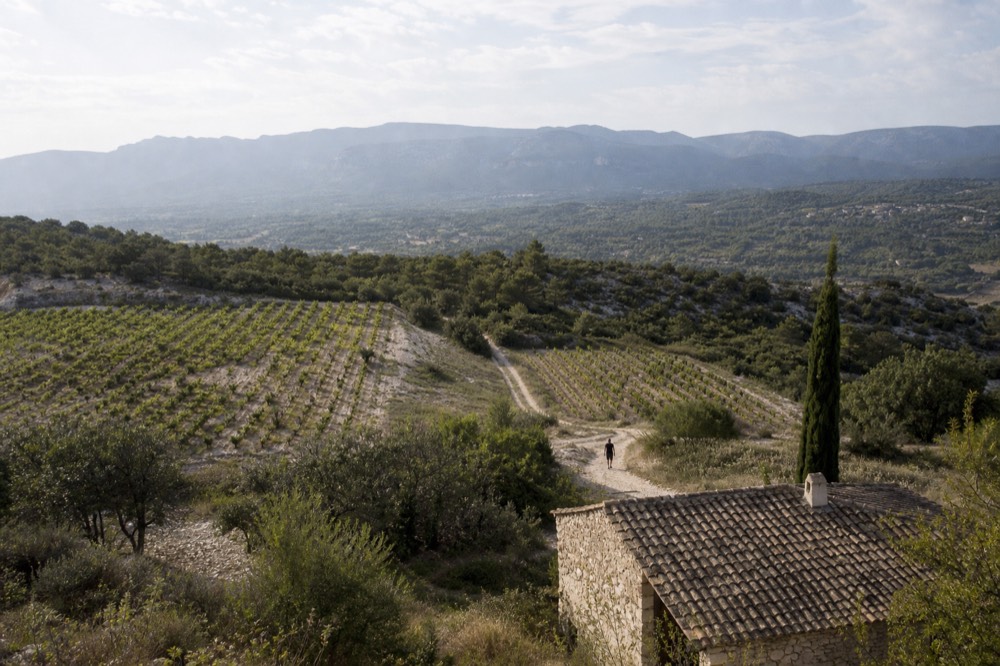
The terroir is classic Provence: limestone and clay-limestone soils, generous sun, and the drying mistral wind that sweeps down the Rhône corridor. Météo-France describes the mistral as a turbulent, generally dry regional wind averaging around 50 km/h with gusts of 80 to 100 km/h, strongest in winter and spring, and an episode can last several days or more than a week. For the vines that wind is a benefit, drying the grapes and reducing disease pressure. For a visitor standing on a tasting terrace in March, it is a reason to pack a windproof layer.
Because the appellation is close to Aix, it is the natural first stop for a wine day from the city, and there are tours built exactly around it.
The half-day Coteaux d'Aix option runs 4.5 hours from Aix at $121.94 per person with tastings included in the price, rated 4.7 across 25 reviews, small group, free cancellation. The Bandol and Cassis half-day is a coastal contrast at the same price, and the private full day covers the region at your own pace.
Which Grapes Grow In Coteaux d'Aix-en-Provence?
The reds and rosés are built on five principal varieties, cinsaut, counoise, grenache, mourvèdre and syrah, with cabernet-sauvignon, carignan and caladoc permitted as accessories, while the whites are led by vermentino, known locally as rolle, alongside clairette, grenache blanc, sauvignon, bourboulenc, sémillon and ugni blanc. The official INAO specification locks those lists, and one entry on them is genuinely unusual for Provence: cabernet-sauvignon is a permitted accessory variety here, a Bordeaux grape that most southern French appellations exclude outright.
That small detail tells you something about the appellation's character. Coteaux d'Aix has always been a little more open than its neighbours, a place where growers historically blended what grew well rather than defending a narrow tradition. Counoise on the principal list is another marker: it is a rare, peppery southern grape that most consumers have never heard of, yet here it is a headline variety rather than a footnote.
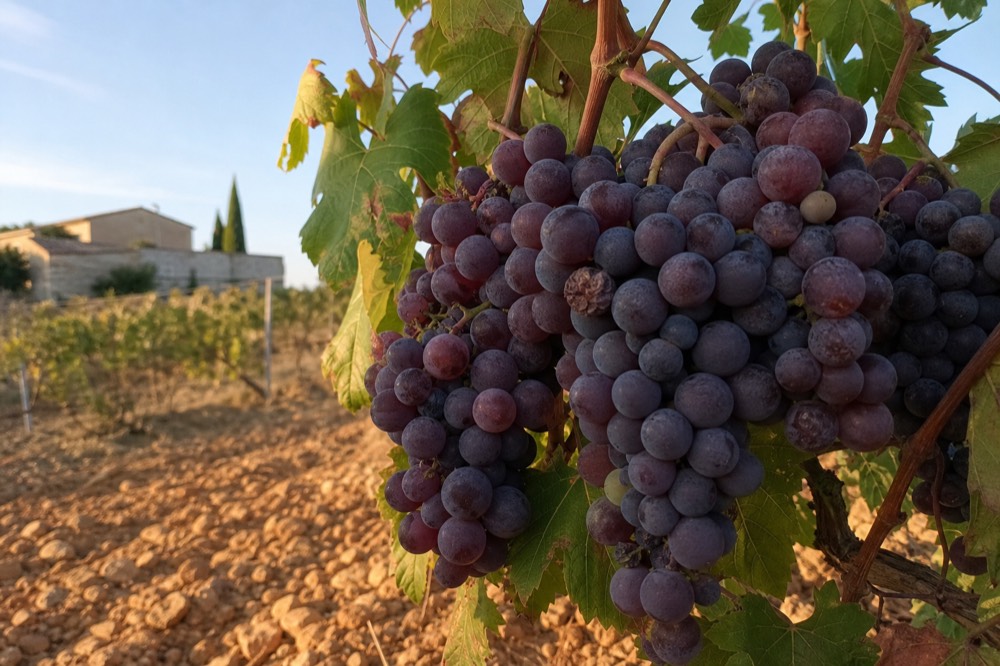
In the glass, the rosés, which dominate production as they do across the three Provence AOPs, tend toward the fuller, spicier end of the Provençal spectrum, with grenache and cinsaut giving red fruit and the mourvèdre and syrah components adding structure. The whites lean on vermentino's freshness. The reds are where counoise and the accessory varieties show their hand, often medium-bodied and food-friendly rather than the powerful, barrel-aged style you find over in Bandol, where mourvèdre must be 50% to 95% of the red plantings and the wines must age a minimum of 18 months in barrel or foudre.
| Category | Principal varieties | Permitted accessories |
|---|---|---|
| Red and rosé | Cinsaut, counoise, grenache, mourvèdre, syrah | Cabernet-sauvignon, carignan, caladoc |
| White | Vermentino (rolle) | Clairette, grenache blanc, sauvignon, bourboulenc, sémillon, ugni blanc |
A tasting in the appellation will usually walk you through all three colours, which is one advantage of visiting a region where the rosé share, while high, is not the near-monopoly it is elsewhere. Across the three Provence AOPs the 2024 vintage was 89% rosé, 6% white and 5% red, so the reds and whites you taste in Coteaux d'Aix are genuinely the rarer pours.
How Does Coteaux d'Aix Compare With Its Neighbours?
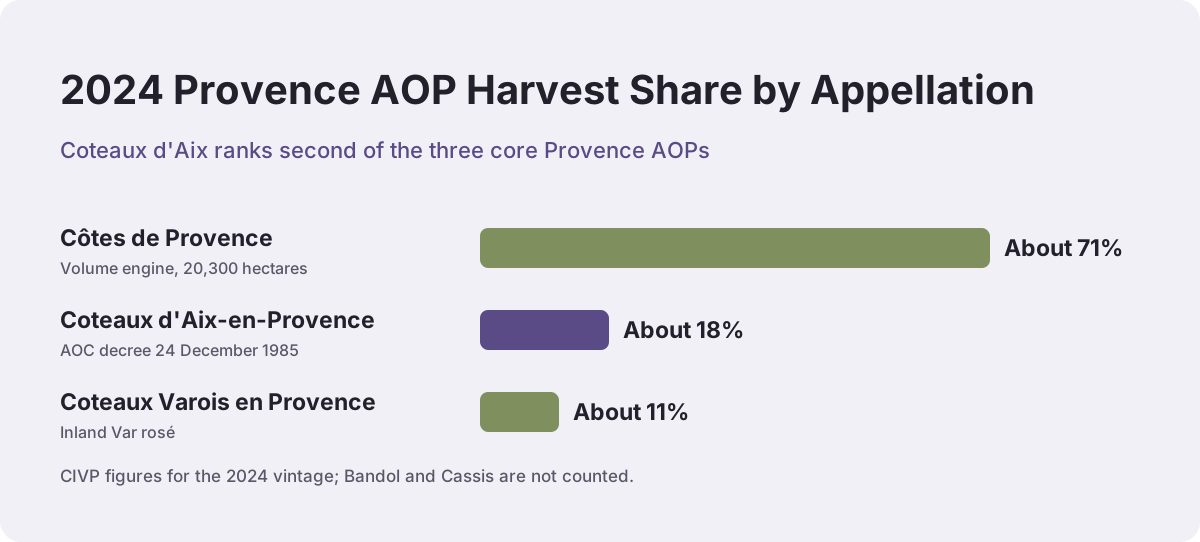
Coteaux d'Aix-en-Provence is the second-largest of the three core Provence AOPs, producing about 18% of their combined 2024 harvest, against roughly 71% for Côtes de Provence and 11% for Coteaux Varois en Provence, and it differs from both in its grape list, its 1985 creation date and its position around Aix rather than the coast. Beyond that trio sit the specialist appellations, Bandol, Cassis, Les Baux-de-Provence, Palette and Bellet, each with its own rules and none of them counted in the CIVP's Provence statistics.
The comparison matters when you are choosing where to spend a tasting day. Côtes de Provence, covered in our Côtes de Provence wine guide, is the volume engine: 84 communes across three departments, 20,300 hectares, and the source of most of the rosé the world associates with the region. Coteaux d'Aix is smaller, slightly later to formal recognition, and centred on a city rather than a coastline. Cassis, by contrast, is tiny and white-dominant, with white wine about 70% of production per its INAO specification, a complete inversion of the regional pattern.
| Appellation | AOC decree | 2024 share of Provence AOP harvest | Signature |
|---|---|---|---|
| Côtes de Provence | 24 October 1977 | About 71% | Volume rosé, five sub-denominations |
| Coteaux d'Aix-en-Provence | 24 December 1985 | About 18% | Hillside rosé around Aix, counoise and cabernet permitted |
| Coteaux Varois en Provence | (Var appellation) | About 11% | Inland Var rosé |
| Bandol | 11 November 1941 | Not counted in CIVP figures | Mourvèdre reds, 18 months minimum ageing |
| Cassis | 15 May 1936 | Not counted in CIVP figures | White-dominant, about 70% of production |
Les Baux-de-Provence, which you can read about in our Les Baux-de-Provence wine guide, was actually a sub-denomination of Coteaux d'Aix before it became independent by the decree of 20 April 1995, so the two share family history. If you want the full picture of how all these fit together on the map, the Provence wine region overview lays it out.
Why Do Most People Take A Guided Tour From Aix?
The honest reason is French drink-driving law: the general limit is 0.5 g of alcohol per litre of blood, and for anyone on a probationary licence, which lasts three years, or two after accompanied driving, the limit is 0.2 g/L, effectively zero, so a self-drive tasting day rules out swallowing anything. Those figures come from Service-Public, the French state's official public-service portal, and they apply at every cellar door in the appellation.
A tasting at three estates, which is what a good half-day in Coteaux d'Aix involves, is not compatible with staying under 0.5 g/L if you are the driver. Spittoons exist, and serious tasters use them, but most visitors on holiday want to swallow the wine they have travelled to taste. A driven tour solves that without a lecture. The probationary-licence point is the one that catches younger travellers: anyone who passed their test in the last three years is held to 0.2 g/L, and the French road-safety authority has run the rule under the plain slogan that 0.2 g/L means zero glasses.
The second reason is access. No primary source publishes region-wide cellar-door opening hours, because opening patterns are set estate by estate, and a cellar that welcomes walk-ins on a Saturday may be appointment-only midweek. A booked tour arrives at cellars the operator has arranged in advance, which is the real practical advantage over turning up and hoping. For the same reason, do not read anything into blanket claims about cellars closing in January or opening at ten: no such regional rule exists.
The third reason is simply distance arithmetic. The Coteaux d'Aix cellars are close to the city, but a day that also takes in the coast or the Rhône adds up fast. Avignon to Châteauneuf-du-Pape is only 17.4 km, but Aix to Châteauneuf-du-Pape is 89.3 km, nearly an hour and a quarter each way before anyone tastes anything, a fact worth knowing before you book a Châteauneuf trip from an Aix base.
What Do The Aix Wine Tours Cost And Include?
A half-day small-group tasting tour in the Coteaux d'Aix appellation runs 4.5 hours from Aix at $121.94 per person with tastings included in the price, rated 4.7 across 25 reviews, while shorter 3-hour options in the wider Aix countryside start at $114.97 per person and a private full day runs $562.33 per person, all with free cancellation. Those are the real bands on the roster, and the price differences track hours and exclusivity rather than quality.
The half-day Coteaux d'Aix tour is the one built specifically for this appellation, and it is the natural pick if the guide's subject is what you came for. It visits estates within the appellation, includes the tastings in the headline price, and gets you back to Aix with half a day left for the city itself.
If you would rather compare styles in one day, the coastal half-day to Bandol and Cassis, 5 hours at $121.94 per person, rated 4.9 across 11 reviews, puts the appellation's rosés next to Bandol's mourvèdre-driven reds and Cassis's rare whites. At the other end of the scale, the private full day at $562.33 per person, rated 5 across 33 reviews, lets you set the route, which suits anyone with a particular cellar in mind.
| Tour | Duration | Price | Rating | Tastings |
|---|---|---|---|---|
| Half-Day Coteaux d'Aix, 4.5 hours | 4.5 hours | $121.94 per person | 4.7 across 25 reviews | Included in the price |
| Sainte-Victoire Route, Côtes de Provence | 3 hours | $114.97 per person | 4.8 across 273 reviews | Included in the price |
| Cézanne Country, Côtes de Provence | 3 hours | $117.01 per person | 4.9 across 288 reviews | Included in the price |
| Half-Day Bandol and Cassis | 5 hours | $121.94 per person | 4.9 across 11 reviews | Included in the price |
| Private Full Day, pickup included | 6 to 8 hours approx. | $562.33 per person | 5 across 33 reviews | Included in the price |
Two of those alternatives sit in the Côtes de Provence Sainte-Victoire sub-denomination rather than Coteaux d'Aix, which is exactly the kind of detail worth checking before you book: the two appellations share a horizon from Aix, and tours from the city mix them freely. If the Coteaux d'Aix name specifically is what you want, the 4.5-hour tour is the one that stays inside it.
When Is The Best Time To Taste In Coteaux d'Aix?
The harvest in Provence starts in the earliest parcels in the second half of August and runs into September, with later sectors picking through mid-September, so late August and September are the months when the appellation is at its most active, though no precise region-wide start and end date exists and it changes every year. The CIVP reported the first secateur cuts of the 2025 harvest around 12 August in the earliest parcels, which is the shape of a typical year rather than a promise.
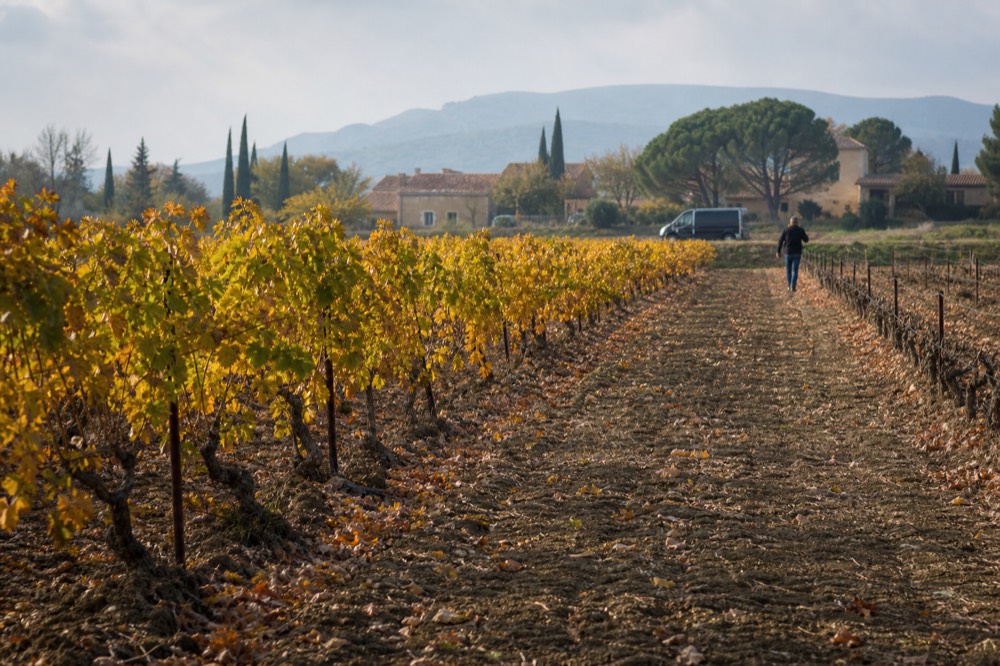
Autumn brings the vintage energy without the peak-summer crowds. INSEE defines the summer tourist season as April to September, and in that window in 2025 the Provence-Alpes-Côte d'Azur region recorded 43.1 million nights, up 1.9% on 2024. The heaviest concentration of visitors falls in July and August, so September and October buy you quieter cellar doors and a landscape still full of grapes or freshly picked.
Spring has its own case, with one caveat. The mistral is strongest in winter and spring, and while mistral days are dry and usually very sunny because the wind clears the cloud, an episode can last more than a week and make outdoor terraces uncomfortable. That is a reason to bring a windproof layer, not a reason to cancel: the wind is a feature of the terroir and part of why the vines here are as healthy as they are.
How Should You Plan A Coteaux d'Aix Tasting Day?
Base yourself in Aix-en-Provence, book a half-day driven tasting in the appellation for the morning or afternoon, and keep the other half of the day for the city, because the cellars sit within roughly 30 to 60 minutes of Aix and a full day in the appellation is more than most visitors need. That is the shape that works for the majority of travellers, and the tour roster supports it directly with a 4.5-hour small-group option.
Distances are on your side here. Aix to Puyloubier below Sainte-Victoire is 24.5 km, Aix to Lourmarin in the Luberon is 40.1 km, and Aix to Les Baux-de-Provence is 71.6 km, so a Coteaux d'Aix morning and a Luberon afternoon is a real, if ambitious, combination, with Les Baux a self-drive detour you add on your own. Those are free-flow driving times, not tour durations: they do not include August coastal traffic or the time a car spends parked at a cellar. Treat them as planning ranges and check your route on the day.
| Route from Aix-en-Provence | Road distance | Free-flow driving time |
|---|---|---|
| Puyloubier (Sainte-Victoire) | 24.5 km | 31 min |
| Lourmarin (Luberon) | 40.1 km | 39 min |
| Bonnieux (Luberon) | 50.0 km | 52 min |
| Les Baux-de-Provence | 71.6 km | 64 min |
| Châteauneuf-du-Pape | 89.3 km | 67 min |
On money: every small-group tour on the roster from Aix includes tastings in the headline price, so there is no separate tasting-fee budget to plan for on a booked tour. If you visit cellars independently instead, expect to pay a tasting fee at the cellar door, and check with each estate in advance, since fees and opening patterns are set individually and no regional standard exists. The legal drinking age in France is 18, and the person pouring is required by law to ask for proof of age, which matters for families travelling with older teenagers.
For a longer itinerary that folds Coteaux d'Aix into a wider trip, the south of France wine tours guide covers multi-day planning, and this site, Provence Wine Tours, keeps a full roster of departures from every base city in the region.
The coastal half-day is the comparison play: five hours, $121.94 per person, tastings included, rated 4.9 across 11 reviews, and free cancellation if the weather turns. For travellers who want the appellation entirely to themselves, the private route is the other end of the roster.
Whether you start with the 4.5-hour appellation half-day or build a private route through your own shortlist of cellars, book ahead: the small-group departures fill first in the April-to-September season, and the free-cancellation terms on every tour in the roster mean an early booking costs you nothing if your plans shift.
These are the questions travellers ask most often about the appellation, from its grape list to how to taste it on a day out from Aix, answered with the same verified figures used throughout this guide. Each answer stands alone, so you can jump straight to the one you need.
Common Questions About Coteaux d'Aix-en-Provence Wine
What Is Coteaux d'Aix-en-Provence Wine?
It is a French AOC, granted by the decree of 24 December 1985, making white, red and rosé wines from more than 4,100 hectares of vineyards in 2009 around Aix-en-Provence. It is the second-largest of the three core Provence AOPs, producing about 18% of their combined 2024 harvest.
Which Grapes Are Used In Coteaux d'Aix-en-Provence?
Reds and rosés use five principal varieties, cinsaut, counoise, grenache, mourvèdre and syrah, with cabernet-sauvignon, carignan and caladoc as permitted accessories. Whites are led by vermentino (rolle), alongside clairette, grenache blanc, sauvignon, bourboulenc, sémillon and ugni blanc.
How Is Coteaux d'Aix Different From Côtes De Provence?
Côtes de Provence is larger, older as an AOC (1977 versus 1985) and produces about 71% of the three Provence AOPs' harvest, against about 18% for Coteaux d'Aix. Coteaux d'Aix also permits cabernet-sauvignon and lists counoise as a principal variety, both unusual for the region.
Can You Visit Coteaux d'Aix Wineries From Aix-en-Provence?
Yes. The appellation wraps around the city, with cellars within roughly 30 to 60 minutes' drive. A 4.5-hour small-group half-day tour from Aix costs $121.94 per person with tastings included, rated 4.7 across 25 reviews, with free cancellation.
Is Coteaux d'Aix Wine Mostly Rosé?
Rosé dominates as it does across all three Provence AOPs, where the 2024 vintage was 89% rosé, 6% white and 5% red. Coteaux d'Aix produced 168,949 hectolitres of rosé in 2024, but the appellation also makes distinctive whites from vermentino and food-friendly reds.
When Is The Best Time Of Year To Taste In Coteaux d'Aix?
Harvest runs from the second half of August into September, with later sectors picking through mid-September, so early autumn combines vintage activity with thinner crowds than July and August. Spring works too, but the mistral wind is strongest in winter and spring, so bring a windproof layer.