What Is The Prettiest Town In Provence?
Gordes is the answer most visitors and photographers settle on, but Roussillon, Moustiers-Sainte-Marie and Les Baux-de-Provence all have a real claim. Here is how to choose.
What Is The Prettiest Town In Provence?
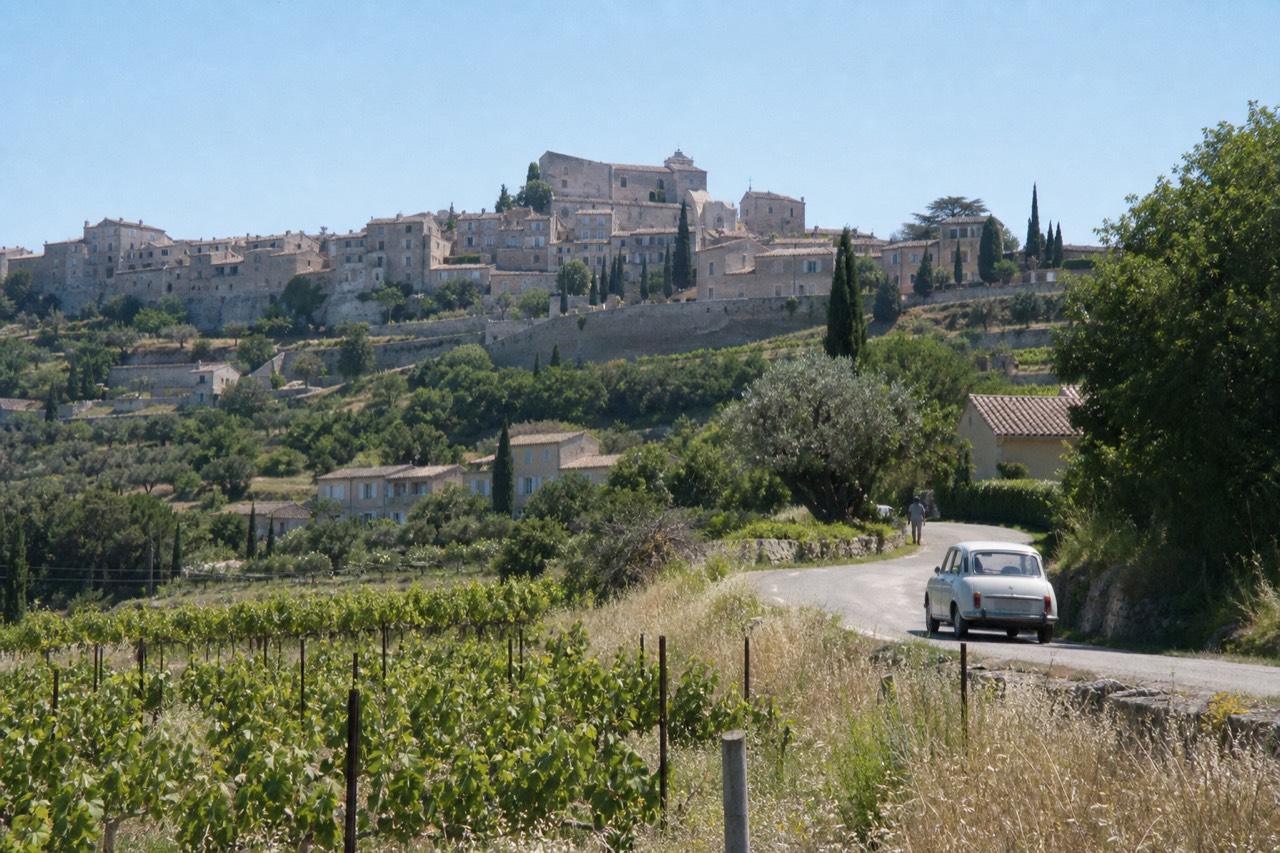
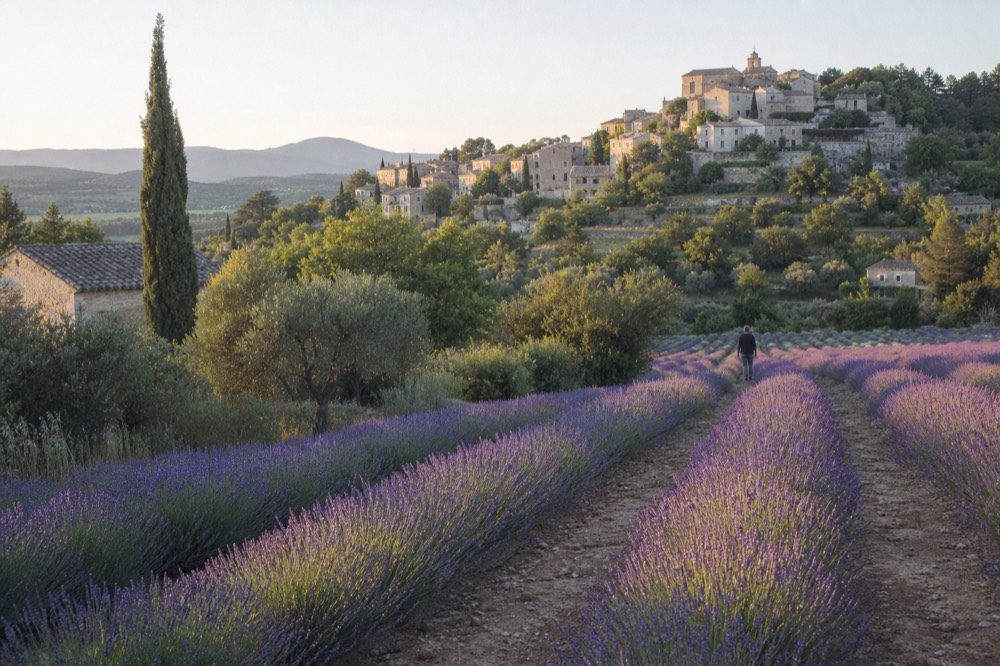
Gordes, the hilltop village on the southern edge of the Vaucluse plateau in the Luberon, is the answer most often given, and it is the one the postcards keep proving right: a cascade of dry-stone houses stacked above the valley, crowned by a Renaissance château. Roussillon, Moustiers-Sainte-Marie and Les Baux-de-Provence are the honest challengers, each pretty in a completely different way.
The case for Gordes is not just sentiment. The village is built of the very stone it stands on, pale limestone that catches the evening light and turns gold, and its profile, a single pyramid of roofs rising off the plain, is one of the most photographed in France. The view from the road below, looking up from the valley of the Sénancole, is the shot most visitors are chasing. Gordes is also a member of Les Plus Beaux Villages de France, the official association that vets French villages on architectural and landscape criteria, which is about as close to an adjudicated "prettiest" label as the country offers.
But "prettiest" is doing a lot of work in that question, and different travellers mean different things by it. Gordes is pretty in a stern, monumental way. Roussillon, twenty minutes east, is pretty in a way that looks painted, because it literally is: the village sits on one of the largest ochre deposits in the world, and its houses range from butter yellow to deep rust. Moustiers-Sainte-Marie, up in the Alpes-de-Haute-Provence at the entrance to the Verdon Gorge, is pretty in a dramatic, cliff-hung way, with a chapel reached by a stone stairway cut into the rock and a gold star hung on a chain stretched between the cliffs above the village. Les Baux-de-Provence, in the Alpilles south of Avignon, is pretty in a ruined, medieval way, a ghost citadel on a limestone ridge.
Here is how the four main contenders stack up, with the road distances that decide which one is practical from your base:
| Town | What makes it pretty | Appellation it sits in | Road distance from Aix-en-Provence |
|---|---|---|---|
| Gordes | Perched limestone silhouette, dry-stone houses, château | Luberon | 50.0 km to Bonnieux nearby, about 52 min |
| Roussillon | Ochre cliffs and houses in yellow-to-red tones | Luberon | Near Gordes, twenty minutes farther east |
| Moustiers-Sainte-Marie | Cliff-hung village, chapel, suspended gold star | Near Verdon, outside the main wine axis | Farther afield, at the Verdon Gorge |
| Les Baux-de-Provence | Ruined citadel on a limestone ridge | Les Baux-de-Provence AOC | 71.6 km, about 64 min |
If you want to see several of these in one day rather than arguing over one, a small-group day tour is the practical route, since the prettiest villages are scattered across two hours of country road and the driving between them is the part most visitors underestimate.
Why Does Gordes Usually Win?
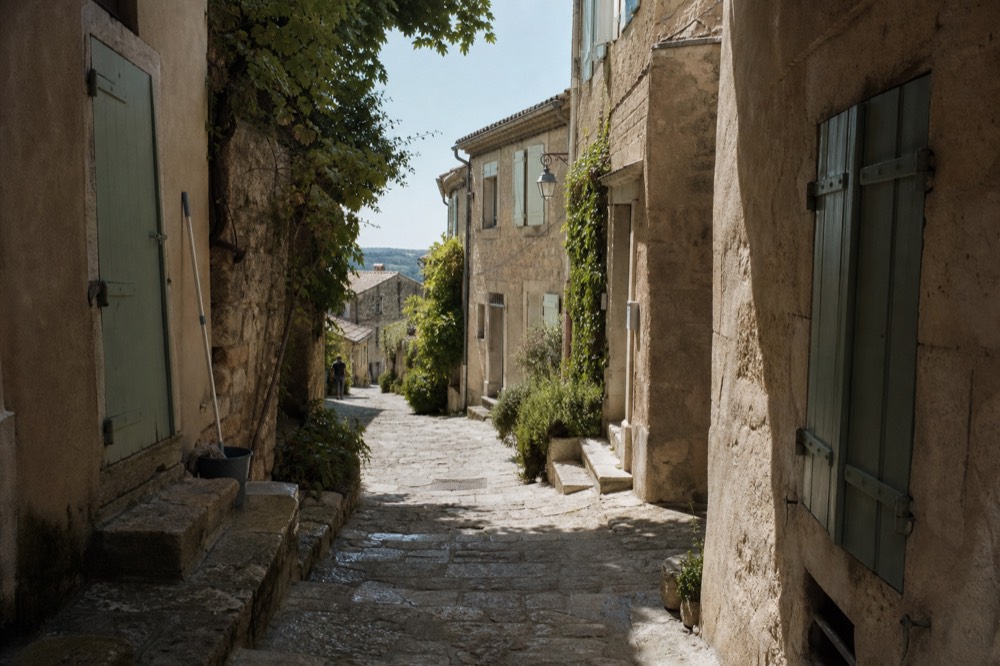
Gordes wins because it combines three things rarely found together: a single, unified silhouette that reads instantly from a distance, dry-stone architecture that is genuinely local rather than decorative, and a setting inside the Luberon Regional Natural Park, with lavender fields, the Sénanque Abbey and cedar forest all within a short drive. The village also has a working centre and year-round residents, so it does not feel like a film set emptied after dark.
The silhouette is the decisive factor. Pretty villages that reveal themselves street by street, lovely as they are, never generate the same instant verdict as a village you can take in with one glance from the valley road. Gordes is seen before it is entered, and that first view, from the D15 approaching from the south, is what fixes it in memory. The Renaissance château at the summit, rebuilt in the sixteenth century and now part-restored, gives the stack of roofs a focal point that most perched villages lack, where the church is the usual summit and a less imposing one.
The dry-stone technique, bories in the local language, extends beyond the village itself. The surrounding hills are dotted with stone huts, low domes built without mortar, and the walls that terrace the slopes are built the same way. It means the landscape and the village are made of the same material by the same tradition, which is a coherence you feel even if you cannot name it. Sénanque Abbey, the Cistercian monastery a few kilometres down the valley, with its lavender field running to the abbey wall, completes the picture and is one of the most photographed single sites in Provence.
The honest counterweight: Gordes is popular, and in July and August the lanes are full. The region's tourism is heavily concentrated in summer; INSEE, the French national statistics office, counts the April-to-September season in Provence-Alpes-Côte d'Azur at 43.1 million nights in 2025, up 1.9% on the year before. For accommodation booked through short-term rental platforms in 2022, 44% of nights in the region fell in July and August, against 37% nationally. That figure covers platform rentals only, not hotels or campsites, but the direction is clear: the prettiest villages are at their prettiest, and their busiest, at exactly the same time of year.
Which Towns Are The Strongest Alternatives?
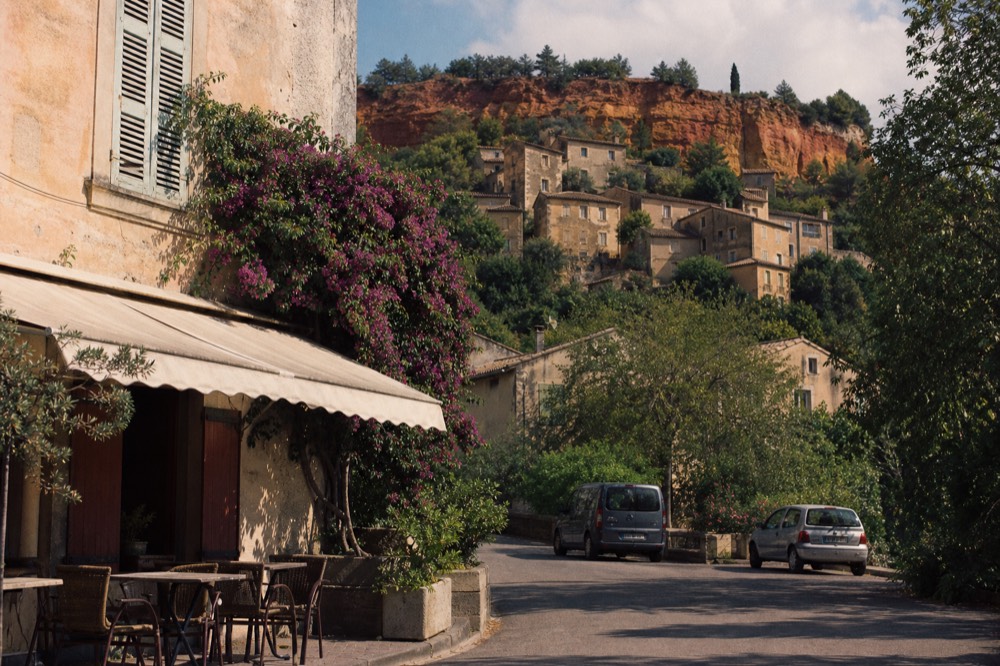
Roussillon stands out for colour, an entire village built from ochre in shades from yellow to blood red, with a marked trail through the former ochre quarries at its foot. Moustiers-Sainte-Marie leads for drama, clinging to a cliff below a suspended gold star at the mouth of the Verdon Gorge, while Les Baux-de-Provence wins for history as a ruined fortress citadel in the Alpilles, 30.7 km and about 40 minutes from Avignon.
Roussillon's claim rests on geology. The village sits on an ochre deposit that was quarried commercially into the twentieth century, and the pigment colours everything: the houses, the dust, the cliff face below. The Sentier des Ocres, a footpath through the old quarry, takes under an hour and is the single best way to understand why the village looks the way it does. Where Gordes is monochrome limestone, Roussillon is a palette, and photographers who find Gordes too severe usually name Roussillon instead.
Moustiers-Sainte-Marie is the romantic's answer. The village climbs a ravine between two limestone cliffs, a waterfall runs through its centre, and a chapel, Notre-Dame de Beauvoir, sits in a cave halfway up the rock face, reached by a long stone staircase cut into the cliff. Between the cliffs, a gold star hangs on a chain stretched high above the rooftops, placed, by tradition, by a returning crusader. Moustiers is also a faience pottery town, with workshops selling hand-painted ceramics in the streets below. It is farther from the main Provence tourist axis, at the western entrance to the Verdon Gorge, which keeps it slightly calmer than the Luberon villages in peak season.
Les Baux is the historical answer, and in some ways the most spectacular. The village itself is a narrow street of restored stone houses, but the main event is the ruined citadel above it, a fortress site occupied since prehistory and dismantled on royal order in the seventeenth century. The limestone ridge of the Alpilles gives the site a fierce, dry beauty, and the surrounding countryside is the Les Baux-de-Provence wine appellation, granted its own AOC by decree of 20 April 1995 after starting life as a sub-denomination of Coteaux d'Aix-en-Provence. A day combining Les Baux with cellar visits in the Alpilles is one of the more satisfying loops out of Avignon.
Is The Prettiest Town The Same As The Best Town To Stay In?
No, and the difference matters. The prettiest villages, Gordes and Roussillon among them, are small and can empty in the evening once day visitors leave, which some travellers love and others find eerie. For a base, many visitors prefer larger, livelier towns such as Aix-en-Provence, Avignon or the Luberon market village of Lourmarin, and make the picture-postcard villages a day trip rather than a destination.
The trade-off is atmosphere versus convenience. Staying inside Gordes means waking to the view and having the lanes to yourself before the coaches arrive, but the practical village, supermarkets, pharmacies, laundrettes, is a drive away in the valley. Staying in Aix means restaurants, a famous daily market and a proper town's rhythm, with the Luberon villages 40 minutes to an hour's drive east. The question of how long to spend in the region overall is covered in our guide to how many days are enough for Provence, which is worth reading before booking anything.
Lourmarin is the connoisseur's compromise. It has a Renaissance château, a famous Friday market, cafés that locals actually use, and it counted Albert Camus among its residents; he is buried in the village cemetery. It is pretty without being a museum piece, and its position at the southern foot of the Luberon makes it a genuine base rather than just a stop. If you pressed the question "prettiest town to live in" rather than "prettiest to photograph", Lourmarin would probably take the prize.
Can You Visit The Prettiest Towns And Taste Wine On The Same Day?
Yes, you can easily combine the region’s prettiest villages with wine tasting in a single day because many of them sit within working appellations, from Gordes and Roussillon in the Luberon to Les Baux and the Côtes de Provence. The only real obstacle is France’s strict drink-driving law, which a small-group tour that pairs cellar visits with village stops neatly removes.
That legal point deserves a plain statement. France's official public-service portal sets the general limit at 0.5 grams per litre of blood, 0.25 mg per litre of breath. For anyone who passed their driving test in the last three years, or two years after accompanied driving, the probationary limit is 0.2 g/L, and the road-safety authority ran the rule under the slogan that for probationary drivers, 0.2 g/L means zero glasses. A hired car and a tasting day simply do not mix for those drivers, and even for everyone else, a driven tour converts a day of measured sips into a day of actual tasting.
The Luberon is the natural place to do this. It is a wine appellation in its own right, first recognised as Côtes du Luberon by decree of 26 February 1988 and renamed Luberon in 2009, producing red, rosé and white, with about 3,300 hectares recorded in 2010. Administratively it counts as a Rhône valley appellation rather than one of the three CIVP "Vins de Provence" AOPs, a distinction the statistics keep but a visitor's palate will not. A village-and-cellar day from Aix can realistically cover Gordes or Roussillon plus two estates, with the driving handled.
The 10-Hour Luberon Villages And Wine tour from Aix-en-Provence does exactly this, pairing the region's best-known villages with included tastings at $209.04 per person, rated 4.9 across 65 reviews, with free cancellation. It is a long day, but the Luberon rewards it: the distances between villages are short once you are inside the park, and the drive itself, through lavender and cherry country, is part of the point.
For a shorter version, the Sainte-Victoire Route Côtes de Provence half-day from Aix covers the appellation's Sainte-Victoire sub-denomination, the vineyards below the mountain Cézanne painted, at $114.97 per person and 4.8 across 273 reviews. It skips the famous villages but delivers the wine half in three hours, which suits anyone whose itinerary is already full.
How Do You Avoid The Crowds At The Prettiest Towns?
Go early, go late or go out of season, and pick the villages that tour buses cannot reach. Gordes is at its calmest before 10am and after 5pm in summer; Roussillon's ochre trail is best walked at opening time; and the smaller villages of the Luberon, Bonnieux, Saignon, Ansouis and Cucuron, deliver the same stone-and-shutter beauty at a fraction of the visitor density.
The timing advice is mechanical but true. Day visitors, and day tours, cluster between late morning and mid-afternoon, so a village that feels unbearable at 1pm can feel like your own at 9am. The light is also better at the edges of the day, which for photographers is not a compromise but the actual goal: the limestone of Gordes turns gold in the hour before sunset, and Roussillon's ochres burn deepest in low sun.
The alternative villages deserve more attention than they get. Bonnieux, stacked on a hillside with a church reached by a long stone staircase, has the view without Gordes's crowds. Saignon, near Apt, is a tiny, almost secret village with a rock outcrop above it that gives one of the best panoramas in the Luberon. Cucuron has its famous pond of plane trees, used in the film "A Good Year", and a slow, lived-in feel. None of these will replace Gordes on a postcard, and that is precisely the point.
Out of season is the honest insider answer. The villages are at their most beautiful in late spring, when the wisteria and roses are out against the stone and the summer crowds have not yet arrived, and the region's harvest window, starting in the second half of August in the earliest parcels and running into September, adds vineyard activity to the scenery. Winter brings the mistral, the dry north wind that can blow at an average of 50 km/h with gusts to 100 km/h for days at a time, strongest in the Rhône corridor around Avignon; it clears the sky to a hard blue and empties the streets, which is either a dealbreaker or the best light of the year, depending on what you came for.
Which Pretty Town Should You Choose For Your Trip?
Choose Gordes if you want the definitive postcard and do not mind sharing it; Roussillon for colour and an easy walk; Moustiers for drama and pottery; Les Baux for ruins and wine; Lourmarin if you are staying rather than visiting. Base yourself in Aix or Avignon and day-trip, or take a small-group tour that strings several villages together with tastings, with prices on the live listing depending on length.
The decision usually comes down to geography. If you are staying in or near Avignon, Les Baux and the Alpilles are on your doorstep, 30.7 km and about 40 minutes away, and the Châteauneuf-du-Pape half-day from Avignon at $103.36 per person, rated 4.8 across 456 reviews, is a natural pairing for a second day. If you are based in Aix, the Luberon villages are your near country, and the full-day village-and-wine tour is the efficient way to see them. If you are coming from Nice or Cannes, the calculus changes entirely, and the Côtes de Provence heartland east of Aix is closer; our guide to wine tours from Nice covers that side.
For a deeper read on the region's appellations before you choose, the Provence wine region guide maps which villages sit inside which AOCs, and the Luberon wine tours guide goes deeper on the villages-and-cellar routes around Gordes and Roussillon. Whatever you choose, book the driven option if wine is on the itinerary: the law is the law, and the prettiest villages are best reached by road anyway.
Whichever town you crown, the practical reality is the same across the region, and it is the one thing Provence Wine Tours exists to solve: the prettiest places are scattered, the driving between them is real, and the wine in between is worth someone else doing the steering for.
Common Questions About The Prettiest Town In Provence
What Is The Prettiest Town In Provence?
Gordes, the perched limestone village in the Luberon, is the answer most often given and the one with the strongest single claim, thanks to its unified silhouette, dry-stone architecture and setting inside the Luberon Regional Natural Park. Roussillon, Moustiers-Sainte-Marie and Les Baux-de-Provence are the strongest alternatives, each pretty in a different register: colour, drama and ruins respectively.
Is Gordes Worth Visiting If It Is Crowded?
Yes, if you time it. Arrive before 10am or after 5pm in summer and the lanes quieten considerably, and the view from the valley road is available at any hour. Combining Gordes with quieter neighbours such as Bonnieux or Saignon spreads the day and reduces the crowd fatigue.
What Is The Prettiest Village Near Aix-en-Provence?
The Luberon villages are the nearest cluster: Lourmarin is 40.1 km and about 39 minutes from Aix, Bonnieux 50.0 km and about 52 minutes, with Gordes and Roussillon a little farther on. All are reachable as a day trip, and small-group tours from Aix cover several in one day with wine tastings included.
Can You Visit Gordes And Taste Wine On The Same Day?
Yes. Gordes sits inside the Luberon wine appellation, and village-and-cellar day tours from Aix pair the famous villages with estate tastings. Because the French drink-driving limit is 0.5 g/L of blood, and 0.2 g/L on a probationary licence, a driven tour is the practical way to do both.
When Is The Best Time To Visit The Pretty Villages?
Late spring, when the flowers are out against the stone and the peak crowds have not arrived, and September, when the harvest is under way in the surrounding vineyards. July and August are the busiest months for the region's short-term rental accommodation, with 44% of platform-booked nights falling in those two months in 2022.